


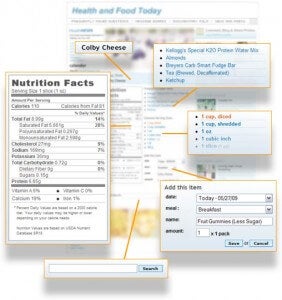
One day we are told that eating fats makes us fat. The next day we learn that carbs are made from pure evil, and that fats are angel tears. It’s hard to keep track of all the nutritional information that is constantly bombarding you from TV, print, and the Internet, but up and coming website Fat Secret is willing to try. It has been compiling information from the USDA, users, and brands to form a comprehensive database for everything food and exercise related. Earlier in August, Fat Secret launched their free API, set to allow almost anyone access to their data for quick and easy reference. It’s Wikipedia meets weight loss and it could change the way we perceive nutrition.
Fat Secret is onto something. We desperately need a resource that reviews, consolidates, and analyzes nutritional information. Not just because such a resource would be trustworthy. The open access, the ability for any website to provide a link and retrieve the correct data, is a valuable tool which will help everyone from doctors to dieters. Right now, who can you ask if you need to know the calories in a cup of almonds? Do you trust that source? If I jog 10 miles one day, how much more food should I eat? Can you find that answer quickly?
Well, Fat Secret is certainly trying to be that all-in-one destination. They’ve even taken it a step further and expanded into social networking. Users can register and share recipes, dieting information, and fitness tips. There are online tools, such as weight tracking calendars, that can be exchanged or posted to a group. Those groups include people on the same diet, or trying the same fitness challenges. All in all, it’s pretty much what you’d expect from a nutrition website, and resembles most of what Body Trace was hoping to accomplish with eScale, though without the hardware. And Fat Secret does it for free.
Creating a reliable nutritional database that is accessible to anyone is a monumental task. Fat Secret’s approach is to separate their API into two flavors: a general API for those developers, users, etc who want to access the data, and a separate entry for those brands looking to enter their information. While having a different door for the likes of Coors and SlimJim seems a little like dietary apartheid it keeps a tight reigns on the doors of the database.
Which is a HUGE difference between Wikipedia and Fat Secret. While both are aiming to be definitive web resources, Fat Secret has a team of experts checking everything in their database. Which is exactly what you want in a database that you hope to trust and rely upon. There is still some user editing and updating, but most of data you see on Fat Secret is gleaned from the USDA or the brands themselves.
As the US shifts from an illness focused to a wellness focused health care system, nutritional information will be at a premium. Naturally, we will want a hub for that data, and Fat Secret might fill that position. I worry, however, what will happen if brands keep their separate access to what would become a universally trusted nutrition source. There’s sweatpants-sized room for abuse there. Hopefully Fat Secret will work tirelessly to keep their data unbiased, free, and comprehensive. Because if they won’t, someone else will. Wolfram Alpha is certainly a strong contender.
Freely accessed and trusted data is the currency of our generation. You, enlightened Singularity Hub reader, could utilize that free data to help you take advantage of the secrets of longevity. Personally, I’m sticking to my simple diet of polyunsaturated angel tears.