iGEM 2009: Synthetic Biology Competition Bigger than Ever this Halloween
Share
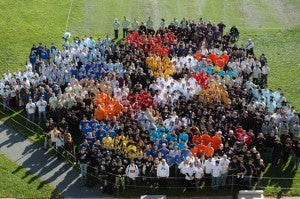
Like some Frankenstein monster composed of space camp, graduate school, and science fair, iGEM is ready to spring to life this Halloween. The International Genetic Engineering Machine competition is now in its 6th iteration and will feature some of the best undergraduate work in synthetic biology the world has ever seen. The main jamboree from Oct 31st to Nov 2nd will allow the more than 110 teams competing to reveal the successes and failures from their summer long foray into the laboratory. As always, iGEM is hosted by MIT and the public is invited to attend the awards ceremony on Sunday November 1st at 8am. If you're in the Boston area, you definitely want to go. Last year's winners included bacteria that could produce electricity, e.coli that could hunt and kill other pathogens, and yeast that could give beer high levels of resveratrol.
Synthetic biology has been called the science of the 21st century. Rewriting the genetic information of micro organisms can allow scientists to create new genetic machines that can perform extraordinary tasks. You remember MIT's Registry of Standard Biological Parts we discussed? iGEM teams are given access to that database in order to come up with useful, interesting, or just plain cool genetic machines for the competition. MIT is allowing these undergraduates access to some of the most advanced synthetic biology tools of today in the hopes of developing students into the best genetic engineers of tomorrow. That's exciting stuff.
For those completely new to the iGEM competition, undergraduate teams are formed in universities all over the world. They receive standard biological parts in the beginning of the summer and present their results during the jamboree in the fall. Not every institution can sponsor an iGEM team. They require funding, access to advanced equipment, and most importantly: synthetic biology expertise. Each team has faculty advisors that help students understand biotechnology, and guide them in its use to accomplish the task they desire.
While an iGEM team's requirements are severe, the number of institutions sponsoring them has increased dramatically. The first iGEM competition in 2004 had just 5 teams attending. Last year saw 84 teams. This year there will be more than 110. The interest and capabilities of synthetic biology undergraduate programs all over the world are increasing at a wonderful rate.
Be Part of the Future
Sign up to receive top stories about groundbreaking technologies and visionary thinkers from SingularityHub.

It really is wonderful news to see so many groups interested in iGEM. These undergraduates aren't just creating neat science projects that will help them get genetic engineering jobs in the future, they are making differences now. Last year's grand prize winner, Slovenia, engineered a vaccine to Heliobacter pylori, a bacteria that infects up to half the world's population, causing gastritis and ulcers. H. pylori is often drug resistant, meaning that Slovenia's vaccine is a new and needed solution to infection.
While it is the premier undergraduate competition of its kind, iGEM could be more. Our old pal Mac Cowell from DIYbio was trying to get a do-it-yourself team into iGEM 2009 but was (kindly) told that iGEM wasn't ready for DIY biology groups yet, mainly due to issues surrounding safety and funding. We still might see a DIYgem team in 2010.
For now, I'm just anxious to see what amazing biological machines will be debuted on Halloween this year. Stay tuned to Singularity Hub for coverage of the competition and discussion of the results as they are announced. Trust me, folks, cool things are coming out of synthetic biology, and iGEM never fails to impress.

Related Articles
All Life Uses 20 Amino Acids. Scientists Just Deleted One in Bacteria.
Scientists Revive Failing Cells With Mitochondria Transplants
Norwegian Man Cured of HIV by His Brother’s Stem Cells
All Life Uses 20 Amino Acids. Scientists Just Deleted One in Bacteria.
Scientists Revive Failing Cells With Mitochondria Transplants
Norwegian Man Cured of HIV by His Brother’s Stem Cells
What we’re reading