


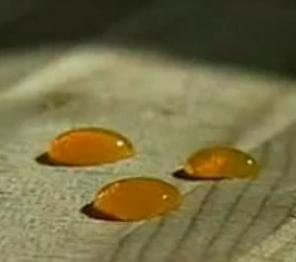
A Germany company is determined to coat your life in a thin layer of Liquid Glass. Also known as SiO2 in ultra thin layering, this transparent film of material is only 100 nm thick (1/500 the width of a human hair) but it can repel water, deter bacteria and fungus growth, protect against wear, and still allow the surface underneath to breathe. Developed by Nanopool, Liquid Glass seems almost too good to be true. Spray it on statues and graffiti won’t stick. Cover your kitchen counter in it, and it can stay clean and sterile for months. Don’t want fungus growing on your plants – you can cover them with Liquid Glass and they’ll be protected, and still able to live. A 30 minute application can last for a full year. The descriptions of what this substance can do are just insane and I wouldn’t believe most of them if we didn’t have visual evidence in their favor. Check out some promo videos from Nanopool after the break. This stuff is going to be everywhere.
According to a news release, the presence of Liquid Glass is already spreading. It helps to protect the surfaces of the Ataturk’s Mausoleum in Ankara, it is in trial use in hospitals in the UK, and its regularly used on trains and luxury furniture. Germany has approved it for open distribution, and the UK is likely to do so in 2010. Nanopool believes that the applications for its product are nearly endless. It could revolutionize household cleaning: one application would help keep every surface sterile for a year and only require light rinsing with warm water. It may change agriculture: coatings on seeds could protect them from infection while they germinate. Liquid Glass is going to change fabrics (no stains, waterproof), buildings and cars (UV, water, and corrosion protection), and electronics (waterproof, scratch resistant). Any one of these applications would be revolutionary and hugely profitable. Taken together…if more countries approve it, a nano layer of glass could encapsulate your entire life.
Unlike other nanotech coatings, Liquid Glass isn’t based on any new or complex nanoparticles. It is simply Si02 molecules extracted from quartz sand (silica). These molecules are then added to water or ethanol (depending on the eventual surface they will coat). While Nanopool won’t discuss anymore of the production process beyond those two facts, they do say that the molecules of glass are held together by quantum bonds, and don’t need extraneous nanoparticles to give them their unique properties. That’s good news for humans and the environment. Silica is inert and harmless (it’s even in some foods) and has no specific ecological impact (its the most abundant mineral on Earth’s surface). There is danger of illness (silicosis) when you inhale large quantities of silica dust, but I’m uncertain if the Liquid Glass would create such dust as it degrades.
I wish there were peer reviewed papers analyzing the efficacy of SiO2 in ultra thin layering, or that there was a bevy of third party scrutiny of Nanopool’s methodology. I would love a comprehensive study on the long term health effects of exposure to Liquid Glass as it degrades. None of these are available. If they were, I would be on the first plane to Germany to somehow become involved with Nanopool. This substance really does appear to be that amazing. A little more proof, and I would go completely crazy promoting this stuff.
As is, I have to be cautiously optimistic. A physiologically harmless, food safe, breathable nanoscale layer that protects almost any surface…how could you not want that to be true? Did you see the ease in which paint could be removed from stone and brick? Think of what that would mean for monuments the world over. The hydrophobic properties are equally impressive. Imagine spilling wine on your white shirt and it simply flowing right off. C’mon, this stuff is mind blowing! And it’s really the most basic form of nanotechnology – an ultra-thin layer of common material. Wait till more advanced nanotech comes to your door in the shape of superconductors, energy generators, and nanobots. Sometimes I’m excited about what technology is coming down the pipeline. With Liquid Glass I’m giddy about the technology that’s already here. I really hope this isn’t some giant hoax or a scientific con job. Even if it is, don’t tell me. I just want to enjoy the possibilities for a while.
[screen capture and video credit: Nanopool]