Newly Found “Secrets To Aging” Are Over Hyped

Share
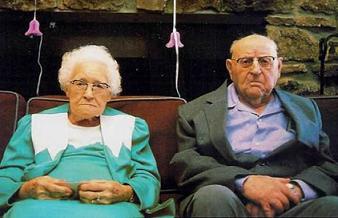
Recent work in Newcastle, UK and at the University of Ulm, Germany has been toted as discovering the "secrets to aging" but is really just another small step in understanding why our bodies wear down. The research was published in the journal Molecular Systems Biology, picked up by the Telegraph and then redistributed by the usual lot of copy and paste news feeds. Using human cells, mouse cells and computer simulations, the British-German team explored the mechanism that produces cell senescence - the state in which a cell stops dividing and eventually dies. They found a certain protein pathway was responsible for cells with damaged DNA becoming senescent. That's a cool bit of science, but it's not the "secret to aging" and its lightyears from a cure for aging. Unfortunately, journalists can't sell "scientists take another steady step in large complex problem that may not be solved for decades", so we're left with an over-hyped, misunderstood development. Which is a shame, because the Newcastle-Ulm group actually made some interesting discoveries.
Just look at some of these hyped up headlines from the past 24 hours:
- Telegraph - British scientists discover 'secret to ageing' bringing new hope to old-age sufferers
- Financial Times - Scientists discover the secret of ageing
- Top News - British Researchers Find Secret To Ageing
- SpiceZee - Coming soon: Elixir of youth
It's not that these outlets get the facts completely wrong. They'll certainly tell you that British (and German) scientists have found a way to prevent cells senescence in certain cases.
What's that mean for you though? At this point...not much. This is where the Telegraph and other news feeds venture into pure hype. Knowing a single factor in how cells stop replicating won't prevent aging. Aging is more complex than that. And this research, while interesting, was not aimed at extending the life of an organism. No mice lived into advanced age, no humans got suddenly younger looking, there's nothing here that would qualify for a MPrize.
Be Part of the Future
Sign up to receive top stories about groundbreaking technologies and visionary thinkers from SingularityHub.

We've seen steady progress in how we understand the mechanisms that cause cells to stop replicating themselves. The most recent Nobel Prize in Medicine was awarded for a suite of research cases that helped define the importance of the tips of chromosomes called telomeres. These "shoe-lace" tips to our DNA help the strands of code replicate. Some believe that the shortening of telomeres over time could be a cause for cell senescence and human aging.
The recent work in Newcastle, however, underplays the importance of telomeres in favor of free radicals. Properly known as reactive oxygen species (ROS), these chemicals are released by mitochondria in cells after DNA is damaged. The British-German team explored how DNA damage response (DDR) and ROS levels created a positive feedback loop. By irradiating cells, they could induce DDR that lead to cell senescence. Scientists found, however, that this path to cell death could be prevented by manipulating proteins important in the DDR-ROS loop.
That's a pretty important discovery. Finding those protein pathways and manipulating them is sort of like finding the phone line you can call to prevent an execution. Yet there are limits to using the DDR-ROS loop to prevent senescence. After irradiating the cells, scientists could wait a few days before blocking protein pathways and still keep these cells from fully shutting down. After 9 days, however, the path to senescence seems pretty inescapable. So, once DNA is damaged, there's only so long you have to act before cells will permanently shut down.
We need to focus on what the research actually provides. Exploring the DDR-ROS loop does give us some new insight into how cell senescence could be stopped in some cases. Yet senescence isn't a horrible thing. It helps prevent cancer by keeping damaged cells from replicating with mutated DNA. So really, the research explored a process that we may wish to one day selectively apply to some of our cells. It's many years from becoming another close to a treatment, but it does highlight where in our cell chemistry a treatment may be be applied. In short, it's a cool development in science, and something really interesting to read about. As long as you don't expect it to turn you grandmother into a tween overnight.
[image credit: Psychology Today]

Related Articles
This Robot Dog Crushed a Marathon Without Stopping to Recharge
Anthropic’s Claude Can Now Autonomously Run Science Experiments With Lab Equipment

Unitree Claims New Humanoid Robot Outruns Usain Bolt
This Robot Dog Crushed a Marathon Without Stopping to Recharge
Anthropic’s Claude Can Now Autonomously Run Science Experiments With Lab Equipment
Unitree Claims New Humanoid Robot Outruns Usain Bolt
What we’re reading