Adam The Robot Scientist Makes Its First Discovery

Share
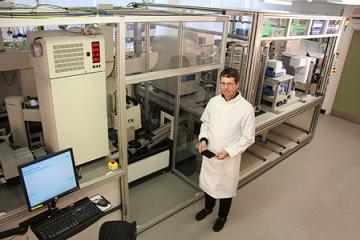
Professor Ross King with robot scientist Adam. Although the cost and large size of the robot makes it impractical to have one in every laboratory, both factors should decrease over time. Remember how the very first computers could fill an entire room?
When it comes to being a scientist, Adam is quite the standout. No, he is not a Nobel Prize Laureate or even a prodigy. He’s more like a prototype - the first robot to design, perform, and interpret a series of scientific experiments leading to a new discovery. As anyone who has taken a high school science class can confirm, taking detailed notes is an integral part of doing science. Unfortunately, this is one area where even the most dedicated scientists can fall short. Unless of course that scientist is a robot that can record the experiments as they are being performed. As if the development of an autonomous robot with a knack for science wasn’t impressive enough, Adam quickly wowed his creators by solving a yeast genetics puzzle that had baffled researchers for decades! And it’s not difficult to imagine the advantages of a robot scientist in the laboratory. Adam and his counterparts will significantly increase the rates at which important advancements are made, inching us closer to the time when robots are more our colleagues than our tools. Check out the video below to see Adam carrying out a typical experiment.
Automation of human tasks is a natural goal of robotics development. We have already seen many areas where automation has become the standard. And even science has seen the advent of nearly autonomous software programs that can deduce principles of physics. As artificial intelligence continues to evolve however, we are beginning to see the introduction of robotics in many “high-skill” fields such as research and medicine. In their report in the journal Science, Professor Ross King and his group at Aberystwyth University describe Adam as the ultimate laboratory companion. Unlike mere humans, Adam doesn’t tire or lose focus while performing repetitive tasks. But don’t mistake Adam as just a high-tech minion.
His developers introduced him to a yeast genetics mystery that had eluded discovery for quite some time. As with all living organisms, yeast have proteins called enzymes that catalyze many of the chemical reactions necessary for life to occur. Each of these enzymes is encoded in the yeast’s genome, but a few of these enzymes were difficult to link to particular genes. For decades, geneticists had toiled to figure out which genes encode a few of these “orphan” enzymes.
Dr. King and colleagues gave Adam a database containing information on the enzymes, the chemicals and reagents to do the experiments, and access to the yeast cultures. After that, a human technician only came around to refill the necessary reagents and remove the waste products generated from the experiments (evidently, Adam is unable to perform those lowly tasks!). So what did Adam find? After multiple rounds of experimentation and analysis, Adam found exactly which yeast genes encode which “orphan” enzymes! The human scientists then went to work to verify his findings by doing the experiments manually. Eureka! Adam had indeed solved the problem!
Be Part of the Future
Sign up to receive top stories about groundbreaking technologies and visionary thinkers from SingularityHub.

While scientists may be breaking out in a sweat at the thought of a robot taking over their job, the importance of automation in science can’t be overstated. Despite the vast amounts of money spent on scientific research today, it can still take years, if not decades, before a discovery makes its way to the general public, whether it’s a new technology or a new treatment for a disease. Part of this delay comes from the limitations in human workers, i.e. fatigue, errors, etc. With robot scientists working around the clock and contributing to scientific knowledge, we can significantly speed up the rate at which important and potentially life-saving discoveries are made. And though some may be hesitant to accept the ever-increasing roles of robots in our world, I, for one, think it will only serve to enhance our lives!
Image credit: aberystwyth university
[Sources: Computational Biology Group, Aberystwyth University, Science Journal]
Related Articles
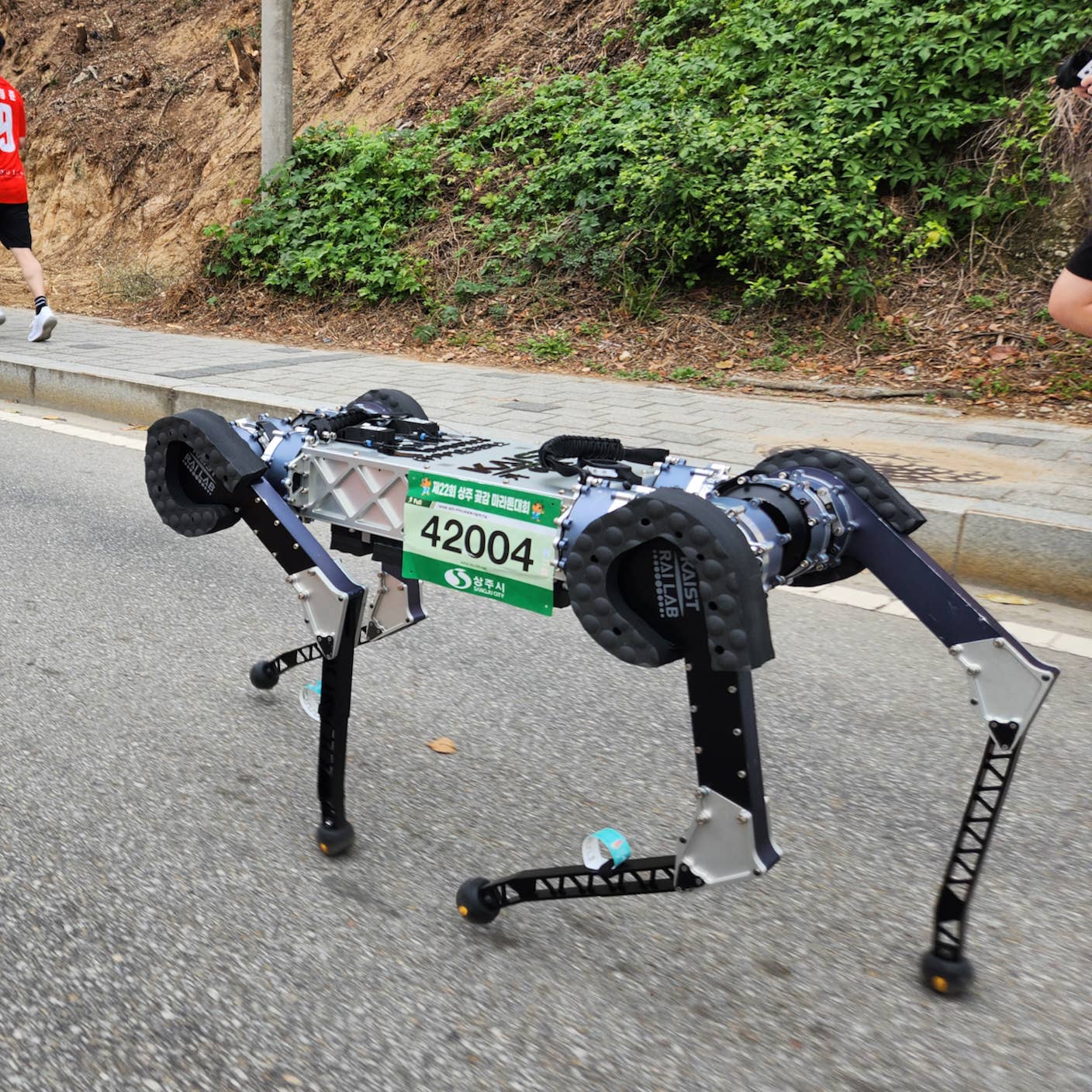
This Robot Dog Crushed a Marathon Without Stopping to Recharge
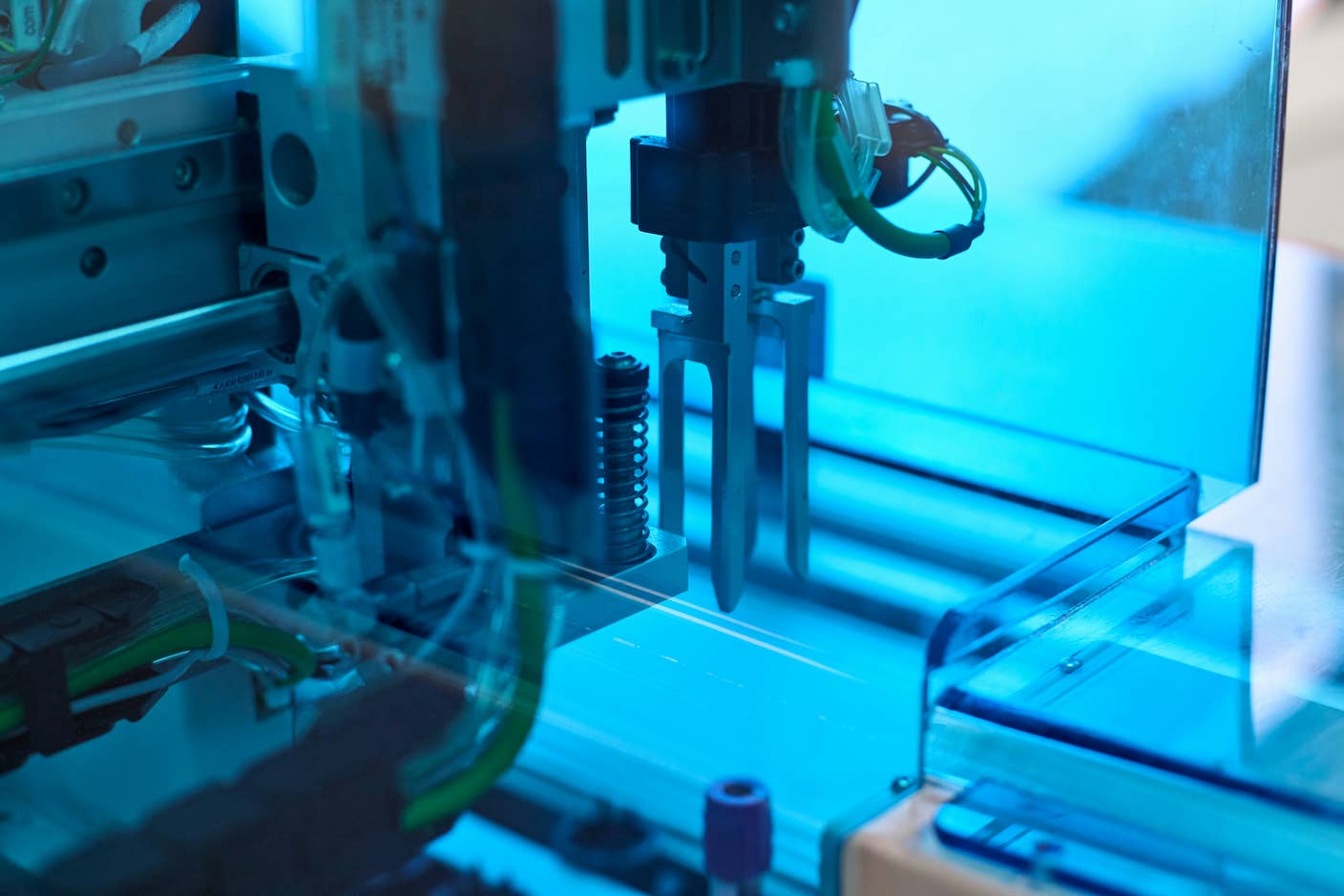
Anthropic’s Claude Can Now Autonomously Run Science Experiments With Lab Equipment
Unitree Claims New Humanoid Robot Outruns Usain Bolt
This Robot Dog Crushed a Marathon Without Stopping to Recharge
Anthropic’s Claude Can Now Autonomously Run Science Experiments With Lab Equipment
Unitree Claims New Humanoid Robot Outruns Usain Bolt
What we’re reading