BioFuel Cell Uses Glucose in the Body to Produce Electricity for Cyborgs

Share
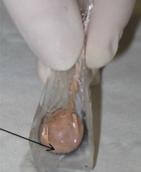
Researchers at Joseph Fourier University in France have created a new biofuel cell that harnesses oxygen and glucose from the body to produce electricity. Glucose biofuel cells (GBFCs) were placed inside the bodies of rats, and displayed peak energy densities of 24.4 microwatts per milliliter - better than many pacemaker batteries. Glucose and oxygen flow into the fuel cell, and waste products flow out, but the enzymes and metals inside don't contiminate the body. The work was detailed in a paper published in PLoS. The JFU team hopes that a new generation of GBFCs will be able to power all kinds of implants in humans. This is another small step towards creating cyborgs.
Humans are already fitted with cybernetic implants on a regular basis. While pacemakers are the most obvious example, there are implants to help with heart monitoring, epilepsy, blindness, diabetes, and other conditions. These devices often run on batteries, or are charged through induction or external wires to a power supply. A glucose based biofuel cell would provide a clear advantage - it is dependent only on chemicals already present in the body (sugar and oxygen). GBFC powered implants could laster longer between replacements, and thus reduce the number of necessary surgeries. Big benefits are to be had in patient safety and lower costs.
Several GBFC configurations were tested for this research. Maximum power was seen from enzymes embedded in graphite discs (shown in the image above). This setup produced peak power density of 24.4 microwatts/mL, with peak power of 6.5 microwatts, and sustained power around 2 microwatts (for eleven days). A typical pacemaker requires power near 10 microwatts, but pacemaker batteries don't have as much power density as this GBFC. In other words, while this particular biofuel cell was not powerful enough to run a pacemaker implant, a larger one could have done so easily, and would likely have still been smaller than a typical pacemaker battery.
According to PLoS, previous attempts at making GBFCs had yielded higher peak powers. These systems, however, usually require low pH (acidic conditions), and were tested in vitro with high glucose levels (~30mM), not in a live animal. The JFU GBFC worked in the rat body's extracellular fluid which has a pH near 7 and glucose levels near 5mM.
Be Part of the Future
Sign up to receive top stories about groundbreaking technologies and visionary thinkers from SingularityHub.

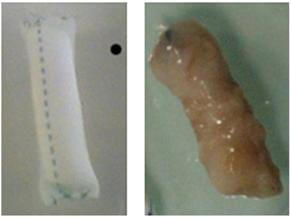
What makes the research published in PLoS so promising is that it actually tested several necessary conditions for getting a working GBFC in a living organism. First there were the power trials noted above. Next JFU determined how long a GBFC might function in a human body. Enzymes on barium beads were wrapped in dialysis tubing and a teflon sleeve and left inside a rat for three months. During that time gluconate levels in the rat's urine indicated that the GBFC was producing power. This GBFC was then removed and showed how the rat's body had enveloped and accepted the device. A final GBFC was successfully shown to run on both glucose and urea - which opens up new possibilities for placement and power.
Of course, the JFU research is still in a very early phase. Rodents and humans have different body chemistries, sizes, and tolerances. As mentioned in PLoS, the team hopes to move on to pig tests soon, which would allow larger GBFCs to be tried. They want to create more than 133 microwatts of peak energy, enough for larger bladder implants often used to treat incontinence in humans, and which typically require manual pumping or other awkward methods of powering.
It's hard to know how far these biofuel cell technologies may be from actual human trials - many years probably. Still they demonstrate the possibility that our bodies could power electromechanical devices without batteries. There's a good chance that we will want to include more such devices in our systems soon, and it would be nice to have them fueled the same way we are: through blood sugar. If so, the appeal of implants will increase, and our cyborg population may blossom. This research may be preliminary, but GBFCs look like a good step towards merging man and machine.
[image credits: Département de Chimie Moléculaire/JFU]
[source: PLoS, Département de Chimie Moléculaire/JFU]

Related Articles

Blind Patients Recover Partial Vision in Gene Therapy Trial

New AI Tool Could Help Scientists Make ‘Rare’ Cross-Disciplinary Leaps

The Evolving Quest to Build Life in a Lab
Blind Patients Recover Partial Vision in Gene Therapy Trial
New AI Tool Could Help Scientists Make ‘Rare’ Cross-Disciplinary Leaps
The Evolving Quest to Build Life in a Lab
What we’re reading