New Super Microphone Can Hear You in a Crowded Stadium

Share

I have an uncanny knack for making a fool of myself when I'm in a crowd, and it always seems like everyone goes silent right when I'm saying the most embarrassing thing. Now all of you can enjoy the same feeling, thanks to AudioScope. Developed by two physicists from the University of Norway, the new super microphone can pick out single voices in a mob of people. Watch the video below to see how the technology listens in to basketball players in a full stadium. AudioScope is being actively marketed towards bringing a new intimacy to athletic events everywhere, and it may not be too long before it singles you out of the masses as well.
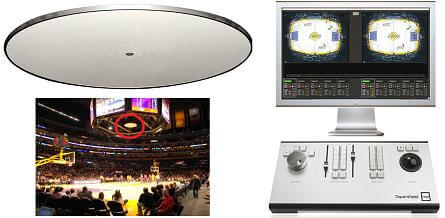
What makes a microphone super? Multiplication. AudioScope is actually hundreds of smaller microphones collected together in the same carbon fiber disk. Measuring about a meter across, the AudioScope array contains 300 individual mics and a camera with wide angle lens. Visual cues from the camera help the system estimate distances, which allows it to precisely time when sounds should arrive at each microphone. "Sophisticated signal processing algorithms" then combine the hundreds of feeds into one audio stream. With pinpoint targeting, AudioScope can listen to specific areas in its field of view, amplifying quiet sounds to audible levels. In the example shown below, the voices of players, referees, and coaches in a LA Lakers game can be heard clearly despite the noise of the stadium. It's pretty amazing.
https://c.brightcove.com/services/viewer/federated_f9
The original source video for the clips shown in the New Scientist segment above can be found here.
Be Part of the Future
Sign up to receive top stories about groundbreaking technologies and visionary thinkers from SingularityHub.

Developers Morgan Kjolerbakken and Vibeke Jahr have formed a new company, Squarehead Technology, to market the AudioScope across a variety of applications. The system could be used to improve video conferencing or public meetings, but the first place we'll see it is probably in televised sports. Soccer and basketball teams (like the LA Lakers shown above) have tested the device with great success. AudioScope offers a clear advantage over traditional directional microphones: a single operator can quickly change the target area via a central control system. One AudioScope, or a few acting in concert, could cover an entire arena, allowing a television broadcaster to zoom in on a player, coach, or fan in rapid succession. In the future, sports audiences at home will be able to hear all the gritty details normally reserved for those with seats on the edge of the field.
As cool as that scenario may be for fans, I'm not sure players would really appreciate it. We could all share that sentiment soon. With AudioScope, businesses and governments have been handed a perfect device for spying on people in crowds. Listening to a conversation in a packed auditorium, or bus station, or airport would be simple. Operators at a central location could quickly move the focus of the device through crowds and monitor them for safety. Or for whatever. We've already seen how audio filtering technology will be able to take massive numbers of audio recordings and extract valuable information about how we feel about ideas, products, or people. When combined with AudioScope, such sentiment analysis technology could become much more powerful.
We've already become accustomed to the 'eye in the sky' cameras that monitor public places for security. Now, AudioScope is likely to provide similar capabilities for audio. If we are comfortable knowing that anyone could be watching us when we're at the store, airport, or sports stadium, it shouldn't be that disconcerting to know they may be listening as well. We'll have to adjust to a future where the crowd can't hide our personal conversations. Whether actively scrutinized by security guards or passively processed by corporations looking to understand their market, the things we say out loud are about to become fair game. Privacy simply isn't what it used to be.
[image credits: Squarehead Technology]
[video credit: New Scientist]
[sources: Squarehead Technology]

Related Articles

This Portable Wind Turbine Is the Size of a Water Bottle and Charges Devices in Under an Hour
Mojo Vision’s New Contact Lens Brings Seamless Augmented Reality a Step Closer

The Weird, the Wacky, the Just Plain Cool: Best of CES 2020
This Portable Wind Turbine Is the Size of a Water Bottle and Charges Devices in Under an Hour
Mojo Vision’s New Contact Lens Brings Seamless Augmented Reality a Step Closer
The Weird, the Wacky, the Just Plain Cool: Best of CES 2020
What we’re reading