Volvo’s New Pedestrian Detector Brakes Car For You (video)
Share
"By 2020, nobody shall be seriously injured or killed in a new Volvo" -- Volvo's Vision2020 Statement
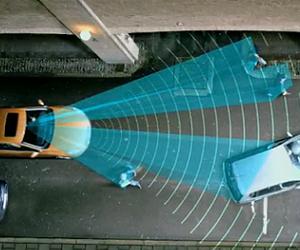
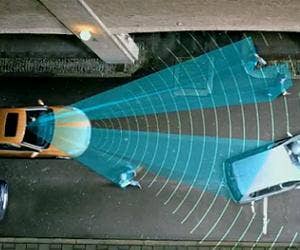
In the next decade Volvo wants to end car fatalities. The first step to that goal is giving human drivers a computer supervisor. The Swedish car company's latest safety feature is the Collision Warning with Full Auto Brake and Pedestrian Detection - a system that will automatically stop your car if you're about to hit someone. Using an onboard radar, Volvo's S60 2011 model can determine the distance and speed of objects as it approaches them. A camera mounted in front of the rear view mirror then determines what those objects are and whether or not they are moving towards a collision with the car. Volvo's Pedestrian Detection system will give you a warning buzz if you're about to hit a human or another vehicle, but if you don't react fast enough you don't have to worry - it will slam on the brakes for you. Check out commercials for the system, along with some real world tests, in the videos below. I think it's entirely possible that Volvo could prevent the majority of automotive deaths associated with their cars by 2020. The question is whether or not they'll ultimately have to remove humans from behind the wheel in order to do so.
Here's the official promotional video for Volvo's Collision Warning with Full Auto Brake and Pedestrian Detection. It gives you a good overview on how the system works. (Those who want to watch the emotional story without the dubbed narration can find it here.)
Announced in early 2010, the Pedestrian Detection system has subsequently received good reviews from automotive journals and magazines. Boston.com and Popular Mechanics were among the many that put the device to the test with real world collisions using a dummy. As you can see in the following videos, Volvo's anti-collision sensors work fairly well. At speeds up to 35 kilometers per hour (~22mph) it can completely avoid a collision. At higher velocities it will reduce the impact significantly.
In the last trial in the following video, the vehicle actually collides with the dummy despite traveling under 35 kph. According to Boston.com this may have been due to crowds gathered on either side of the test track.
https://c.brightcove.com/services/viewer/federated_f9
The Pedestrian Detection system is just part of a suite of advanced safety features that use computers to augment human drivers. The Volvo S60 retails for around $40,000 in the US when equipped with a technology package that includes:
Driver Alert Control (DAC): An alarm that warns if the car begins to weave randomly or uncontrollably - signs of a tired or distracted driver.
Blind Spot Information System (BLIS): Warning lights on the outside mirrors alert drivers to unseen vehicles.
Be Part of the Future
Sign up to receive top stories about groundbreaking technologies and visionary thinkers from SingularityHub.

Dual Xenon with Active Bending Lights (ABL): The headlamps move to follow the curve of the road.
Lane Departure Warning (LDW): System that monitors the lane dividers and warns the driver if the car moves across them without first using the turn indicator.
Many of these features, including the Pedestrian Detection, are upgraded from components found on Volvo's City Safety system that was released a few years ago and continues to be updated:
Of course, all of these driver enhancing technologies are just a step towards fully automated vehicles. We've already seen Volvo take bigger moves in that direction with their work in SARTRE - a project that allows drivers to join 'convoys' on the highway, slaving the control of their car to a lead driver. Pedestrian Detection, DAC, BLIS, ABL, LDW and all the other safety features on the S60 are just the calming pats on the head that are trying to prepare us for the day when computers completely take over driving.
Why the need for all these baby steps? As I mentioned back when Google unveiled their robot car project, humans simply aren't ready to cede control of their vehicles to computers. There are too many social and legal hurdles (not to mention psychological ones) that bar autonomous automobiles from taking their rightful place on the highway. Robot car technology will probably be ready long before humanity is ready to accept it.
So we'll keep getting these tiny moves towards autonomous vehicles in the years ahead. Letting computers take more control one dangerous potential scenario at a time. By 2020 we may have stumbled all the way into fully robotic cars. I doubt it will happen that fast, but it's possible. Even if we do go full robot, however, driving fatalities will always be with us. Volvo's Vision for 2020 is laudable, but no driver, human or computer, is 100% safe.
The irony may be that acknowledging this fact is the only way to make us become brave enough to accept computers behind the wheel.
[screen capture credit: Volvo]
[video credit: Volvo, Boston.com, Popular Mechanics billknightauto]
[source: Volvo press release, Boston.com, Popular Mechanics]

Related Articles

The ‘WarGames’ Problem: Computer Science Has Long Understood What It Takes to Keep AI Under Control
This Robot Dog Crushed a Marathon Without Stopping to Recharge

How Would AI Actually Kill All Humans? Here Are the Top 5 Scenarios
The ‘WarGames’ Problem: Computer Science Has Long Understood What It Takes to Keep AI Under Control
This Robot Dog Crushed a Marathon Without Stopping to Recharge
How Would AI Actually Kill All Humans? Here Are the Top 5 Scenarios
What we’re reading