Vivid Ads Give You False Memories That You Swear Are Real

Share

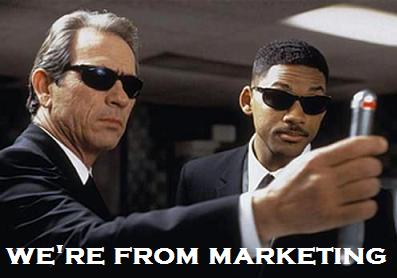
Remember that time you were drinking Coke with Ronald McDonald and Tony the Tiger while the Energizer Bunny danced in your living room? Yeah, that never happened....but that doesn't mean you can't remember it happening. A new study published in the Journal of Consumer Research reveals that not only do vivid ads give us false memories related to what we're shown in marketing images, but we are remarkably confident that those memories are true. Long after you watch a commercial picturing a happy family enjoying Nestle cookies around a fire, or laughing on a beach, you may begin to remember those events not as ads, but as real memories of your life. This 'false experience effect' may have profound effects not only on our purchasing habits, but on the very way we perceive ourselves and reality. You thought our memories were our own? Silly reader, advertising tricks are screwing with your kids.
Priyali Rajagopal of Southern Methodist University's Cox School of Business and Nicole Montgomery of William & Mary worked to discover how real and false experiences can seem equally true. 100 volunteers were shown one of two ads for a fake product (Orville Redenbacher's Gourmet Fresh Popcorn): either a text based description, or an image rich one. These cohorts were then either given a survey or a chance to taste the popcorn (actually a real Orville Redenbacher product disguised as the fake one). A week later, they were asked about their experiences. Those subjects that were given the text based ads recalled events closely to as they occurred. Incredibly, those volunteers who were shown the image rich ad but only given the survey were just as likely to recall tasting the popcorn as the ones who had actually tried it, and they were also equally confident in their recollection. Rajagopal and Montgomery termed this the 'false experience effect'. Vivid images gave the volunteers memories of tasting a product that didn't exist.
The false experience effect seems dependent on brand recognition and elapsed time. Volunteers shown ads for the less popular Pop Joy brand popcorn showed fewer cases of false memories and lower confidence. When volunteers were interviewed less than a week after being shown the ad, they also had an easier time recalling what really happened. That's good news for all of you free-will proponents out there - the research seems to show that you'll have a decent chance of accurately recalling recent events.
Be Part of the Future
Sign up to receive top stories about groundbreaking technologies and visionary thinkers from SingularityHub.

Of course, the reverse implications are staggeringly scary. Things that happened to you long ago, specifically things that happened surrounding concepts and images that bear heavy symbolic weight - those memories may be the most susceptible to being clouded by false recollections. Did you really cry when astronauts walked on the moon? Or are you remembering a news reel as your own experience? Events we cling to as a nation, that we remember as unfolding in a certain way, may be more shaped by the media we watched around those events than what actually happened to us. Think about that for a second. History is written by the winners...and our memory may be written by TV.
This is simply one study, and a relatively small one at that, so we should take the results with a grain of salt. Still, even if the false experience effect is much weaker than this research proposes, it may still have a very strong impact on our lives. Rajagopal and Montgomery's work offers some insight into how advertisements shape our perceptions of our lives, but it also alludes to the potential power of virtual reality. As we are exposed to increasingly real simulations, as we up our consumption of media and commercials, we may be effectively recasting ourselves as the heroes of false experiences. Even when we are wrong about what really happened, we'll be confident that we are right. Perhaps 24 hour surveillance, lifelogging, and other recording concepts will counter balance the false experience effect as they are adopted on a larger scale. Yet one thing seems clear: as our research into the human brain continues we find that our minds are far less secure than we hoped.
Source: rajagopal and montgomery journal of consumer research 2011, smu news
Related Articles

Epigenetic Editing Could Wipe Out Chronic Hepatitis B Infections
Google DeepMind Gives AI-Designed Proteins a Watermark

This Week’s Awesome Tech Stories From Around the Web (Through October 3)
Epigenetic Editing Could Wipe Out Chronic Hepatitis B Infections
Google DeepMind Gives AI-Designed Proteins a Watermark
This Week’s Awesome Tech Stories From Around the Web (Through October 3)
What we’re reading