Quantcast

A Mosquito Zapping Laser That Fights Malaria? Yes!

by Aaron Saenz May 19th, 2010 | Comments (15)

Share
Share by email
Import Addresses
Send To A Friend Close


Save time! Click Here to select directly from your AOL, Gmail, Hotmail, or Yahoo! Address Book
 
malaria-laser

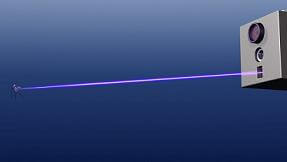
A laser to stop malaria? I get to zap mosquitos and save the world? Sign me up.

Intellectual Ventures Lab is shooting mosquitos out of the sky with lasers. The invention-focused company received funding from the Bill and Melinda Gates Foundation to find solutions for many of the world’s leading health problems, including malaria. Using cheap components from various commercial technologies (laser printers, digital cameras, etc) IVL has devised a fence-like system which would monitor for mosquitos and zap them as they try to fly by. By controlling the mosquito population the company hopes to stop the spread of malaria which kills more than a million people each year. For those who just want to see the laser in action, check out the brief video from National Geographic after the break. A more in depth discussion, and a live demo (12:32), can be seen in Nathan Myhrvold‘s recent TED talk below.

IVL’s foray into mosquito hunting is awesome looking. Growing up I received enough ‘squito bites that watching their burning deaths has become very cathartic. But there are more important factors at work here than just marveling at what lasers can destroy. Humanity is faced with several grand challenges, and among these are poverty, hunger, environment, health, and energy. These problems are responsible for millions of death each year, and have ramifications for everyone on the planet. That’s why groups like Singularity University, Bill and Melinda Gates Foundation, and others want to use advancing technology to mitigate or maybe even solve some of these issues. IVL’s plan to combat malaria is one such application of technology, and Myhrvold discusses a few more in his talk. Hopefully, this is just the beginning of a much larger trend wherein the best and brightest minds are given the funding and the materials needed to find sustainable solutions for Earth’s troubles. Of course, solving these probelms will require everyone to do their part. I have my pointing laser ready, just tell me where to shoot.

[image credit: Intellectual Ventures]
[video credits: National Geographic, TED Talks]
[source: Intellectual Ventures]


Related Stories


Connect With Us

.

Post a Comment

Sort By:

Comments


  • I begin this comment with a word of consideration to those wishing to share their resolution with the world’s popular debates. The advocacy of trust is a preliminary fundament of all constitution, demarcating the world. The social concept, is a constitutionalized affair. Therefore, each one of us, as a social concept, brings into submission the world constitution by regulatory affairs. We are each responsable for giving our government a vehicle to sodomize affairs. If we each contribute to social science, as a predestination, then we should consider also, a predestination to be the summit of official affair. We are the social science, as a pre-clinical application to social affairs. If we give prognosis to truth, as the representative of the world’s science, then we too relay a conscription of ambiguous denial – to give purpose to the equation: If we consider ourself as the equation, we cannot give purpose to the denial as a consecration of truth. We consider ourselves to be reactive and not proactive, as a consensus to truth. So the cardinal rule points to surface solution, typified by our governments, but reflected by us as the social construct – a habitual behaviour. To demonstrate the social construct as habitual behaviour, we simply have to look within the rationality that observes as one human being, the cost effective process of living or dying under curative zone of just one vaccine. To familiarise the notion as the pitfall of society, we need only survey the responses across the global net, that propose a financial irresponsability on behalf of those funding the research project, with cause to prevent the high infant mortality rate of a (supposedly) already dying society, Finding a cure for Malaria and Dengue, would be the first step towards replacing a value for life existence within a criteria for social solution. As a humanity, we can only truly evolve as moving through the sum of our parts, which is in equality.


  • I used to spend a lot of time near woods and water, so the video made me smile.

    Took a minute to search for the “cons” of wiping out mosquitoes.

    Here’s one article.

    http://www.helium.com/items/2045637-what-good-are-msoquitoes-how-mosquitoes-live-what-mosquitoes-eat-eliminating-mosquitoes

  • User Picture

    OK, so you keep all those people alive so they can starve and die in poverty, or worse yet, send them to the wonderful United States where they will die anyway because they have pre-existing conditions. Or, they will not be able to afford heath care. Let’s not pretend we live in a country that really cares about anything other than money. Big Pharma, IF YOU HAVE THE MONEY, will treat what you have on a very costly “Monthly Maintenance Program”, but they have no interest in curing you. There just is no monetary incentive to “cure” anything. So, we are between a rock and the republican party. For every person we save, we kill someone else.

    This whole deal sounds good, like everything else, but when all the people dying from malaria decide to live, then overcrowding or starvation will kill them anyway. I’m not a pessimist, I’m just thinking ahead. My hope is that world hunger and disease will not exist. But the good book says different. At least until man realizes he cannot rule on his own. But then, who really gives a crap about what any book says-right? Right, and that is the american way. It’s called trust in mankind, and belief in the system. I think we all know who really rules the system, and it surely is not the Head Honcho Upstairs! Lasers are really cool.

  • User Picture

    As someone who’s had the misfortune to contract malaria several times this invention seems like a dream come true. Kudos to its inventors.

    That said, how practical will it be in the poorest countries where most preventable deaths from malaria occur?

    In Zambia and Malawi for example (of which I can speak personally) most villages and homesteads at risk from malaria do not even have power to run these devices (assuming they’re not battery operated) let alone money to purchase, install and service them.

    Good for the inventors to get $$ out of the Gates Foundation for this, but that same money spent on pesticide-impregnated mosquito nets, anti-malarial prophylactics and education about stagnant water would save a lot more lives.

  • User Picture

    As someone who’s had the misfortune to contract malaria several times this invention seems like a dream come true. Kudos to its inventors.

    That said, how practical will it be in the poorest countries where most preventable deaths from malaria occur?

    In Zambia and Malawi for example (of which I can speak personally) most villages and homesteads at risk from malaria do not even have power to run these devices (assuming they’re not battery operated) let alone money to purchase, install and service them.

    Good for the inventors to get $$ out of the Gates Foundation for this, but that same money spent on pesticide-impregnated mosquito nets, anti-malarial prophylactics and education about stagnant water would save a lot more lives.

  • User Picture

    I would like one for my cabin. The surroundings are full of mosquitos. Even though they don’t carry malaria they are really annoying. I wouldn’t mind paying a 100 $ (or more?) if this solved the problem.

  • User Picture

    I would like one for my cabin. The surroundings are full of mosquitos. Even though they don’t carry malaria they are really annoying. I wouldn’t mind paying a 100 $ (or more?) if this solved the problem.

  • User Picture

    @Ben951
    If I’m not mistaken, IVL and B&M Gates Foundation mean to find ways in which these systems can be cheaply produced so that they can provide them in high-risk areas, or so that governments can build them for high-risk areas. In either case, preventative methods like mosquito control will have to work with, not replace, treatment methods like the ones you described.

  • User Picture

    Co-Arinate, Arsucam = 6 euros for a complete treatment almost 100 % efficiency.
    Still million of African mainly child die from malaria.
    You need to understand what being poor in Africa means.

  • User Picture

    Co-Arinate, Arsucam = 6 euros for a complete treatment almost 100 % efficiency.
    Still million of African mainly child die from malaria.
    You need to understand what being poor in Africa means.

  • User Picture

    Nice idea but how people in Africa will afford those ?
    Artémésia is a natural plant that can treat malaria, it might cost less that 3$ for a complete cure, but it’s still too expensive for the vast majority or African people.
    Will that device cost less than 3$ ?
    How will it be powered ?
    Solar and battery would be the only way to reach people that need it the most.
    I’m going to Senegal next week it might be useful for me and other people that can afford it but don’t pretend it will cure malaria in Africa when most people don’t even have access to cheap natural efficient treatment.

  • User Picture

    Nice idea but how people in Africa will afford those ?
    Artémésia is a natural plant that can treat malaria, it might cost less that 3$ for a complete cure, but it’s still too expensive for the vast majority or African people.
    Will that device cost less than 3$ ?
    How will it be powered ?
    Solar and battery would be the only way to reach people that need it the most.
    I’m going to Senegal next week it might be useful for me and other people that can afford it but don’t pretend it will cure malaria in Africa when most people don’t even have access to cheap natural efficient treatment.

  • User Picture

    From what I remember of this invention, it tracks mosquitoes by a characteristic frequency of their wingbeats. I would expect there would be strong selective pressure towards altering that frequency. I wonder if it will migrate towards some other range, one possibly occupied by some other (possible more useful) insect and create possibilities for “friendly fire”.

    • User Picture

      Hmmm…possibly. But technological evolution is much faster than biological evolution. Detection techniques will likely out pace the selection for masked wing beats.

  • User Picture

    From what I remember of this invention, it tracks mosquitoes by a characteristic frequency of their wingbeats. I would expect there would be strong selective pressure towards altering that frequency. I wonder if it will migrate towards some other range, one possibly occupied by some other (possible more useful) insect and create possibilities for “friendly fire”.

Get Our Newsletter

Popular On The Hub

Singularity

Martin Ford Asks: Will Automation Lead to Economic Collapse?

Written by: Aaron Saenz 716 days ago

lights-in-the-tunnel

Will the future be filled with cool technologies and endless opportunities or will our own creations lead to eventual doom? [...]

Robots

5 Axis Robot Carves Metal Like Butter (Video)

Written by: Aaron Saenz 605 days ago

metal-helmet-machine

Industrial robots are getting precise enough that they’re less like dumb machines and more like automated sculptors producing artwork. Case [...]

Genetics

Designer Babies – Like It Or Not, Here They Come

Written by: Keith Kleiner 1009 days ago

designer-babies

Long before Watson and Crick famously uncovered the structure of DNA in 1953, people envisioned with both horror and hope [...]

Stem Cells, Gadgets, Robots, Longevity, Health, Artificial Intelligence, Genetics, Body Implants, Cyborgs, Science, Technology, Singularity, The Future!