Sharing Photos Online? Companies Are Tracking What You Wear and How You Feel
Ditto, a Boston-based social analytics company, is using emerging computer vision technologies to give corporations insight into what users are saying about them in photos shared online.

Share
The same utopian principle of the Internet — it allows people to communicate freely around the globe — makes it an appealing target not just for government surveillance but also for corporate surveillance in the form of brand insights mining. In all of that free and open communication, corporations want to know what’s being said about their brands.
And a picture is worth a thousand words. Images continue to pose a greater challenge to the artificial intelligence systems than text, but with more than half a billion images shared online every day, corporations really want to know what users are conveying about their brands.
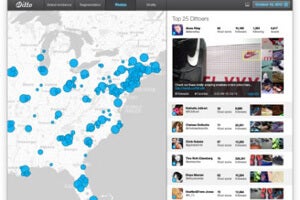
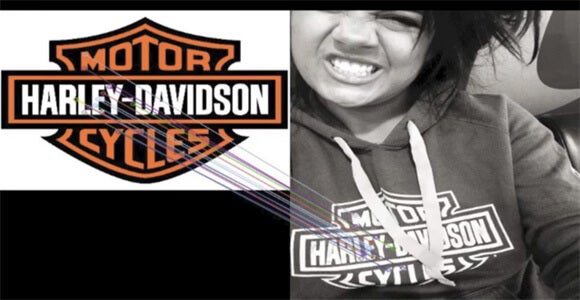
Ditto Labs, a Boston-based social analytics company, is using emerging computer vision technologies to give them answers. It uses computer vision to identify logos in the photos shared on Facebook, Twitter, Instagram and Tumbler. The system also recognizes some telltale patterns, such as a Burberry plaid.
If a product is anything more than an unwitting backdrop for the photo, the service then uses emotion recognition algorithms to report what the people in the photograph are most likely feeling.
Emotion recognition is an emerging area of artificial intelligence. Some of the basic techniques emerged from research designed to teach children with autism to recognize others’ feelings. Several companies now offer the service as an SDK for other companies to build into their apps and services.
Be Part of the Future
Sign up to receive top stories about groundbreaking technologies and visionary thinkers from SingularityHub.

Using metadata and basic facial recognition, Ditto Labs can also tell companies when and where people use their products, what race and roughly how old they are, what they’re doing in photos before and after using the products are all available for corporate marketers.
Although readers who use social media may well feel violated by this kind of reporting, the terms of service of most sites make photos public. Those who post photos to Twitter and Pinterest must share publicly. Instagram defaults to public settings for photos, but users can limit them to approved followers. Facebook is the most private in this regard; users must opt into the Ditto app.
With strong demand for this kind of information, it seems likely the photos we share will be subject to more AI applications like this one in the months ahead. It wouldn't be surprising to see Facebook launch its own platform, given recent investment in AI and the controversial changes it made to Instagram's privacy policy allowing brands to display users' photos.
Images: Ditto Labs

Cameron received degrees in Comparative Literature from Princeton and Cornell universities. He has worked at Mother Jones, SFGate and IDG News Service and been published in California Lawyer and SF Weekly. He lives, predictably, in SF.
Related Articles

Autonomous AI Agents Have an Ethics Problem

Sparks of Genius to Flashes of Idiocy: How to Solve AI’s ‘Jagged Intelligence’ Problem

Researchers Break Open AI’s Black Box—and Use What They Find Inside to Control It
Autonomous AI Agents Have an Ethics Problem
Sparks of Genius to Flashes of Idiocy: How to Solve AI’s ‘Jagged Intelligence’ Problem
Researchers Break Open AI’s Black Box—and Use What They Find Inside to Control It
What we’re reading