Honda Surprises Space Industry by Launching and Landing a New Reusable Rocket
Honda's been quietly working on a side hustle.
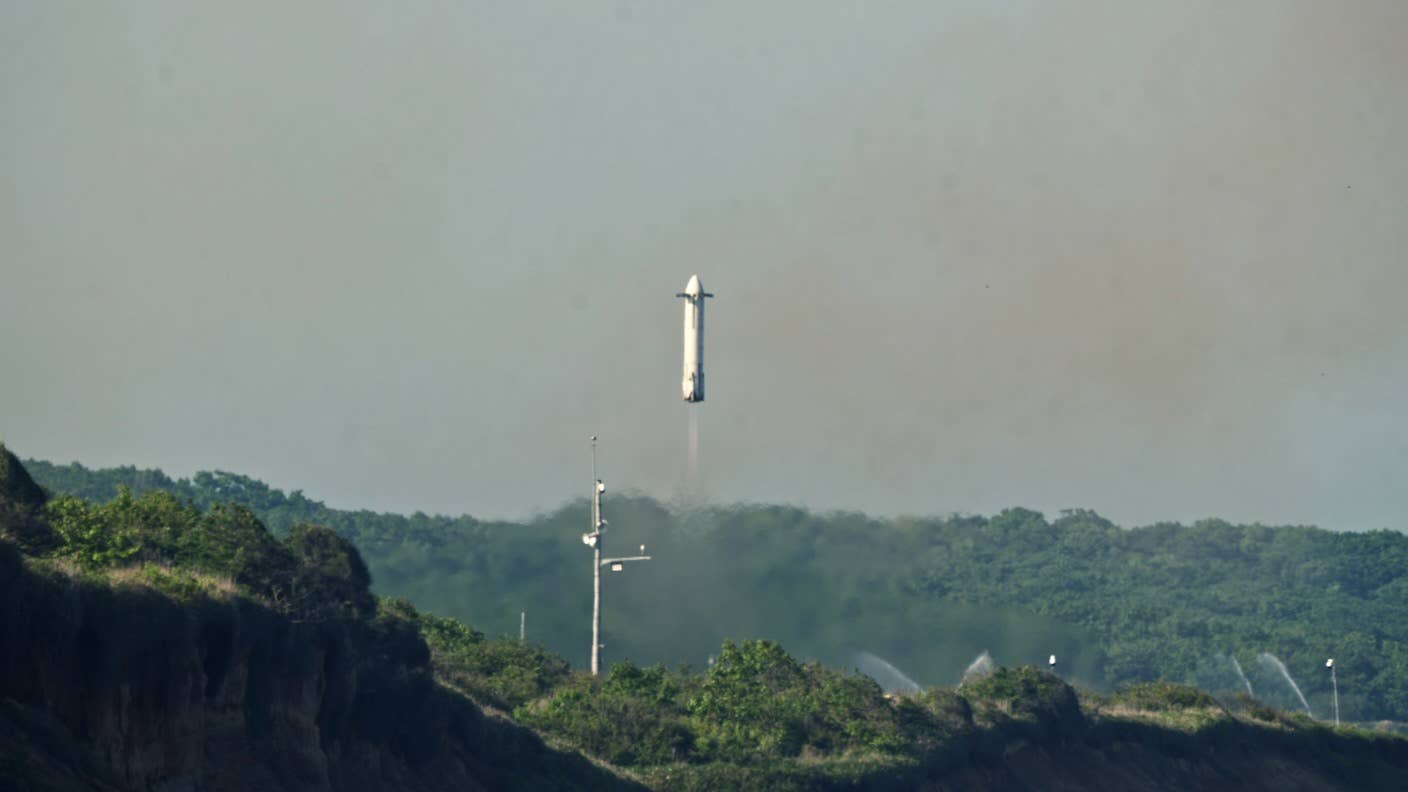
Image Credit
Honda
Share
The private space race has been dominated by SpaceX for years. But Japanese carmaker Honda may be about to throw its hat in the ring after demonstrating a reusable rocket.
Space rockets might seem like a strange side hustle for a company better known for building motorcycles, fuel-efficient cars, and humanoid robots. But the company’s launch vehicle program has been ticking away quietly in the background for a number of years.
In 2021, officials announced that they had been working on a small-satellite rocket for two years and had already developed an engine. But the company has been relatively tight-lipped about the project since then.
Now, it’s taken the aerospace community by surprise after successfully launching a prototype reusable rocket to an altitude of nearly 900 feet and then landing it again just 15 inches from its designated target.
“We are pleased that Honda has made another step forward in our research on reusable rockets with this successful completion of a launch and landing test,” Honda’s global CEO Toshihiro Mibe said in a statement. “We believe that rocket research is a meaningful endeavor that leverages Honda’s technological strengths. Honda will continue to take on new challenges.”
The test vehicle is modest compared to commercial launch vehicles, standing just 21-feet tall and weighing only 1.4 tons fully fueled. It features four retractable legs and aerodynamic fins near the nose of the rocket, similar to those on SpaceX’s Falcon 9, which are presumably responsible for steering and stabilizing the rocket on its descent.
Honda said the development of the rocket was built on core technologies the company has developed in combustion, control systems, and self-driving vehicles. While it didn’t reveal details about the engine, Stephen Clark of Ars Technica writes that the video suggests the rocket burns liquid cryogenic fuels—potentially methane and liquid oxygen.
Honda says the goal of the test flight, which took place on Tuesday in Taiki, Hokkaido and lasted just under a minute, was to demonstrate the key technologies required for a reusable rocket, including flight stabilization during ascent and descent and the ability to land smoothly.
Be Part of the Future
Sign up to receive top stories about groundbreaking technologies and visionary thinkers from SingularityHub.

In a video of the launch shared by Honda, the rocket lifts off, retracts its four legs, and then rises smoothly to 890 feet. It then hovers briefly and extends its fins before returning to the launch platform, deploying its legs just before touchdown.
With this successful test flight, Honda joins an elite club of companies that have managed to land a reusable rocket, including SpaceX, Blue Origin, and handful of Chinese startups. It’s also beaten Japan’s space agency (JAXA) to the milestone. The agency is developing a reusable rocket called Callisto alongside the French and German space agencies, but it has yet to conduct a test flight.
The company is currently targeting a suborbital launch—where the spacecraft reaches space but doesn’t enter into Earth orbit—by 2029. But Honda says it has yet to decide if it will commercialize the technology.
Nonetheless, the company noted the technology could have synergies with its existing business by making it possible to launch satellite constellations that could help support the “connected car” features of its vehicles. And it is already developing other space technologies including renewable-energy systems and robots designed to work in space.
Whatever their decision, this launch shows the barriers to space are falling rapidly as a growing number of companies develop capabilities necessary to push into Earth orbit and beyond.

Related Articles

Star Catcher Is About to Beam Power Between Two Satellites for the First Time
Europe’s First Private Rocket Reaches Orbit
Heat Is an Orbital Data Center’s Greatest Foe. These Tiles Dump It at the Source.
Star Catcher Is About to Beam Power Between Two Satellites for the First Time
Europe’s First Private Rocket Reaches Orbit
Heat Is an Orbital Data Center’s Greatest Foe. These Tiles Dump It at the Source.
What we’re reading