How to Build Better Digital Twins of the Human Brain
Brain twins where regions are allowed to compete for resources behave more like the real thing.
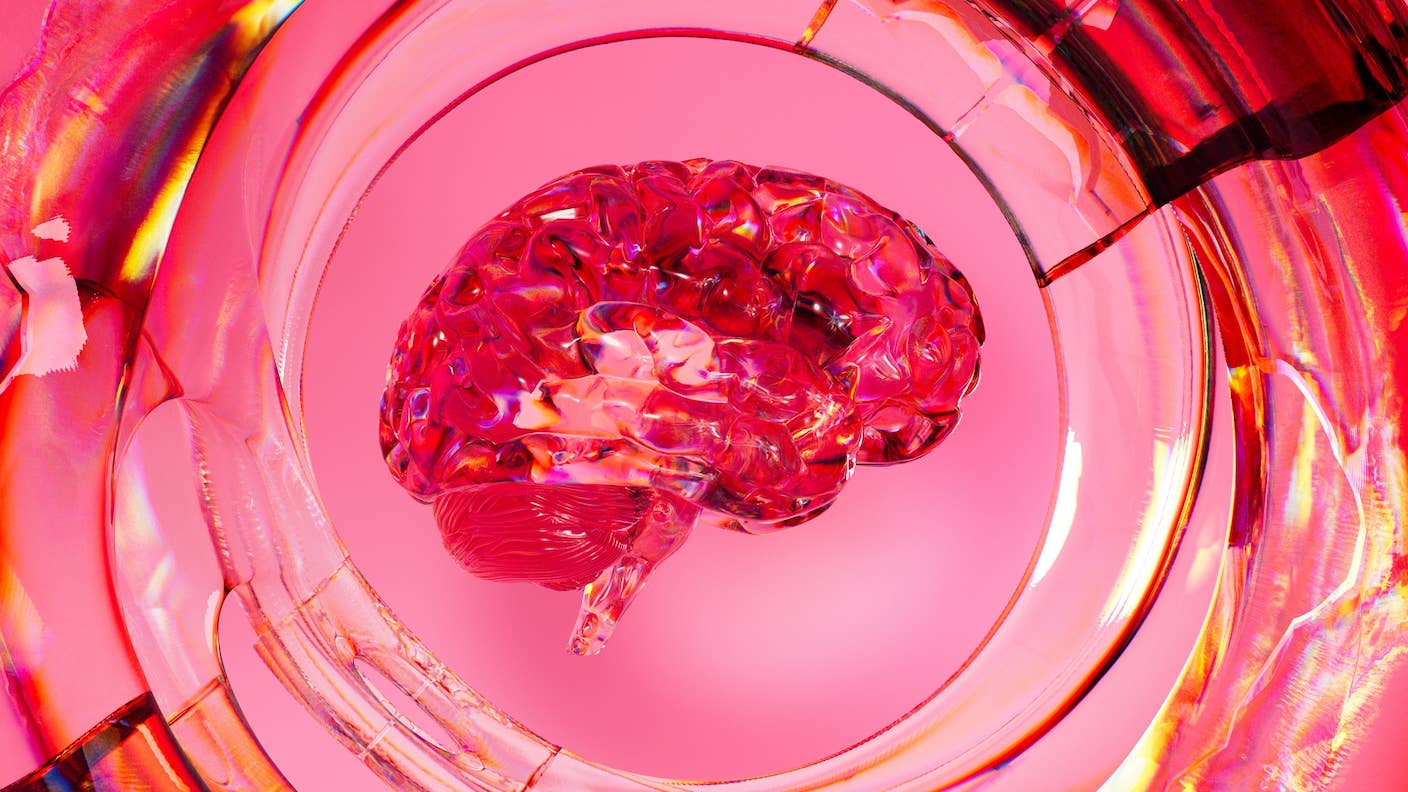
Image Credit
Marek Pavlík on Unsplash
Share
The potential to create personalized digital twins of your brain and body is a hot topic in neuroscience and medicine today. These computer models are designed to simulate how parts of your brain interact and how the brain may respond to stimulation, disease, or medication.
The extraordinary complexity of the brain's billions of neurons makes this a very difficult task, of course, even in the era of AI and big data. Until now, whole-brain models have struggled to capture what makes each brain unique.
People’s brains are all wired slightly differently, so everyone has a unique network of neural connections that represents a kind of “brain fingerprint.”
However, most so-called brain twins are currently more like distant cousins. Their performance is barely any closer to the real thing than if the model were using the wiring diagram of a random stranger.
This matters because digital twins are increasingly proposed as tools for testing treatments by computer simulation, before applying them to real people. If these models fail to capture fundamental principles of each patient’s unique brain organization, their predictions won’t be personalized—and in worst cases could be misleading.
In our latest study, published in Nature Neuroscience, we show that realistic digital brain twins require something that many existing models overlook: competition between the brain’s different systems.
Our findings suggest that without competition, digital twins risk being overly generic, missing out on what makes you “you.”
Excess of Cooperation
The human brain is never static. The ebb and flow of its activity can be mapped non-invasively using neuroimaging methods such as functional MRI. A computer model can be built from this, specific to that person and simulating how the regions of their brain interact. This is the idea of the digital twin.
The brain is often described as a highly cooperative system. Yet everyday experiences such as focusing attention or switching between tasks tells us intuitively that brain systems compete for limited resources. Our brains cannot do everything at once, and not all regions can be active together all the time.
Despite this, the vast majority of brain simulations over the past 20 years have not taken these competitive interactions between regions into account. Rather, they have “forced” neighboring regions to cooperate. This can push the simulated brain into overly synchronized states that are rarely seen in real brains.
In a large comparative study of humans, macaque monkeys, and mice, our international team of researchers used non-invasive brain activity recordings to show that the most realistic whole-brain models not only require cooperative interactions within specialized brain circuits, but long-range competitive interactions between different circuits.
To achieve this, we compared two types of brain model: one in which all interactions between brain regions were cooperative, and another in which regions could either excite or suppress each other’s activity. In humans, monkeys, and mice, the models that included competitive interactions consistently outperformed cooperative-only models.
Using a large-scale analysis of over 14,000 neuroimaging studies, we found that spontaneous activity in the competitive models more faithfully reflected known cognitive circuits, such as those involved in attention or memory. This suggests competition is crucial for enabling the brain to flexibly activate appropriate combinations of regions—a hallmark of intelligent behavior.
Visual summary of our study:
Be Part of the Future
Sign up to receive top stories about groundbreaking technologies and visionary thinkers from SingularityHub.


When whole-brain models of humans, macaques, and mice are allowed to treat interactions between some brain regions as competitive, they consistently do so—generating activity patterns that closely resemble those associated with real cognitive processes. Luppi et al/Nature Neuroscience, CC BY
We concluded that competitive interactions act as a stabilizing force, allowing different brain systems to take turns in shaping the direction of the brain’s ebbs and flows without interference or distraction. This ability to avoid runaway activity may also contribute to the remarkable energy-efficiency of the mammalian brain, which is many orders of magnitude more efficient than modern AI systems.
Crucially, models with competitive interactions were not only more accurate but also more individual-specific. This means they were better at capturing the unique brain fingerprint that distinguishes one person’s brain from another’s.
No Longer Lost in Translation?
The fact that our findings hold across humans and other mammals suggests they reflect fundamental principles of how intelligent systems work. In each case, we found models with competitive interactions generated brain activity patterns that closely resembled those associated with real cognitive processes.
This could have major implications for translational neuroscience. Animal models are routinely used to test treatments before human trials, yet differences between species often limit how well these results translate. Around 90 percent of treatments for neuropsychiatric disorders are “lost in translation,” failing in human clinical trials after showing promise in animal trials.
Combining brain imaging data from human patients with whole-brain modeling could radically change this. A framework that works across species would provide a powerful bridge between basic research and clinical application.
If someone needs intervention in the brain, for example due to epilepsy or a tumor, their digital twin could be used to explore how the patient’s brain activity would change when stimulated with different levels of drugs or electrical impulses. This might significantly improve on existing trial-and-error approaches with real patients, and thus provide better treatments.
The general principles of brain organization across species also offer a path for understanding how to shape the next generation of artificial intelligence. In the not-too-distant future, we may be able to construct digital twins that are more faithful in reproducing the salient features of the human brain—and potentially, AI models that are more faithful to the human mind.
This article is republished from The Conversation under a Creative Commons license. Read the original article.

Andrea Luppi is a Wellcome Early Career Fellow at the University of Oxford and Research Fellow of St. John's College at the University of Cambridge. He works at the intersection of computational neuroscience, network science, and complex systems to understand principles of consciousness and cognition in biological and artificial systems. Coming from a background in philosophy and cognitive science, followed by a PhD in neuroscience and postdoctoral training in neuro-engineering, he is interested in the relation between brain structure and function. Specifically, his work aims to characterize how the capacity for computation, cognition, and consciousness arises from the complex interactions between the brain's network architecture and its dynamical regime. To this end, he combines tools from information theory, network science, and whole-brain computational modeling to study the dynamics and connectivity of the brain across multiple scales and imaging modalities (functional and diffusion MRI, brain stimulation, pharmacology) in humans and other species.

Gustavo Deco is research professor at the Institució Catalana de Recerca i Estudis Avançats (ICREA) and professor (Catedrático) at the Pompeu Fabra University (UPF) where he leads the Computational Neuroscience group. He was also director of the Center of Brain and Cognition from 2001 to 2021 at UPF. In 1987, he received his PhD in physics for his thesis on relativistic atomic collisions. In 1987, he was a postdoc at the University of Bordeaux in France. From 1988 to 1990, he obtained a postdoc of the Alexander von Humboldt Foundation at the University of Giessen in Germany. From 1990 to 2003, he led the Computational Neuroscience Group at Siemens Corporate Research Center in Munich, Germany. He obtained in 1997 his Habilitation (maximal academical degree in Germany) in computer science at the Technical University of Munich for his thesis on neural learning. In 2001, he received his PhD in psychology at the Ludwig-Maximilians-University of Munich. In 2012, he received an ERC Advanced Grant and recently in 2022 he received an ERC Synergy Grant.

Professor Morten L. Kringelbach is the founding director of the interdisciplinary Centre for Eudaimonia and Human Flourishing at Linacre College, University of Oxford, UK. He is also a principal investigator at Center for Music in the Brain, University of Aarhus, Denmark. His prizewinning research has helped elucidate the brain systems driven by hedonic and eudaimonic stimuli such as, for example, infants, food, psychedelics, and music. He has published 15 books and over 450 scientific papers, chapters, and other articles.
Related Articles

Anthropic’s Mythos AI Uncovered Serious Security Holes in Every Major OS and Browser
MIT Mined Bacteria for the Next CRISPR—and Found Hundreds of Potential New Tools
US Issues Grand Challenge: The First Fault-Tolerant Quantum Computer by 2028
Anthropic’s Mythos AI Uncovered Serious Security Holes in Every Major OS and Browser
MIT Mined Bacteria for the Next CRISPR—and Found Hundreds of Potential New Tools
US Issues Grand Challenge: The First Fault-Tolerant Quantum Computer by 2028
What we’re reading