CATL’s New EV Battery Charges in Six Minutes
That's a few minutes longer than it takes to fill up the average gas-powered car—but still fast enough it might not matter.
Share
For all their promise, electric cars have always had a big drawback: Charging takes much longer than filling up a gas tank.
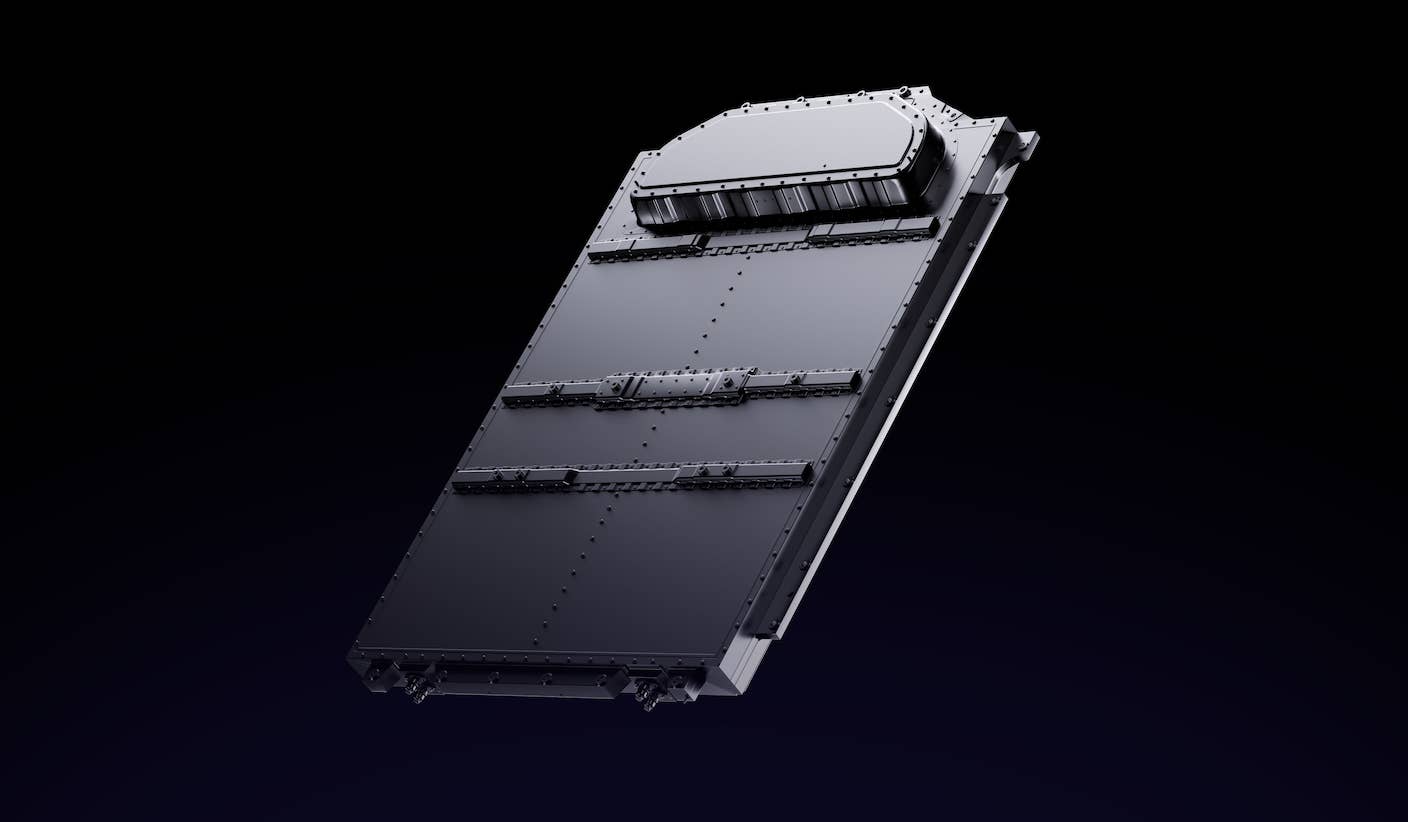
But the gap has been closing, and this week, Chinese battery giant CATL announced battery technology nearing parity. On Tuesday, the company said its third-generation Shenxing fast-charging battery goes from 10 percent to 98 percent charged in 6 minutes and 27 seconds.
If you're driving an electric car around town, charging is a breeze. You probably don't have to do it more than a couple times a month. And when you do, you can plug your car in overnight at home.
For longer trips, you'll need a charging station. Smartphone apps can help, and drivers learn to plan ahead, but it's still a pain. Stations aren't abundant, and when you find one, there may be a line. A full charge will then take the better part of an hour. Most people aim for 80 percent, but even that consumes up to a half hour. EV fans may find it's worth the trouble, but range is a sticking point for many drivers.

It's no wonder that battery makers have been hyper-focused on energy density, which determines how far EVs can go, and charging speed. They've improved both in recent years. But increasing range, which involves balancing a complex mix of battery chemistries, weight, and economics, may prove a tougher tradeoff to manage than bringing charging times in line with gas-powered cars at the pump.
In other words, if you can travel the same distance and charge or gas up in roughly the same amount of time, the two become interchangeable on long trips. (This also depends, of course, on infrastructure—more on that below.)
CATL has been pushing the boundaries of charging speeds with its Shenxing line of fast-charging batteries, first announced in 2023. The company is the world's largest EV battery manufacturer. Its products power EVs in China but also American brands including Tesla and Ford.
The numbers are hard to compare generation to generation and company to company, as the specs reported vary. The second-generation Shenxing battery, announced last year, charged from 5 percent to 80 percent in 15 minutes, according to the Financial Times. Then in March of this year, rival battery maker BYD said its Blade 2.0 model charged 10 percent to 97 percent in 9 minutes.
Notching nearly a full charge in under 10 minutes was already an impressive mark.
But on Tuesday, CATL one-upped BYD with its third-generation Shenxing, which takes a full charge in a little over six minutes. At a maximum legal rate of 10 gallons per minute at gas stations in the US, that's still a few minutes longer than it takes to fill up most gas-powered cars. But it might also be fast enough not to matter. Big gas-powered trucks are already in the same range. And CATL said charging to 80 percent takes just 3 minutes and 44 seconds—which is nearly a wash.
Be Part of the Future
Sign up to receive top stories about groundbreaking technologies and visionary thinkers from SingularityHub.

“This effectively closes the gap with ICE [internal combustion engine] vehicles,” Bernstein analysts wrote in a note quoted by the Wall Street Journal.
Fast-charging batteries have shorter lifespans due to excess heat. But CATL said it's tamed the heat by decreasing the amount produced in operation, more effectively bleeding it off, and controlling how and when it's generated. The battery retains over 90 percent capacity after 1,000 charging cycles.
"The boundaries of electrochemistry are still far from being reached, and the possibilities of materials science are still far from being exhausted," CATL founder and CEO, Robin Zeng, told reporters and investors, per the Financial Times.
With 6-minute charging times, it's easy to imagine charging station lines evaporating. Instead of drivers grabbing a meal while their car takes up real estate, they'd breeze in and out, like at a gas station.
That vision will take time to materialize, however. There are still far fewer charging stations than there are gas pumps. And those that do exist won't include chargers that handle the bleeding edge anytime soon.
As for the batteries themselves, splashy press releases don't usually translate to near-term availability and might not match real-world performance. The third-generation Shenxing isn't likely to hit roads right away. When it does, it could show up in Chinese models first, be pricey (like BYD's latest offering), and require fancy new chargers.
Still, it's no longer theoretical: EVs can compete with the convenience of traditional cars at the gas station.

Related Articles
Scrapping a New Gas Car for an Electric One Could Cut Emissions, Study Finds
Solar Beat Coal in US Electricity Mix for the First Time in May
How to Tame AI’s Voracious Appetite for Energy
Scrapping a New Gas Car for an Electric One Could Cut Emissions, Study Finds
Solar Beat Coal in US Electricity Mix for the First Time in May
How to Tame AI’s Voracious Appetite for Energy
What we’re reading