Scientists Inch Closer to Creating Human Sperm in the Lab
Researchers could use lab-grown sperm to develop infertility treatments or, more controversially, make babies.
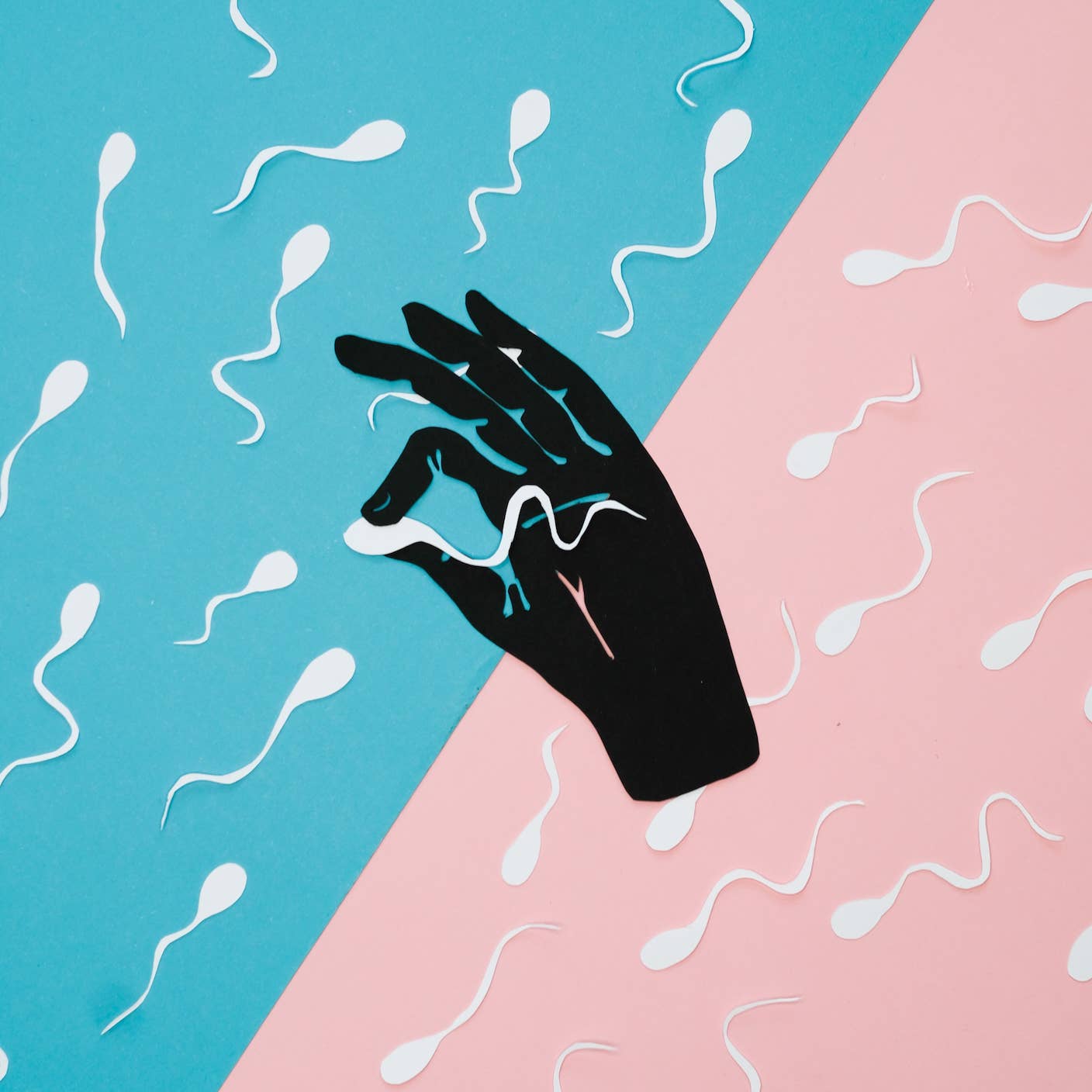
Image Credit
Nadezhda Moryak on Pexels
Share
Scientists just transformed a living mouse’s kidney into an incubator for developing human sperm made from blood cells.
It sounds like sci-fi Mad Libs. But a team at the University of Pennsylvania, led by Kotaro Sasaki, pulled it off. For up to nine months, a tiny pouch of human cells nestled beneath a mouse's kidney gradually developed into immature sperm. The study is the latest in a decade-long quest to grow sperm in the lab.
If successful, lab-grown sperm could open a new window into the earliest stages of sperm development, a process that's notoriously difficult to study because it begins before birth. The research could also shed light on male infertility—which, in many cases, has no clear cause—and inspire treatments.
More controversially, lab-grown sperm could one day be used to make babies, offering hope to people struggling to conceive and same-sex couples who want to have children genetically related to both parents. That goal is still far off. Though gene activity was similar to their natural counterparts, none of the lab-grown cells were able to develop into functional sperm.
Those results starkly contrast similar attempts in mice. Researchers have already produced functional sperm and egg cells from rodent skin cells, and in two pioneering cases, used them to create healthy pups with two dads. But translating this capability to humans has been difficult, largely because reproductive development differs tons between species.
Still, the new system can help scientists probe the earliest stages of human sperm development. And because any future clinical applications would first need extensive testing in non-human primates, the team also generated immature sperm cells from monkeys, whose reproductive biology more closely mirrors our own.
Recapitulating sperm development in the lab has uses beyond fertility treatment too, such as testing whether drugs interfere with reproduction. The platform “establishes a robust framework for modeling primate germ cell [reproductive cell] development,” the team wrote.
Winning Recipe
For decades, scientist have been able to rewind adult cells into induced pluripotent stem cells (iPSCs). These cells can go on to become nearly any other cell type. But steering them to become sperm has proven far trickier, largely because human sperm takes years to fully develop.
The journey begins before birth. Early stem cells give rise to spermatogonia, the founder cells that replenish sperm throughout life. These cells are largely dormant until puberty, when some begin meiosis, a special type of cell division that halves their chromosomes. That way, when sperm meets egg, the embryo gains a full genetic set.
But the cells don’t live in a vacuum. Proteins and other molecules instruct immature sperm when to grow, divide, or pause. Physical forces, such as the winding architecture of the testes and the flow of fluid, also play a role. Recreating this intricate environment in a dish has been one of the biggest challenges to the study of sperm development and our ability to grow them in the lab.
Roughly a decade ago, Sasaki and colleagues found a way to transform human iPSCs into early stem cells that could eventually give rise to sperm and egg. On paper, their gene expression profile closely matched that of natural counterparts. But in practice, the cells couldn’t mature further without the right environmental cues.
In an usual workaround, the team next mixed the immature cells with supportive, non-reproductive cells isolated from mice testes. While it was an usual environment, the mice cells provided nutrients and molecular signaling that nudged development forward.
Called xrTestis, the mixture spontaneously organized into tube-like structures resembling those inside testes. “Overall, our culture method accurately recapitulates in vivo human male GC [germ cell] development and allows us to understand the genetic pathways governing this process,” they wrote at the time.
Yet none of the immature sperm advanced beyond developmental stages normally seen in fetuses. And the miniature structure collapsed after 80 days, likely because it lacked a blood supply.
Unexpected Host
To prolong the mixture’s viability and push sperm development further, the team transplanted it into the kidneys of immunodeficient mice.
Be Part of the Future
Sign up to receive top stories about groundbreaking technologies and visionary thinkers from SingularityHub.

The graft organized itself into the hallmark tubular structures found in testes within a month and remained stable for at least half a year. The mice showed no signs of discomfort or immune rejection.
Six months later, some human cells developed into spermatogonia—the self-renewing stem cells that eventually generate sperm. Along the way, they underwent a major event: an epigenetic reset. During this process, chemical tags on DNA that influence whether genes are turned on or off are almost completely wiped clean. If that reset is incomplete, it could compromise any sperm eventually used for reproduction.
Here, the team found a “dramatic” genome-wide epigenetic reset. The cells’ gene activity mirrored their natural counterparts. Even though the graft survived for at least nine months, however, none of the cells were able to develop into mature sperm.
This is likely due to the environment. Human and mice testes don’t share the exact same signaling molecules or respond the same way to hormones and other developmental cues. Replacing the mouse support cells with human versions could help the spermatogonia develop further.
The Ultimate Test
The team also tested the technique in monkeys, with results similar to those found in human cells. “While our human iPSC system provided valuable insight into male gametogenesis [the formation of reproductive cells], future studies of fertility competency must be carried out in non-human primates,” they wrote.
Although the cells also halted at the immature stage, the results are still valuable. Previous studies have shown monkey spermatogonia can generate mature sperm after transplantation into recipient testes, opening the door to eventually testing if lab-grown cells can sire healthy offspring.
That idea is precisely what makes some bioethicists uneasy.
Mass-producing sperm and eggs in the lab could generate far more embryos for selection, making it easier for prospective parents to choose desirable traits such as eye color or height. Pairing the technology with gene editing makes “designer babies” less hypothetical. And if skin scrapings or a single hair can be turned into reproductive cells, someone could theoretically create sperm or eggs from another person without consent.
These scenarios are purely speculation, but regulators are already preparing for that future. In 2025, the United Kingdom’s Human Fertilization and Embryology Authority urged the government to explicitly tackle lab-grown reproductive cells in legislation. The International Society for Stem Cell Research has similarly called for careful oversight and public engagement before clinical use. Most countries, however, are only beginning to grapple with how these technologies should be dealt with.
Meanwhile, companies are pressing forward. Paterna Biosciences in Utah recently announced they had produced functional sperm from immature sperm collected during testicular biopsies. According to the company, early embryos created with the lab-grown sperm seemed comparable to those produced through standard in vitro fertilization (IVF). And California startup Conception recently reported generating early human egg cells from iPSCs. Neither company has released results in a preprint or journal article, making the claims hard to evaluate.
Like germline gene editing, conversations weighing the pros and cons of lab-grown reproductive cells will help decide not only what’s possible, but also what should be permitted. For now, the team stresses that their work is only a research tool—not a fertility treatment—and clinical use is a long way off.

Related Articles
Epigenetic Editing Could Wipe Out Chronic Hepatitis B Infections
Google DeepMind Gives AI-Designed Proteins a Watermark

How Would AI Actually Kill All Humans? Here Are the Top 5 Scenarios
Epigenetic Editing Could Wipe Out Chronic Hepatitis B Infections
Google DeepMind Gives AI-Designed Proteins a Watermark
How Would AI Actually Kill All Humans? Here Are the Top 5 Scenarios
What we’re reading