A Digital Cell Predicts Which Drugs Will Be Most Effective in Deadly Breast Cancer
The AI-powered virtual cell tailors treatments for breast cancer based on samples of each patient's tumor.
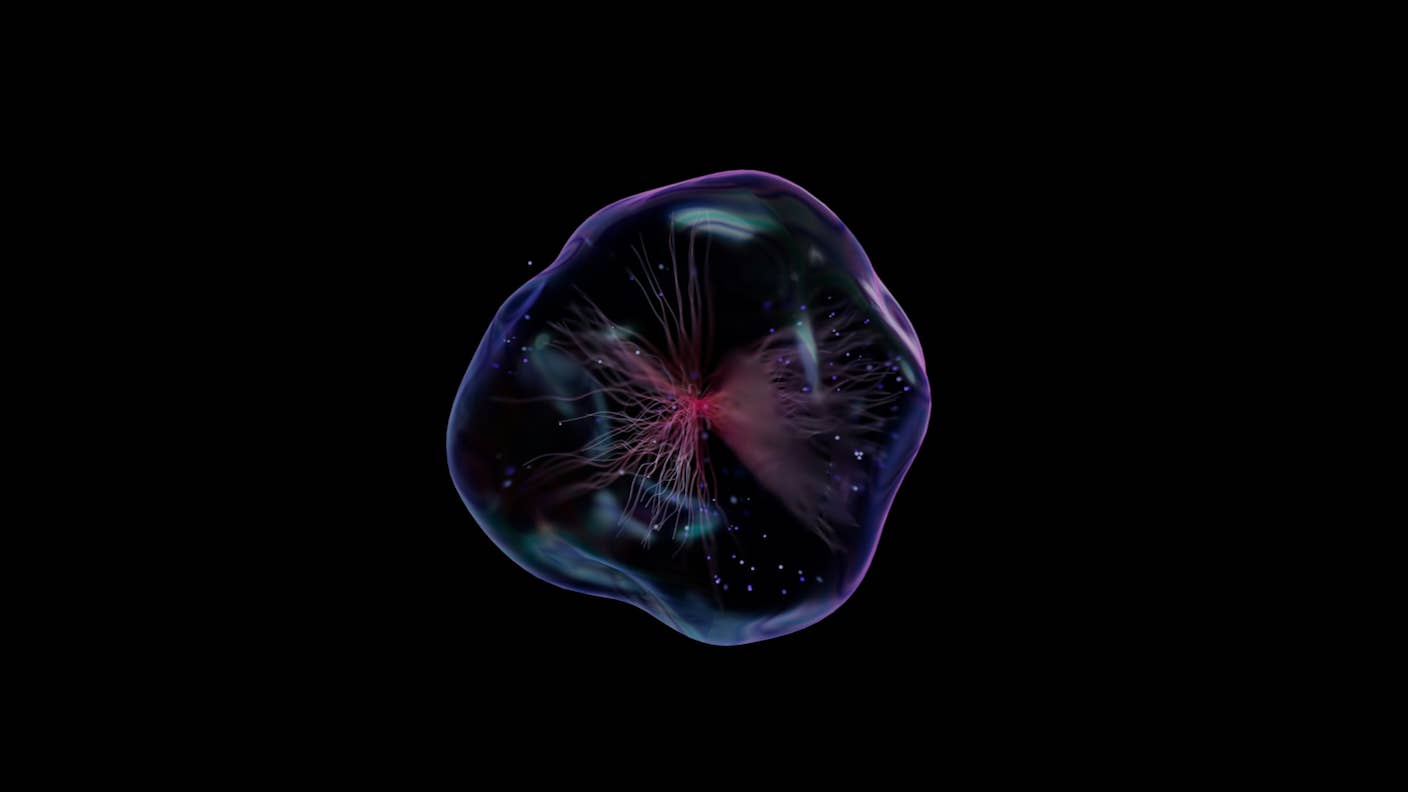
Image Credit
and machines on Unsplash
Share
Tailoring cancer treatments is a science and an art.
The same type of tumor can behave very differently from one person to the next, and a drug that works for one patient may fail in another. The uncertainty stacks up when multiple drugs enter the mix. Trial and error is often unavoidable. Meanwhile, cancers keep growing and compounding side effects can plague already beleaguered bodies.
Researchers have long sought to speed up the process of tailoring treatments to patients, and AI might lend a hand. This month, a Chinese team developed an AI-based virtual cell for triple-negative breast cancer—a challenging form of the disease that often evades standard treatments—to predict how individuals will respond to different drugs.
Rather than reconstructing every detail of a cell’s inner workings, the virtual cell focused on just proteins. Trained on a massive, curated dataset tracking protein changes before and after drug treatments, the model outperformed existing drug-tailoring approaches and discovered new combinations that could work even better.
The underlying AI, called ProteinTalks, was also readily adapted to predicting drug responses in other cancers, hinting at a broader reach beyond breast cancer.
That’s not to say the virtual cell is ready for prime time. Researchers tested its predictions in patient-derived cells in lab dishes, and the model can only evaluate two-drug combinations. Whether its recommendations translate into meaningful benefits must be tested in patients.
But the results offer a proof of concept: Virtual cells, even imperfect mimics of their biological counterparts, could one day help physicians find more effective treatments from the get-go.
“This is the first time that a virtual cell model goes out of the laboratory and is tested in a clinical scenario,” study author Tiannan Guo at Westlake University in Hangzhou, China told Nature.
Digital Twins
Every cell is a buzzing city. Proteins zip around a crowded interior, briefly grabbing onto one another to direct cell functions. Fatty molecules maintain the protective outer membrane, while mRNA carries genetic instructions to protein-making factories. All these workers relay feedback to the cell’s control center—the DNA-harboring nucleus—where these signals help switch genes on or off and keep the cell humming.
Recreating this complexity in digital form might sound like a fever dream. But AI is turning it into a scientific race. Unlike finicky biological cells, their virtual counterparts could slash the time and labor needed to run experiments, allowing researchers to test myriad ideas at breakneck speed.
Academia and industry are already chasing this goal.
In an interview, Google DeepMind co-founder Demis Hassabis said the team is developing an AI-powered virtual nucleus, which offers a relatively self-contained starting point from which to build a whole virtual cell. The Chan Zuckerberg Initiative is partnering with Nvidia to develop tools and AI models that would help run and evaluate virtual cells. Meanwhile, the Science for Life Laboratory received funding for its ambitious AlphaCell program, which aims to create AI models that predict how cells work and adapt in health and disease.
Earlier efforts to build virtual cells relied on transcriptomics—that is, a snapshot of gene activity—across single cells. But these measurements don’t necessarily reflect what a protein is doing at any given time and can miss changes.
The new study takes a different route, cutting out the middleman. Instead of inferring protein activity from which genes are active at any given moment, the team trained their AI model directly on the proteins themselves and used the model to power a new type of virtual cell.
The Protein Whisperer
A long-standing roadblock for protein-based AI models is the lack of comprehensive datasets.
Be Part of the Future
Sign up to receive top stories about groundbreaking technologies and visionary thinkers from SingularityHub.

To tackle the problem, the team treated 18 immortalized breast cancer cell types—16 of them triple-negative—with 63 FDA-approved anticancer drugs and 59 common drug combinations. They then measured thousands of proteins at four timepoints: before treatment and at 6, 24, and 48 hours afterwards. Altogether, the experiments generated more than 38 million protein measurements, along with cell-survival data, now available in an open-source database.
It’s “one of the largest…resources reported to date,” wrote the team.
ProteinTalks, the AI virtual cell trained on this dataset, could deal with several aspects of cancer treatment.
First, it found over 800 proteins whose levels changed after each drug treatment and zeroed in on a rapidly shifting subset. These could “act as sentinels” of an early drug response, the authors wrote. Most behaved as expected. Some drugs disrupted the cell’s structural scaffolding; others interfered with DNA repair or growth, ultimately causing cells to wither.
Over time, tumors can evade treatments, resulting in their return or spread. The model flagged several protein suspects likely involved in this process. These might serve as signals of resistance or drug targets for tackling it.
The AI could also generalize. When challenged with 81 drugs it hadn’t seen during training, ProteinTalks predicted protein changes with 88 percent accuracy, outperforming several previous models.
The team then trained it on more than 900 drug mixes to see whether it could help identify promising pairs. The virtual cell gave higher scores to combinations that had already been validated experimentally and used in the clinic. This “sanity check” suggests the AI isn’t simply hallucinating results but could generate valuable insights.
Finally, the team asked whether the model could help prioritize treatments for individual patients. They screened 3,000 approved, clinical-stage molecules using proteomics data from three people with the disease. The model identified regimes that matched treatments that had kept the disease at bay—and suggested three additional molecules that could be even more effective. The predictions worked out. When tested in cancer cell samples from patients, the drugs inhibited growth at lower doses than standard therapies.
Although trained on breast cancer, ProteinTalks could also pivot to other tumor types when fed cancer-specific proteomics data. In lab-grown melanoma, colorectal, lung, and pancreatic cancer cells, it found more than 5,100 protein changes, including subsets unique to each cancer type ready for further analysis.
As with other virtual cells, ProteinTalks is still a prototype. Given the hope, and hype, surrounding these models, the team emphasizes that its predictions will need to be tested in animal models and, eventually, clinical trials. Its suggestions could point the way toward better treatments for stubborn cancers, or they could turn out to be AI flights of fancy—drug combinations that look promising on paper but make little biological sense.
There’s another limitation. ProteinTalks doesn’t account for protein interactions, either with one another or with DNA and other biomolecules. Drugs could disrupt these temporary biological “handshakes,” potentially triggering effects that ripple through the cell.
Combining ProteinTalks with AI based on gene activity could add another layer of information and spruce up its predictions. The virtual cell is still a long way from a true digital twin, but piece by piece, the dream is getting closer.

Related Articles
Three-Year-Old Boy’s Metastatic Cancer Disappears After Two Shots of Experimental Cell Therapy

Virtual Biotech Company Puts 37,000 AI Agents to Work on Drug Discovery
The Next Frontier Is Not Artificial Intelligence—It’s Artificial Societies
Three-Year-Old Boy’s Metastatic Cancer Disappears After Two Shots of Experimental Cell Therapy
Virtual Biotech Company Puts 37,000 AI Agents to Work on Drug Discovery
The Next Frontier Is Not Artificial Intelligence—It’s Artificial Societies
What we’re reading