Is AI Really a Black Box? Neural Networks May Be Easier to Understand Than We Thought
It's widely believed AI's inner workings are largely inscrutable. A former OpenAI researcher now says this narrative could be wrong.
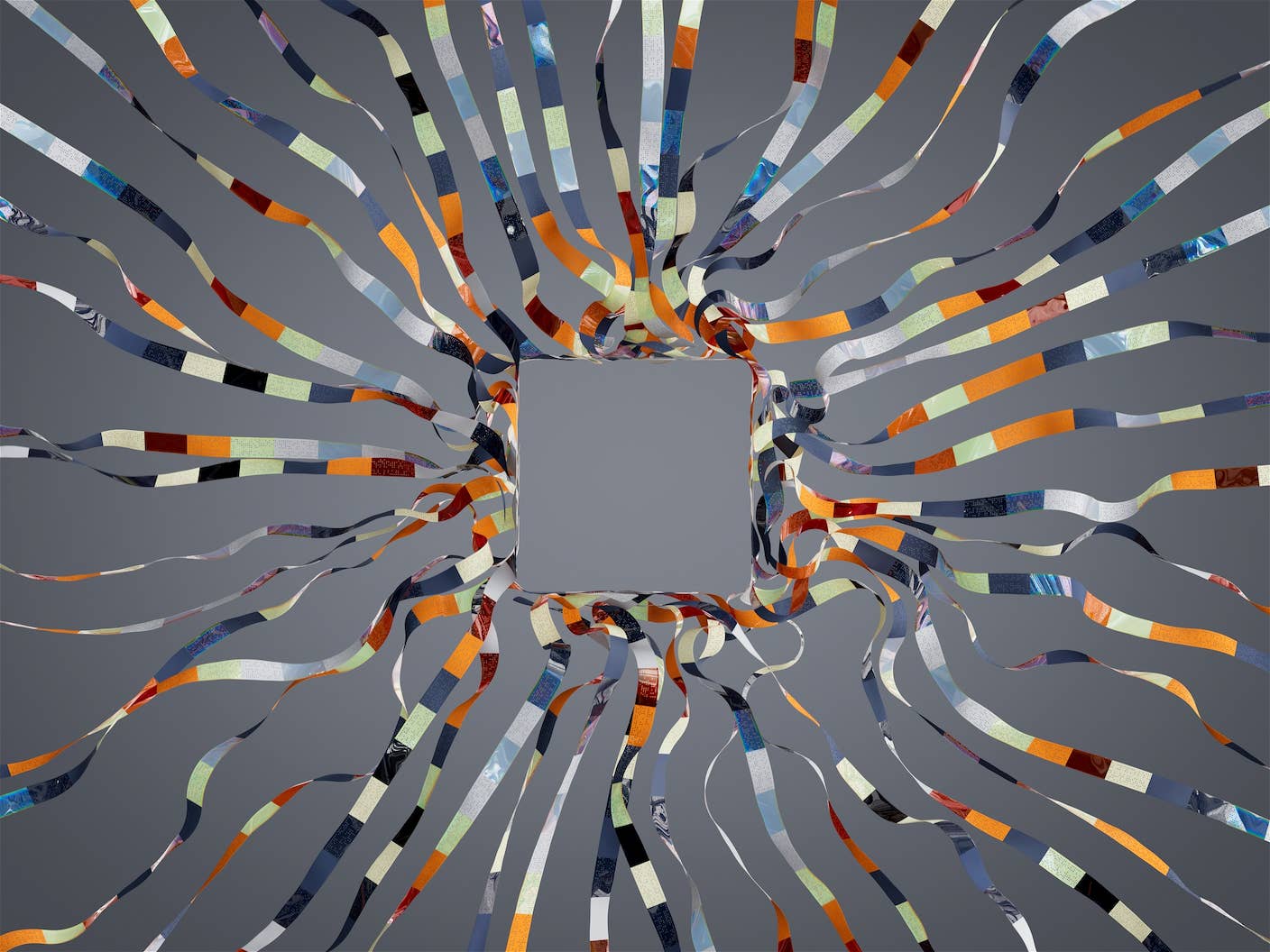
Image Credit
Google DeepMind on Unsplash
Share
The idea that the neural networks underpinning modern AI are “black boxes” almost impossible to understand has become received wisdom. But a provocative blog post from a researcher who played a key role in setting that narrative says these models may be far more interpretable than we thought.
The opacity of today’s leading AI models is becoming an increasingly pressing problem as the technology seeps into ever more areas of our lives. Recent incidents where agents from leading developers escaped their sandboxes to go on hacking sprees have only boosted the sense of urgency.
This has spurred interest in a research field known as mechanistic interpretability, which attempts to reverse engineer neural networks to learn what individual neurons and the circuits they create do. By detailing how these networks operate, researchers hope it’ll be easier to control and direct them.
Progress has been slow, however, and leading theories have suggested the way these networks learn leads to a tangled mess that is incredibly difficult to parse. Now though, Nick Cammarata, a researcher at AI startup Goodfire who helped lay the foundations of the field while at OpenAI, has published a 26,000-word blog post arguing that these theories are wrong and even the largest neural networks could be much simpler to read than expected.
“I think I have good news about the nature of neural networks,” Cammarata writes in the post. “Interpretability might be far more tractable, possibly in the near term, than we’ve assumed.”
The idea Cammarata is challenging is one he helped establish. In 2020, while studying a Google image-recognition model called InceptionV1, he and colleagues found neurons that seemed to respond to unrelated things—most famously one that fired on both cat faces and the fronts of cars.
The leading explanation was the concept of superposition, which suggested that when a network runs short of neurons, it starts lumping unrelated concepts together into the same neurons. And it specifically combines concepts that are so disconnected they’re unlikely to clash. This means that looking at an individual neuron tells you very little, because there’s no rhyme or reason behind what ideas it groups together.
But when Cammarata revisited the famous cat-car neuron, he realized both images shared a prominent V shape. Further tests showed the same neuron also responded to the corner of a pool table and the pointed nose of a Japanese bullet train.
Be Part of the Future
Sign up to receive top stories about groundbreaking technologies and visionary thinkers from SingularityHub.

Cammarata then went looking for similar explanations across the rest of InceptionV1 with the help of a specialized suite of tools and AI agents to help speed up the search. He concluded that unrelated concepts packed into neurons were usually more connected than they first appeared. This is often because a neuron starts out tracking one thing before gradually branching out into neighboring ideas as the network learns—a phenomenon he calls recursive generalization.
Cammarata has since applied the same approaches to modern language models. Preliminary results from the Qwen3-32B model suggest roughly 90 percent of its neurons track one main concept, potentially alongside a few closely related offshoots. Cammarata says he found similar results while analyzing the much larger, trillion-parameter Kimi K3 model, which he plans to detail in a forthcoming technical paper.
The blog post sparked huge debate in the AI community, including some rapturous praise from leading researchers at large AI companies. But not everyone is convinced. For a start, the blog post self-identifies as a working hypothesis rather than a rigorous empirical study. “I appreciate that he looked at thousands of examples, but even a large number here is not a substitute for rigorous evaluation,” Chris Potts at Stanford University told MIT Technology Review.
And others question how far understanding individual neurons can take you. In a series of posts on X, Jacob Hilton at the Alignment Research Center, pointed out that to truly understand what a neural network is doing you need to track and explain how they connect neurons into larger circuits.
Even Cammarata says he is surprised by the response the blog has received and admits some people have taken his findings too far. “It’s not infinitely good news; it’s not everything solved,” he told Tech Review. “There’s a bunch of open questions around, like how much the combinations of neurons matter versus just one at a time.”
Nonetheless, the work has reopened a central question in AI that many researchers considered settled. And while Cammarata’s forthcoming technical paper should give the field a clearer sense of how justified his optimism really is, there is now a sliver of hope that the intelligent machines we are building may be slightly less inscrutable than initially feared.

Related Articles

Why Calling for a ‘Kill Switch’ Is the Wrong Way to Think About Reining in AI
This AI Model Designs Enzymes With Atomic Precision
New AI Tool Could Help Scientists Make ‘Rare’ Cross-Disciplinary Leaps
Why Calling for a ‘Kill Switch’ Is the Wrong Way to Think About Reining in AI
This AI Model Designs Enzymes With Atomic Precision
New AI Tool Could Help Scientists Make ‘Rare’ Cross-Disciplinary Leaps
What we’re reading