Quantcast

5 Axis Robot Carves Metal Like Butter (Video)

by Aaron Saenz April 5th, 2010 | Comments (116)

Share
Share by email
Import Addresses
Send To A Friend Close


Save time! Click Here to select directly from your AOL, Gmail, Hotmail, or Yahoo! Address Book
Ad
 
milling robot carves metal

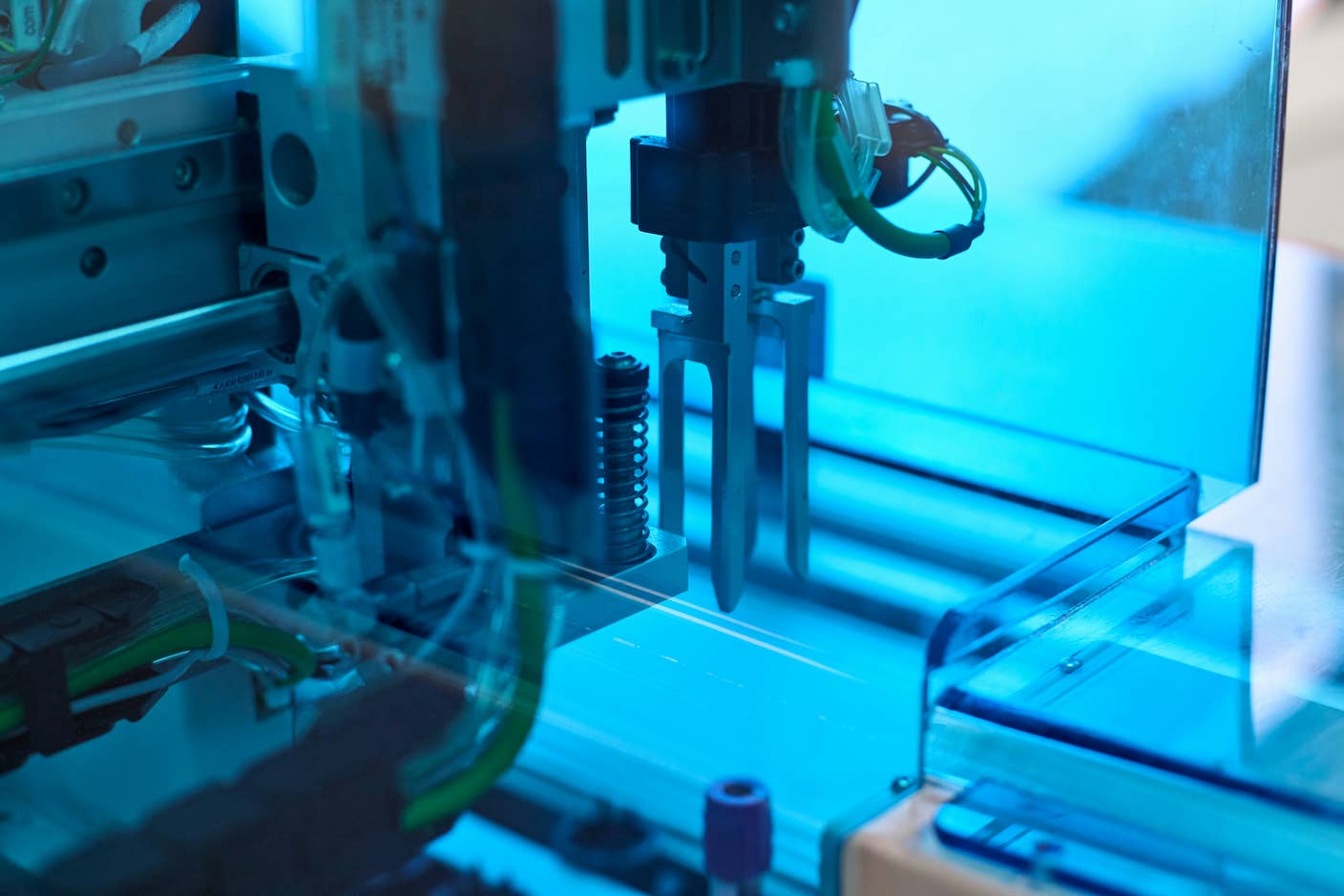
The speed and precision of modern industrial machining robots puts humans to shame.

Industrial robots are getting precise enough that they’re less like dumb machines and more like automated sculptors producing artwork. Case in point: Daishin’s Seki 5-axis mill. The Japanese company celebrated its 50th anniversary last year by using this machine to carve out a full scale motorcycle helmet out of one piece of aluminum. No breaks, no joints, the 5-Axis mill simply pivots and rotates to carve metal at some absurd angles. Every cut is guided by sophisticated 3D design software (Openmind’s HyperMill). While the Daishin helmet made a nice showpiece for a biannual meeting of machining companies (EMO), this level of production is becoming the new standard. Your average industrial company got hi-tech in a hurry and now we have machines that can transform computer designs into the highest quality professional metal objects, seemingly at a push of a button. Human machinists are left in the dust. Watch the helmet being built in the video below.

Automated production has really progressed to a point where humans can’t keep up. The real challenge is between two different styles of robotic production: printing and machining. In a world with 3D printers that can work in metal, taking a huge block of aluminum and cutting it down may seem practically medieval. Milling, however, is still the best way to produce high-grade metal objects suitable for use in other machines. You can’t build a working diesel engine out of a 3D printer…yet. While we’re waiting for that technology to mature, the machining sector is developing new capabilities that keep it competitive. Information technology has crept into everything, and where it goes, innovation follows. So it is with the Daishin Seki machine’s 5 axes which are guided by the Hypermill software. These industrial robots can carve exquisite pieces out of materials 3D printers can’t touch.  Eventually production may belong to 3D printers, but for now the industrial robots sculptors are showing us that they’ve still got years of unparalleled work ahead of them. As for humans…well, we’ve moved from the machine room floor to the designer’s chair. That’s okay; the coffee’s better in the chair, anyway.

[screen capture: Daishin Seki]
[video credits: Daishin Seki, Matsuura]
[source: Daishin Seki]


Related Stories


Connect With Us

.

Post a Comment

Sort By:

Comments


  • I want one and that helmet!!! This is awesome. Soon will have solid, lightweight aluminum products for everything… not just apple products.

  • User Picture

    Amazing…

  • User Picture

    Push a button and crap out a part. Put 500 people out of work.

    • User Picture

      Hey Spammy, keep in mind that these things don’t build themselves. Also try to remember that the total services are ever increasing. One door closes, two doors open.

      By your logic light bulbs would have caused massive unemployment to candle makers, but really the jobs eventually follow the goods.


      • A number of oil lamps and candles makers in Italy asked for a ban of the latter to be passed and for a law forbidding from keeping windows open during the day to increase request for their product…

        You cannot build the future by stunting progress, simply because it doesn’t work.

    • User Picture

      Yes, and I’m sure the scribes put out of work by the printing press were very upset by it, too. But the world is still better off.

  • User Picture

    Push a button and crap out a part. Put 500 people out of work.

  • User Picture

    Push a button and crap out a part. Put 500 people out of work.

  • User Picture

    Is the machine capable of choosing on it’s own which cutting/shaping bit to use? Or does somebody need to change the bit for it? And when the model was flipped to cut the bottom half, was that done by the machine or was there some human intervention required?

    • User Picture

      The machine itself is capable of only one thing: Taking extremely specific commands and executing them to within a very specific accuracy. It will very precisely, carefully chop its own head off if you instruct it to do so.

      A human must choose the cutter and tell a separate computer how to generate the toolpath. Then the human must review said toolpath, and then often there is a “dry run” with no material (or machinable wax) on the machine to test the program (or some programs allow simulation, which is almost as good).

      In this case, the material was turned over (re-fixtured) by a human (Note the small cylindrical cutouts on each side of the block providing a reference for the machinist to find the center of the block).

      There are production machines which can do things including re-fixture their own parts, but every next part/fixture requires careful design, programming, and testing by a human before they can be trusted. A shop has to make many, many identical parts to justify investing in machinery which can move its own parts from fixture to fixture.

  • User Picture

    Is the machine capable of choosing on it’s own which cutting/shaping bit to use? Or does somebody need to change the bit for it? And when the model was flipped to cut the bottom half, was that done by the machine or was there some human intervention required?

  • User Picture

    Is the machine capable of choosing on it’s own which cutting/shaping bit to use? Or does somebody need to change the bit for it? And when the model was flipped to cut the bottom half, was that done by the machine or was there some human intervention required?

    • User Picture

      The machine itself is capable of only one thing: Taking extremely specific commands and executing them to within a very specific accuracy. It will very precisely, carefully chop its own head off if you instruct it to do so.

      A human must choose the cutter and tell a separate computer how to generate the toolpath. Then the human must review said toolpath, and then often there is a “dry run” with no material (or machinable wax) on the machine to test the program (or some programs allow simulation, which is almost as good).

      In this case, the material was turned over (re-fixtured) by a human (Note the small cylindrical cutouts on each side of the block providing a reference for the machinist to find the center of the block).

      There are production machines which can do things including re-fixture their own parts, but every next part/fixture requires careful design, programming, and testing by a human before they can be trusted. A shop has to make many, many identical parts to justify investing in machinery which can move its own parts from fixture to fixture.

    • User Picture

      The machine itself is capable of only one thing: Taking extremely specific commands and executing them to within a very specific accuracy. It will very precisely, carefully chop its own head off if you instruct it to do so.

      A human must choose the cutter and tell a separate computer how to generate the toolpath. Then the human must review said toolpath, and then often there is a “dry run” with no material (or machinable wax) on the machine to test the program (or some programs allow simulation, which is almost as good).

      In this case, the material was turned over (re-fixtured) by a human (Note the small cylindrical cutouts on each side of the block providing a reference for the machinist to find the center of the block).

      There are production machines which can do things including re-fixture their own parts, but every next part/fixture requires careful design, programming, and testing by a human before they can be trusted. A shop has to make many, many identical parts to justify investing in machinery which can move its own parts from fixture to fixture.

  • User Picture

    As the humble owner of a CNC shop, I have to point out a few things of note: First of all, there is the cost of the machine, which is 3 or 4 hundred grand. Then add 12K for the programming software, about 5k in tooling, the block of aluminum at a few hundred bucks, and then the machine run time to make the neato helmet copy. How many of those do you suppose you need to sell for a thousand bucks a piece to make enough profit to keep your business open? The technology is very cool, and it’s acquisition and application are very expensive. Even with machinists making serf wages, as in China, there is still a substantial cost barrier to overcome. At the end of the day, what it all comes down to is the question of how clever and hard working is your workforce, and how good are they at applying the technology in more productive ways than their competition. It’s about the people, not the tools.

  • User Picture

    As the humble owner of a CNC shop, I have to point out a few things of note: First of all, there is the cost of the machine, which is 3 or 4 hundred grand. Then add 12K for the programming software, about 5k in tooling, the block of aluminum at a few hundred bucks, and then the machine run time to make the neato helmet copy. How many of those do you suppose you need to sell for a thousand bucks a piece to make enough profit to keep your business open? The technology is very cool, and it’s acquisition and application are very expensive. Even with machinists making serf wages, as in China, there is still a substantial cost barrier to overcome. At the end of the day, what it all comes down to is the question of how clever and hard working is your workforce, and how good are they at applying the technology in more productive ways than their competition. It’s about the people, not the tools.

  • User Picture

    As the humble owner of a CNC shop, I have to point out a few things of note: First of all, there is the cost of the machine, which is 3 or 4 hundred grand. Then add 12K for the programming software, about 5k in tooling, the block of aluminum at a few hundred bucks, and then the machine run time to make the neato helmet copy. How many of those do you suppose you need to sell for a thousand bucks a piece to make enough profit to keep your business open? The technology is very cool, and it’s acquisition and application are very expensive. Even with machinists making serf wages, as in China, there is still a substantial cost barrier to overcome. At the end of the day, what it all comes down to is the question of how clever and hard working is your workforce, and how good are they at applying the technology in more productive ways than their competition. It’s about the people, not the tools.

  • User Picture

    I want my Iron Man suit. NOW.

  • User Picture

    I want my Iron Man suit. NOW.

  • User Picture

    I want my Iron Man suit. NOW.

  • User Picture

    This is not a robot…and the machine was not made by Daishin Sieki. Looks like they’re the company that owns it.

  • User Picture

    This is not a robot…and the machine was not made by Daishin Sieki. Looks like they’re the company that owns it.

  • User Picture

    This is not a robot…and the machine was not made by Daishin Sieki. Looks like they’re the company that owns it.

  • User Picture

    Multi-axis CNC mills have been around for quite a while, and multi-axis *NC* mills have been around even longer–since the 1960s, in fact. Is there anything particularly special about this one, other than the cool demo it was used for?

    • User Picture

      The problem is that most people don’t really understand what a 5-axis CNC mill can do, so when you show someone a mill working they’re like “ZOMG THATS SO AWESOME”.

      • User Picture

        It’s a cool video – I thought a MUCH better video was the one from about a year back where some company was showing off by carving something useful – a V8 aluminum racing block – and yeah, it was a working block for some race team

  • User Picture

    Multi-axis CNC mills have been around for quite a while, and multi-axis *NC* mills have been around even longer–since the 1960s, in fact. Is there anything particularly special about this one, other than the cool demo it was used for?

  • User Picture

    Multi-axis CNC mills have been around for quite a while, and multi-axis *NC* mills have been around even longer–since the 1960s, in fact. Is there anything particularly special about this one, other than the cool demo it was used for?

    • User Picture

      The problem is that most people don’t really understand what a 5-axis CNC mill can do, so when you show someone a mill working they’re like “ZOMG THATS SO AWESOME”.

      • User Picture

        It’s a cool video – I thought a MUCH better video was the one from about a year back where some company was showing off by carving something useful – a V8 aluminum racing block – and yeah, it was a working block for some race team

      • User Picture

        It’s a cool video – I thought a MUCH better video was the one from about a year back where some company was showing off by carving something useful – a V8 aluminum racing block – and yeah, it was a working block for some race team

    • User Picture

      The problem is that most people don’t really understand what a 5-axis CNC mill can do, so when you show someone a mill working they’re like “ZOMG THATS SO AWESOME”.

  • User Picture

    Nice!
    This would be just the thing for making the head/skull of a Terminator.

    • User Picture

      ROFL!

      I was thinking the same thing!

      This thing is quite awesome, but I was shuddering watching the video.

      On the positive side, I am envisioning a world 10 years from now where people can have a “CafePress” version of this kind of thing: someone makes the software simple enough, and we’re going to have custom metalwork over the internet. LOL.

      • User Picture

        It is that way, kind of. Mastercam, Rhino3D, etc. etc. Someone just needs to make the website.

        • User Picture

          The website exists:

          www emachineshop com

          You still pay $200/hr+ for 5 axis machining.

          And anyone who thinks this technology displaces machinists has never been inside a CNC shop.

  • User Picture

    Nice!
    This would be just the thing for making the head/skull of a Terminator.

  • User Picture

    Nice!
    This would be just the thing for making the head/skull of a Terminator.

    • User Picture

      ROFL!

      I was thinking the same thing!

      This thing is quite awesome, but I was shuddering watching the video.

      On the positive side, I am envisioning a world 10 years from now where people can have a “CafePress” version of this kind of thing: someone makes the software simple enough, and we’re going to have custom metalwork over the internet. LOL.

      • User Picture

        It is that way, kind of. Mastercam, Rhino3D, etc. etc. Someone just needs to make the website.

        • User Picture

          The website exists:

          www emachineshop com

          You still pay $200/hr+ for 5 axis machining.

          And anyone who thinks this technology displaces machinists has never been inside a CNC shop.

        • User Picture

          The website exists:

          www emachineshop com

          You still pay $200/hr+ for 5 axis machining.

          And anyone who thinks this technology displaces machinists has never been inside a CNC shop.

      • User Picture

        It is that way, kind of. Mastercam, Rhino3D, etc. etc. Someone just needs to make the website.

    • User Picture

      ROFL!

      I was thinking the same thing!

      This thing is quite awesome, but I was shuddering watching the video.

      On the positive side, I am envisioning a world 10 years from now where people can have a “CafePress” version of this kind of thing: someone makes the software simple enough, and we’re going to have custom metalwork over the internet. LOL.

  • User Picture

    Always remember, its the human that progams machine and yes it is a wonderful CNC

  • User Picture

    Always remember, its the human that progams machine and yes it is a wonderful CNC

    • User Picture

      lol, yes, in 2010 the human programs the machine
      but in 2020.. lol (can’t you smell what’s coming?)

      “Milling machine mills first milling machine”
      …ad infinitum…

    • User Picture

      lol, yes, in 2010 the human programs the machine
      but in 2020.. lol (can’t you smell what’s coming?)

      “Milling machine mills first milling machine”
      …ad infinitum…

  • User Picture

    Looking the performance of the machine I am astonished , Thumps up to the Team of Daishin Seki .

  • User Picture

    Looking the performance of the machine I am astonished , Thumps up to the Team of Daishin Seki .

  • User Picture

    Looking the performance of the machine I am astonished , Thumps up to the Team of Daishin Seki .

  • User Picture

    This particular example wouldn’t put any manual machinists out of work. If this can even be done on a manual mill, I would imagine it would take months or even years.

  • User Picture

    This particular example wouldn’t put any manual machinists out of work. If this can even be done on a manual mill, I would imagine it would take months or even years.

  • User Picture

    This particular example wouldn’t put any manual machinists out of work. If this can even be done on a manual mill, I would imagine it would take months or even years.

  • User Picture

    Cool video. To the folks who seem to think that this sort of equipment will put people out of work, it is quite the opposite. These types of machines take highly trained group of dedicated professionals to program set up and run. This video is completely misleading in so many ways. This is a DEMO part it serves NO actual purpose other then to look pretty. In the REAL world parts have critical tolerances and are made of materials that make aluminum look like butter. As long as machining is being used to make parts, there will be people required to program, set up, run and inspect that parts the machine has made. Automation can only go so far.

    • User Picture

      “Automation can only go so far.”

      Yeah? And how far is that?

  • User Picture

    Cool video. To the folks who seem to think that this sort of equipment will put people out of work, it is quite the opposite. These types of machines take highly trained group of dedicated professionals to program set up and run. This video is completely misleading in so many ways. This is a DEMO part it serves NO actual purpose other then to look pretty. In the REAL world parts have critical tolerances and are made of materials that make aluminum look like butter. As long as machining is being used to make parts, there will be people required to program, set up, run and inspect that parts the machine has made. Automation can only go so far.

  • User Picture

    Cool video. To the folks who seem to think that this sort of equipment will put people out of work, it is quite the opposite. These types of machines take highly trained group of dedicated professionals to program set up and run. This video is completely misleading in so many ways. This is a DEMO part it serves NO actual purpose other then to look pretty. In the REAL world parts have critical tolerances and are made of materials that make aluminum look like butter. As long as machining is being used to make parts, there will be people required to program, set up, run and inspect that parts the machine has made. Automation can only go so far.

    • User Picture

      “Automation can only go so far.”

      Yeah? And how far is that?

    • User Picture

      “Automation can only go so far.”

      Yeah? And how far is that?

  • User Picture

    as a retired machinist and n/c programmer, it takes more people making a higher wage than a single machinist attempting to make this project, which then costs the consumer less. If that dosn’t make sense, what does?

  • User Picture

    as a retired machinist and n/c programmer, it takes more people making a higher wage than a single machinist attempting to make this project, which then costs the consumer less. If that dosn’t make sense, what does?

  • User Picture

    as a retired machinist and n/c programmer, it takes more people making a higher wage than a single machinist attempting to make this project, which then costs the consumer less. If that dosn’t make sense, what does?

  • User Picture

    Actually the battle between printer and miller is not only in quality but mostly in size. bounding boxes for high resolution high quality metal prints, like titanium alloys, are 20cm³ max. Bronze infiltrated steel is a bit better, but it’s an inferior alloy. Milling however can be done on far larger parts. There won’t be a large metal 3D printer for a very long time. The technology could have been scaled up easily 10 years ago, but there’s no demand to warrant the investments. And what alternatives do exist, 3D prints used as investment casts, aren’t beeing used, no 3D printer will load up their largest machine with casteable printing material, it would sit there idle most of the time. The whole prototyping industry is denoted by a subtle balance between huge investments and lack of imagination by clients. Which leads to low risk taking, and a general stalemate, very slow progress. Commercial 3D printing has been around for 20 years, there’s youtube video’s ppl milling lifelike faces on 15 year old mills. And still it gets treated like the “new thing”. Pretty uninformed. For me, who’s in the business, the slow progress is very frustrating.

    And China is full blown communist country rand they could mill the chair right from under your ass, with self designed and built mills. And the soviet union wasn’t a nice place to live, but pretty innovative none the less. Innovation is done by scientists that want to discover for discovery’s sake, both the free market OR government can either be a brake or a instigator. imho

  • User Picture

    Actually the battle between printer and miller is not only in quality but mostly in size. bounding boxes for high resolution high quality metal prints, like titanium alloys, are 20cm³ max. Bronze infiltrated steel is a bit better, but it’s an inferior alloy. Milling however can be done on far larger parts. There won’t be a large metal 3D printer for a very long time. The technology could have been scaled up easily 10 years ago, but there’s no demand to warrant the investments. And what alternatives do exist, 3D prints used as investment casts, aren’t beeing used, no 3D printer will load up their largest machine with casteable printing material, it would sit there idle most of the time. The whole prototyping industry is denoted by a subtle balance between huge investments and lack of imagination by clients. Which leads to low risk taking, and a general stalemate, very slow progress. Commercial 3D printing has been around for 20 years, there’s youtube video’s ppl milling lifelike faces on 15 year old mills. And still it gets treated like the “new thing”. Pretty uninformed. For me, who’s in the business, the slow progress is very frustrating.

    And China is full blown communist country rand they could mill the chair right from under your ass, with self designed and built mills. And the soviet union wasn’t a nice place to live, but pretty innovative none the less. Innovation is done by scientists that want to discover for discovery’s sake, both the free market OR government can either be a brake or a instigator. imho

  • User Picture

    Actually the battle between printer and miller is not only in quality but mostly in size. bounding boxes for high resolution high quality metal prints, like titanium alloys, are 20cm³ max. Bronze infiltrated steel is a bit better, but it’s an inferior alloy. Milling however can be done on far larger parts. There won’t be a large metal 3D printer for a very long time. The technology could have been scaled up easily 10 years ago, but there’s no demand to warrant the investments. And what alternatives do exist, 3D prints used as investment casts, aren’t beeing used, no 3D printer will load up their largest machine with casteable printing material, it would sit there idle most of the time. The whole prototyping industry is denoted by a subtle balance between huge investments and lack of imagination by clients. Which leads to low risk taking, and a general stalemate, very slow progress. Commercial 3D printing has been around for 20 years, there’s youtube video’s ppl milling lifelike faces on 15 year old mills. And still it gets treated like the “new thing”. Pretty uninformed. For me, who’s in the business, the slow progress is very frustrating.

    And China is full blown communist country rand they could mill the chair right from under your ass, with self designed and built mills. And the soviet union wasn’t a nice place to live, but pretty innovative none the less. Innovation is done by scientists that want to discover for discovery’s sake, both the free market OR government can either be a brake or a instigator. imho

  • User Picture

    Sorry, is that the same block of Aluminium?
    120Kg original weight over to 3.6kg?

    Impressive video

  • User Picture

    Sorry, is that the same block of Aluminium?
    120Kg original weight over to 3.6kg?

    Impressive video

  • User Picture

    Sorry, is that the same block of Aluminium?
    120Kg original weight over to 3.6kg?

    Impressive video

  • User Picture

    You should emphasize that while Daishin’s Seki may actually own the milling machine, the machine itself is a Deckel-Maho, which is a German machine tool maker. This is basically a Japanese machine shops demo using German hardware and software.

  • User Picture

    You should emphasize that while Daishin’s Seki may actually own the milling machine, the machine itself is a Deckel-Maho, which is a German machine tool maker. This is basically a Japanese machine shops demo using German hardware and software.

  • User Picture

    You should emphasize that while Daishin’s Seki may actually own the milling machine, the machine itself is a Deckel-Maho, which is a German machine tool maker. This is basically a Japanese machine shops demo using German hardware and software.

  • User Picture

    In a socialist world, we wouldn’t have designers or machines because we’d all be too impoverished to care.

  • User Picture

    In a socialist world, we wouldn’t have designers or machines because we’d all be too impoverished to care.

  • User Picture

    In a socialist world, we wouldn’t have designers or machines because we’d all be too impoverished to care.

  • User Picture

    And we’d use our human potential to do little more than what we’re doing now. ;>

  • User Picture

    And we’d use our human potential to do little more than what we’re doing now. ;>

  • User Picture

    And we’d use our human potential to do little more than what we’re doing now. ;>

  • User Picture

    Caption quote: “The speed and precision of modern industrial machining robots puts humans to shame.”
    I would say NOT! What it does is show the ability of the mind to conceive “better”. It still takes a Human to design and execute this type of activity. The robot and computers are nothing more than very advanced tools.

  • User Picture

    Caption quote: “The speed and precision of modern industrial machining robots puts humans to shame.”
    I would say NOT! What it does is show the ability of the mind to conceive “better”. It still takes a Human to design and execute this type of activity. The robot and computers are nothing more than very advanced tools.

  • User Picture

    Caption quote: “The speed and precision of modern industrial machining robots puts humans to shame.”
    I would say NOT! What it does is show the ability of the mind to conceive “better”. It still takes a Human to design and execute this type of activity. The robot and computers are nothing more than very advanced tools.

  • User Picture

    This is what a 5 axis mill does. What is new?

  • User Picture

    This is what a 5 axis mill does. What is new?

    • User Picture

      That’s kind of what I was thinking. We have a Centroid 5-Axis at work, and 5-Axis has been around for a while now.

      Centroids, though, are extraordinarily user-friendly, since they come with Mastercam.

    • User Picture

      That’s kind of what I was thinking. We have a Centroid 5-Axis at work, and 5-Axis has been around for a while now.

      Centroids, though, are extraordinarily user-friendly, since they come with Mastercam.

  • User Picture

    This is what a 5 axis mill does. What is new?

    • User Picture

      That’s kind of what I was thinking. We have a Centroid 5-Axis at work, and 5-Axis has been around for a while now.

      Centroids, though, are extraordinarily user-friendly, since they come with Mastercam.

  • User Picture

    “As for humans…well, we’ve moved from the machine room floor to the designer’s chair. That’s okay; the coffee’s better in the chair, anyway.”

    In a socialist world, it’d be better than okay. It would be a wonderful part of freeing our human potential.

    In a capitalist world, it’s a nightmare of human suffering.

    • User Picture

      You are such a kneejerk, Luddite tool. Unlike this machine, though, you’re a *useless* tool.

    • User Picture

      Perhaps we should ban these machines, in order to protect the jobs of people doing this kind of work—instead of allowing those people to go do something and produce more wealth. Sounds very capitalist, doesn’t it?

      /sarcasm

      • User Picture

        Let the robot be controlled by human designers, and let the designers work for the people, not the banks. We’d all be better off with each other on the gulf course or other relaxing venue such as a beach, or river bank, being human again and using our heads for a better future, rather than fighting or superficially created scarcity. Capitalism has failed, time for humanism.

    • User Picture

      you wouldn’t have innovation like this in a socialist country

    • User Picture

      ON TOPIC:
      Daishin Seiki is a large manufacturing and design firm. They manufacture and design goods, and this is less of a display of the abilities of the machine and more of a display of the abilities of their machine programming team. As someone who works with a machine shop that runs 5-axis machines for the aerospace industry this video is fantastic. The people who went into planning the tool paths, tool sets, and basic design should be commended for their programming prowess. Chances are they’re well compensated for their time and are highly desirable workers.

      OFF TOPIC:
      For those who want to look past rhetoric/post shitting: Capitalism is nothing more and nothing less than the transfer of goods/services from people who value said goods/services at a rate that is lower than someone else. This system will exist as long as there are two people who have objects of differential value.

      In fact the system exists in societies that have few taxes/regulations and those that have extensive taxes/regulations. Systems of exchange exist in Cuba, North Korea, Somalia, and even this whacky continent known as Europe.

    • User Picture

      Addendum to my previous post:

      Robots didn’t design, maintain, prepare, or load the machine. People employed by a company did.

    • User Picture

      A machine that can displace one machinist. The machine is built and maintained by how many people? And the infrastructure needed to *use* the machine require how many?

      One robot does not displace one worker. It displaces one worker and requires many, many more.

      Why do it then? Because the robot’s work is precise, fast, infinitely repeatable in an exact, precise, predictable way. Robots are generally much faster per item produced as well.

      Take the artisan displaced by the robot and train them in the use of the tech that makes the robot useful. So he’s not standing there with a grinder anymore. Let him take the mental skills and do much more with it.

      If the artisan can’t adjust, that’s just too bad. Being human means to never stop learning.

    • User Picture

      That’s equivalent to saying that computers are a capitalist nightmare. One of the stupidest things I’ve heard anybody say in years.

  • User Picture

    “As for humans…well, we’ve moved from the machine room floor to the designer’s chair. That’s okay; the coffee’s better in the chair, anyway.”

    In a socialist world, it’d be better than okay. It would be a wonderful part of freeing our human potential.

    In a capitalist world, it’s a nightmare of human suffering.

  • User Picture

    “As for humans…well, we’ve moved from the machine room floor to the designer’s chair. That’s okay; the coffee’s better in the chair, anyway.”

    In a socialist world, it’d be better than okay. It would be a wonderful part of freeing our human potential.

    In a capitalist world, it’s a nightmare of human suffering.

    • User Picture

      You are such a kneejerk, Luddite tool. Unlike this machine, though, you’re a *useless* tool.

    • User Picture

      You are such a kneejerk, Luddite tool. Unlike this machine, though, you’re a *useless* tool.

    • User Picture

      Perhaps we should ban these machines, in order to protect the jobs of people doing this kind of work—instead of allowing those people to go do something and produce more wealth. Sounds very capitalist, doesn’t it?

      /sarcasm

      • User Picture

        Let the robot be controlled by human designers, and let the designers work for the people, not the banks. We’d all be better off with each other on the gulf course or other relaxing venue such as a beach, or river bank, being human again and using our heads for a better future, rather than fighting or superficially created scarcity. Capitalism has failed, time for humanism.

      • User Picture

        Let the robot be controlled by human designers, and let the designers work for the people, not the banks. We’d all be better off with each other on the gulf course or other relaxing venue such as a beach, or river bank, being human again and using our heads for a better future, rather than fighting or superficially created scarcity. Capitalism has failed, time for humanism.

    • User Picture

      Perhaps we should ban these machines, in order to protect the jobs of people doing this kind of work—instead of allowing those people to go do something and produce more wealth. Sounds very capitalist, doesn’t it?

      /sarcasm

    • User Picture

      you wouldn’t have innovation like this in a socialist country

    • User Picture

      you wouldn’t have innovation like this in a socialist country

    • User Picture

      ON TOPIC:
      Daishin Seiki is a large manufacturing and design firm. They manufacture and design goods, and this is less of a display of the abilities of the machine and more of a display of the abilities of their machine programming team. As someone who works with a machine shop that runs 5-axis machines for the aerospace industry this video is fantastic. The people who went into planning the tool paths, tool sets, and basic design should be commended for their programming prowess. Chances are they’re well compensated for their time and are highly desirable workers.

      OFF TOPIC:
      For those who want to look past rhetoric/post shitting: Capitalism is nothing more and nothing less than the transfer of goods/services from people who value said goods/services at a rate that is lower than someone else. This system will exist as long as there are two people who have objects of differential value.

      In fact the system exists in societies that have few taxes/regulations and those that have extensive taxes/regulations. Systems of exchange exist in Cuba, North Korea, Somalia, and even this whacky continent known as Europe.

    • User Picture

      ON TOPIC:
      Daishin Seiki is a large manufacturing and design firm. They manufacture and design goods, and this is less of a display of the abilities of the machine and more of a display of the abilities of their machine programming team. As someone who works with a machine shop that runs 5-axis machines for the aerospace industry this video is fantastic. The people who went into planning the tool paths, tool sets, and basic design should be commended for their programming prowess. Chances are they’re well compensated for their time and are highly desirable workers.

      OFF TOPIC:
      For those who want to look past rhetoric/post shitting: Capitalism is nothing more and nothing less than the transfer of goods/services from people who value said goods/services at a rate that is lower than someone else. This system will exist as long as there are two people who have objects of differential value.

      In fact the system exists in societies that have few taxes/regulations and those that have extensive taxes/regulations. Systems of exchange exist in Cuba, North Korea, Somalia, and even this whacky continent known as Europe.

    • User Picture

      Addendum to my previous post:

      Robots didn’t design, maintain, prepare, or load the machine. People employed by a company did.

    • User Picture

      Addendum to my previous post:

      Robots didn’t design, maintain, prepare, or load the machine. People employed by a company did.

    • User Picture

      A machine that can displace one machinist. The machine is built and maintained by how many people? And the infrastructure needed to *use* the machine require how many?

      One robot does not displace one worker. It displaces one worker and requires many, many more.

      Why do it then? Because the robot’s work is precise, fast, infinitely repeatable in an exact, precise, predictable way. Robots are generally much faster per item produced as well.

      Take the artisan displaced by the robot and train them in the use of the tech that makes the robot useful. So he’s not standing there with a grinder anymore. Let him take the mental skills and do much more with it.

      If the artisan can’t adjust, that’s just too bad. Being human means to never stop learning.

    • User Picture

      A machine that can displace one machinist. The machine is built and maintained by how many people? And the infrastructure needed to *use* the machine require how many?

      One robot does not displace one worker. It displaces one worker and requires many, many more.

      Why do it then? Because the robot’s work is precise, fast, infinitely repeatable in an exact, precise, predictable way. Robots are generally much faster per item produced as well.

      Take the artisan displaced by the robot and train them in the use of the tech that makes the robot useful. So he’s not standing there with a grinder anymore. Let him take the mental skills and do much more with it.

      If the artisan can’t adjust, that’s just too bad. Being human means to never stop learning.

    • User Picture

      That’s equivalent to saying that computers are a capitalist nightmare. One of the stupidest things I’ve heard anybody say in years.

    • User Picture

      That’s equivalent to saying that computers are a capitalist nightmare. One of the stupidest things I’ve heard anybody say in years.

  • User Picture

    Always remember, its the human that progams machine and yes it is a wonderful CNC

  • User Picture

    lol, yes, in 2010 the human programs the machine
    but in 2020.. lol (can’t you smell what’s coming?)

    “Milling machine mills first milling machine”
    …ad infinitum…

Get Our Newsletter

Popular On The Hub

Singularity

Martin Ford Asks: Will Automation Lead to Economic Collapse?

Written by: Aaron Saenz 716 days ago

lights-in-the-tunnel

Will the future be filled with cool technologies and endless opportunities or will our own creations lead to eventual doom? [...]

Robots

5 Axis Robot Carves Metal Like Butter (Video)

Written by: Aaron Saenz 605 days ago

metal-helmet-machine

Industrial robots are getting precise enough that they’re less like dumb machines and more like automated sculptors producing artwork. Case [...]

Genetics

Designer Babies – Like It Or Not, Here They Come

Written by: Keith Kleiner 1009 days ago

designer-babies

Long before Watson and Crick famously uncovered the structure of DNA in 1953, people envisioned with both horror and hope [...]

Stem Cells, Gadgets, Robots, Longevity, Health, Artificial Intelligence, Genetics, Body Implants, Cyborgs, Science, Technology, Singularity, The Future!