


This past August fellow Singularity Hub writer Aaron Saenz wrote about Udacity, the online university created by Stanford artificial intelligence professor and Google autonomous vehicle leader, Sebastian Thrun. At the time Thrun was gearing up to teach his Introduction to Artificial Intelligence course to a class of 200 at Stanford. But why teach 200 when you can teach 1,000…or 160,000? With Udacity, Thrun and fellow AI giant Peter Norvig created an online version of the course, and anyone that wanted to enroll could – for free. The homework assignments and exams would be the same as the ones given to the Stanford students, and they would be graded in the same way so online enrollees could see how they stacked up to some of the brightest students in the world. It was to be a grand experiment in education.
Now, the semester’s over. The exams have been taken, the homework’s been turned in, computers logged off and pencils set down. How’d it all turn out? Thrun spoke recently at the Digital Life Design conference about he and Norvig’s experience. As you’ll see, his students weren’t the only ones with much to learn.
Online, the course went viral. Over 100,000 people enrolled in the initial weeks. By the time the lessons began Thrun and Norvig were instructors for a class size of 160,000. With students all over the world, they enlisted the help of some 2,000 volunteer translators to translate the classes into 44 different languages. Discussion groups were set up on social networks like Facebook so students could help each other, forming what Thrun called an “entire counterculture.”
Thrun also proudly pointed out that he was teaching more students than all the students of Stanford.
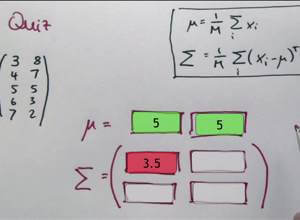
The lessons themselves were very simple – at least in method if not in content. Material was explained by Thrun and Norvig as they drew on sheets of paper. Kind of like the overhead projector lessons before the days of Powerpoint, except the online students could interact with the drawings. Rather than simply lecturing to the student and asking them to regurgitate the information on exams, the online format allowed for constant quizzing. Students would be asked a question then answer it by clicking or entering values right on the drawings. They wanted the student to actively think, be constantly challenged and given constant feedback.
The flexibility that this format offers is immediately clear. If the student misses a point or doesn’t quite understand, he or she can rewind, watch it again. Get the quiz wrong, just take it again…and again if you have to.
Until you get it right.

When the course began, however, it wasn’t like that. Initially Thrun had structured it as he had structured every other course over the past twenty years of teaching. Give the kids really hard material, then it’s sink or swim. But then he received an email from a parent who called his class a “weeder” class, and told him his daughter was dropping out. It was an epiphany for Thrun, compelling him to make a bold claim: “Grades are the failure of the education system.”
Thrun’s sudden dislike of grades is with its all-or-nothing nature. If we get a “C” on an exam we obviously haven’t mastered the material. Yet even if we get a “C”, the professor moves on to more advanced material anyway that will likely depend on the previous, unmastered material. After the email,
Thrun completely revamped Udacity to break the mold. If a student is having trouble with a problem they continue to work on it until they get it right. To Thrun, that’s still worth an A+. Imagine that, an entire class of students who can test at an A+ level. He sums up the attitude by paraphrasing a point made by Salman Khan, founder of the online Khan Academy: “When you learn to ride a bicycle, and you fail to learn a bicycle, you don’t stop to learn a bicycle, give the person a ‘D’ and move onto unicycle.”
What will education look like in the future? If other educators buy into the Udacity model it would be a sea change in the approach to education. An email Thrun received from a student in Afghanistan shows just how radically it is already changing.
I spent the last few days under incoming mortar and rocket attacks, then dodging checkpoints under questionable legal status to exfiltrate a war zone to a third world air field until things settled down. I had about an hour of fairly solid internet connectivity to be able to get the assignments done, and still managed a respectable score. This is a typical week here for me.
Okay, it’s time to address the note-taking, 800 ton gorilla in the room. Don’t we always hear that the key to a better education is to make classes smaller? How can two people possibly teach a class of 160,000 students? Obviously Thrun and Norvig didn’t grade the homework and exams by hand. What kinds of pioneering AI professors would they be if they didn’t employ their subject matter to correct it? AI programs shouldered the grading, and even handled question submissions. The multitudinous questions submitted by the students are sifted by a program and the most common ones are plucked out to be addressed. Not only does this make effectively answering questions possible, but it will highlight confusion points where the curriculum could be fine-tuned.
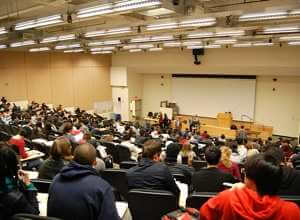
One might logically question the format, wonder if learning by yourself on a laptop turns education into a lonely and impersonal experience. But anyone who’s watched a movie on a long plane ride knows the blissful isolation of plugging in ear phones and watching the latest action/romance/comedy/family movies. If done thoughtfully, educators can take advantage of the intimacy of just you and your laptop and create an amazingly personal learning experience despite being one of 200,000 enrolled. Here, Udacity seems to have succeeded. With its illustrations literally drawn out for the students, the lessons made one student feel that Thrun and Norvig were “personally tutoring” her. Anyone who’s sat in an auditorium, looking over the heads of 200 hundred other students at the far away professor and Powerpoint projections knows that the impersonal feel of an average university classroom has much room for improvement. Incidentally, two weeks after Thrun’s AI class began at Stanford the class attendance had dwindled down from about 200 to about 30. They preferred him online rather than in person.
Udacity is now offering up two new courses, CS 101: Building a Search Engine and CS 373: Programming a Robotic Car. Together with David Evans, a professor at the University of Virginia, Thrun will teach you how to build a search engine in just seven weeks. The Search Engine course doesn’t require any programming experience. The Robotic Car course is more advanced, but don’t be scared off. Thrun says that familiarity with linear algebra and statistics and programming experience is useful, but none of this is required.
If you have 22 minutes to spare, I think you’ll enjoy Thrun’s talk. If you don’t, just go to 15:45 and listen as the moving student testimonials come in from all over the world. They alone should convince you that Udacity is on to something great. It was made clear that Thrun thinks so, when he shocked the audience by announcing that he was leaving his tenured position at Stanford. “I feel like there’s a red pill and a blue pill,” he told them. “You can take the blue pill and go back to Stanford…but I’ve taken the red pill and I’ve seen Wonderland.”
[image credits: Udacity and Xbxg32000 via WikiCommons]
image 1 and 2: Udacity
image 3: lecture hall
video: DLDconference