Manipulation of large dna strands with microhook and microspool

Share
The Short:
In this recent paper from Lab on a Chip it is revealed that researchers in Japan have developed two microtools for manipulating large strands of DNA such as an entire chromosome. Using a 10 micrometer hook they are able to grab hold of a strand of DNA and drag it where they like. Also, using two microspools (microbobbins) a chromosome sized strand of DNA can be neatly wound up into a small, compact form. The wound up DNA can easily be unwound as needed.
The Long:
The microtools are manipulated by targeted laser beams that can move the microtools and orient them as needed. Excellent videos demonstrating the microhook pulling a strand of DNA and a strand of DNA being wound up and then unwound using the spools can be seen here. Below is a picture of the microtools:
Be Part of the Future
Sign up to receive top stories about groundbreaking technologies and visionary thinkers from SingularityHub.

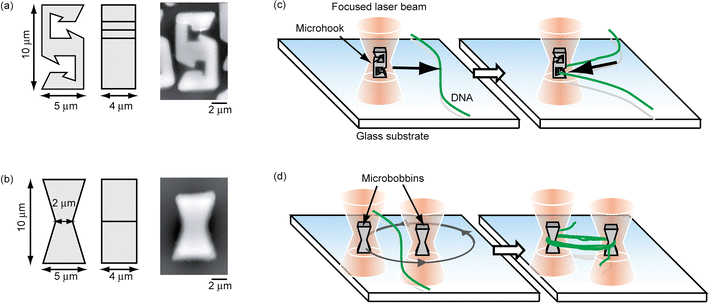
Although many tools, such as optical microtweezers already exist for the manipulation of small chunks of DNA, such tools are poor at dealing with large eukaryotic chromosome sized strands of DNA primarily because large strands easily break due to hydrodynamic shear. The microtools used by the Japanese researchers specifically overcome this problem by only requiring small forces (25pN) to manipulate the DNA and thus avoid breakage or deformation of the DNA strand. The researchers use a technique they previously pioneered called electroosmotic flow (EOF) to first untangle the DNA strand from its original three dimensional form and draw the strand out into a nice straight thread for subsquent manipulation by the microhook or microspools.

Related Articles
New Immune Treatment May Suppress HIV—No Daily Pills Required
How Scientists Are Growing Computers From Human Brain Cells—and Why They Want to Keep Doing It
Study: AI Chatbots Choose Friends Just Like Humans Do
New Immune Treatment May Suppress HIV—No Daily Pills Required
How Scientists Are Growing Computers From Human Brain Cells—and Why They Want to Keep Doing It
Study: AI Chatbots Choose Friends Just Like Humans Do
What we’re reading