This Touchable Midair 3D Laser Display Is Pretty Magical

Share
If you’re a science fiction fan—you are well familiar with holographic displays floating in midair. Maybe it’s Princess Leia materializing above R2-D2 or Tony Stark designing his Iron Man suit with a few cinematic flicks of the wrist.
In the real world, such technology has been difficult to perfect—but not for lack of trying.
Probably the closest we'll get to these sci-fi visions in the near future are augmented reality systems like Microsoft’s Hololens or Magic Leap. But much of today's technology requires you look through something (like a pair of goggles) to see those 3D images.
What if we could just project them in midair? Isn’t that what we really want?
There is, in fact, a technique that’s been in development for awhile to do just that. It works by focusing infrared laser pulses to briefly ionize the air, creating a light-emitting plasma.
The problem? Lasers, plasma, and humans don’t mix well.
In a new paper, however, researchers say they’ve created a laser-induced plasma display that is safe to touch. The key breakthrough? The team found that by reducing the length of the laser bursts from nanoseconds to femtoseconds—or a mere millionth of a billionth of a second—they could avoid causing damage to the skin.
Be Part of the Future
Sign up to receive top stories about groundbreaking technologies and visionary thinkers from SingularityHub.

Though still in the research phase—the necessary equipment is bulky and the images produced are small (no more than 8 cubic millimeters)—the resulting system, dubbed Fairy Lights, is still pretty magical.
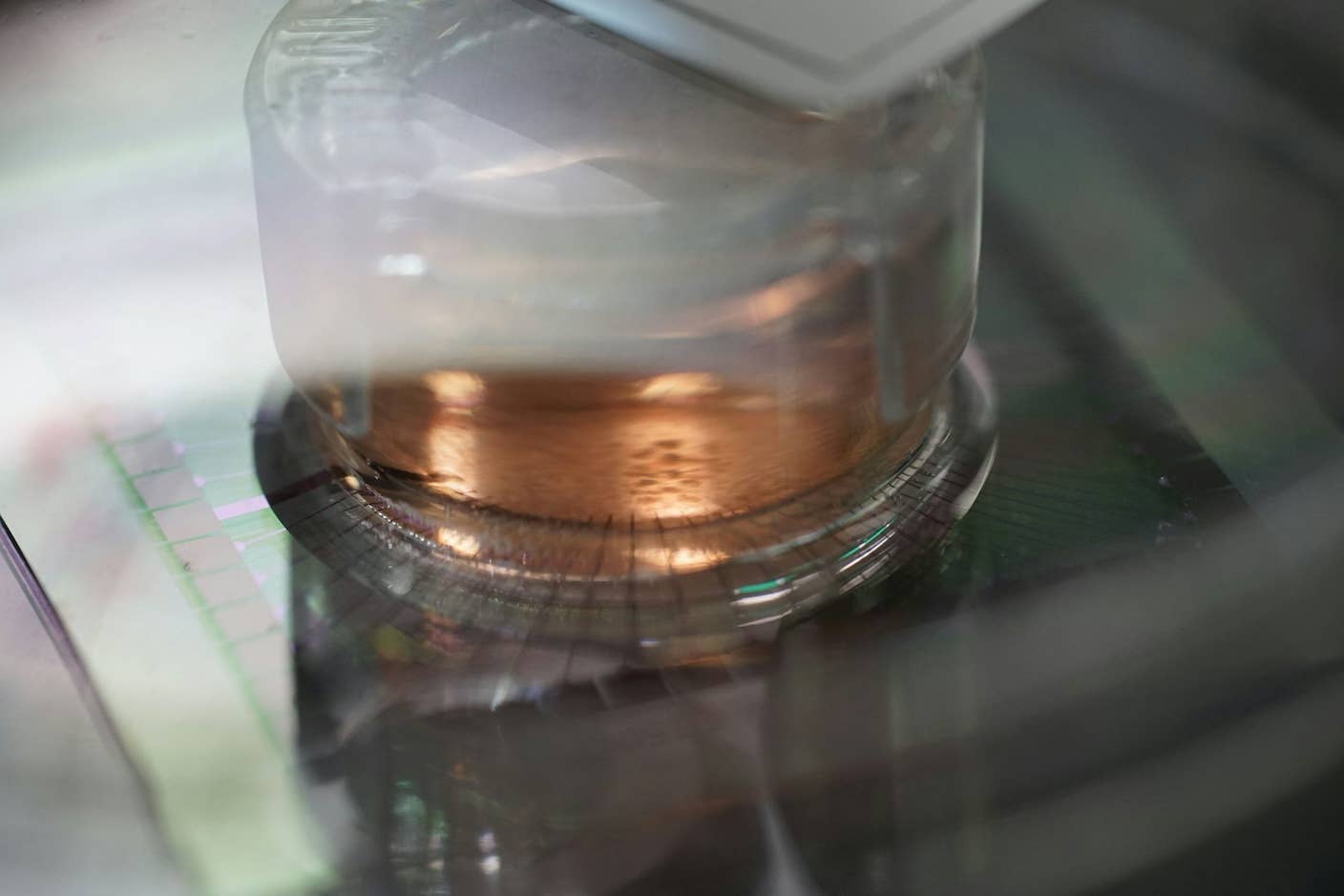
Image Credit: Yoichi Ochiai / University of Tsukuba

Jason is editorial director at SingularityHub. He researched and wrote about finance and economics before moving on to science and technology. He's curious about pretty much everything, but especially loves learning about and sharing big ideas and advances in artificial intelligence, computing, robotics, biotech, neuroscience, and space.
Related Articles
How Scientists Are Growing Computers From Human Brain Cells—and Why They Want to Keep Doing It

AI Companies Are Betting Billions on AI Scaling Laws. Will Their Wager Pay Off?

These Brain Implants Are Smaller Than Cells and Can Be Injected Into Veins
How Scientists Are Growing Computers From Human Brain Cells—and Why They Want to Keep Doing It
AI Companies Are Betting Billions on AI Scaling Laws. Will Their Wager Pay Off?
These Brain Implants Are Smaller Than Cells and Can Be Injected Into Veins
What we’re reading