Aging Weakens Immunity. An mRNA Shot Turned Back the Clock in Mice.
The treatment converted the liver into an immune cell "nursery" that pumped out greater numbers of healthy T cells.
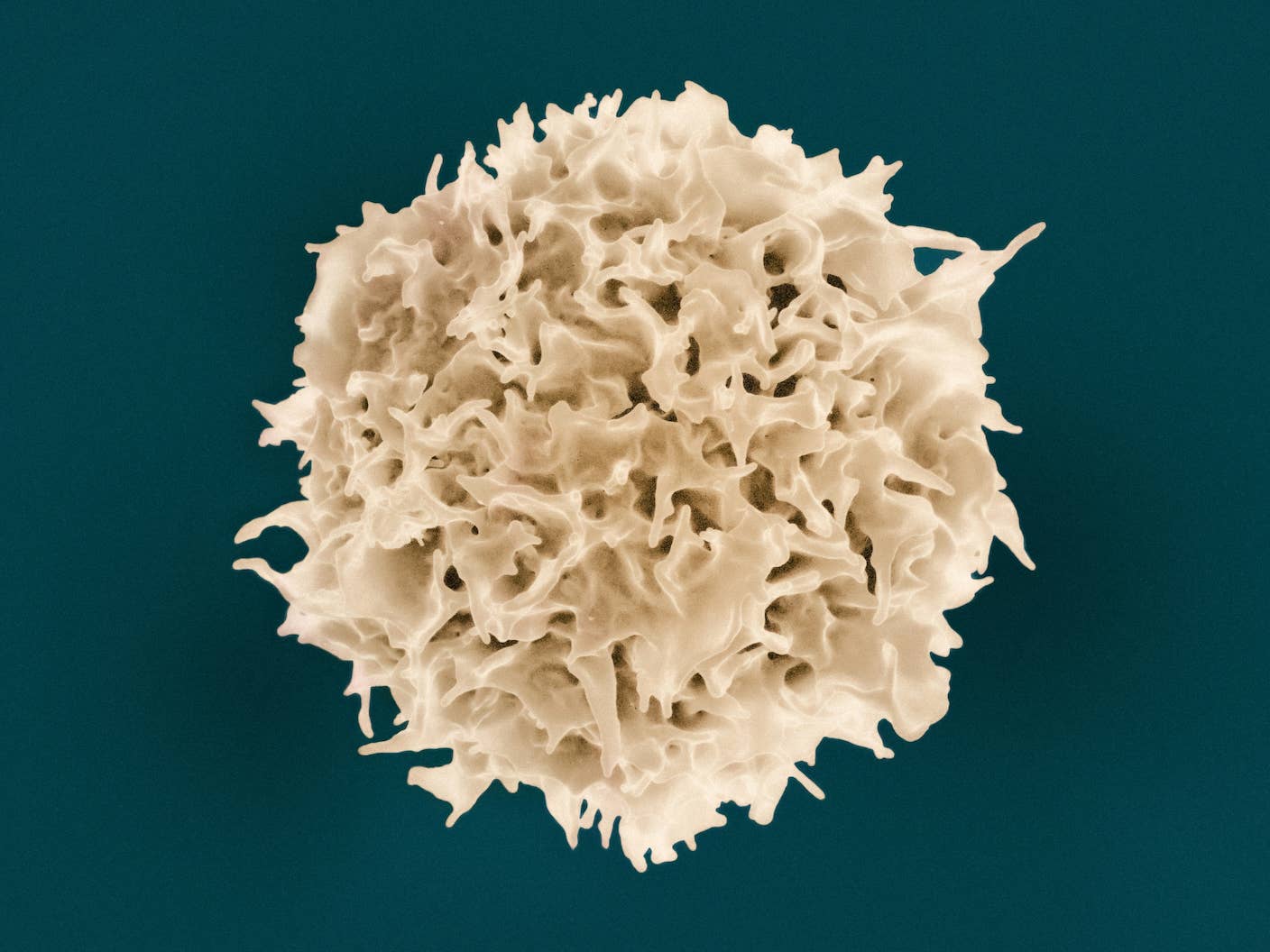
Image Credit
T cell / NIAID via Unsplash
Share
Our immune system is a fierce brigade. Roaming immune cells scan for bacteria, viruses, and other invaders. They also communicate with tissues to catch early signs of cancer. After detecting a threat, the immune system kickstarts formidable defenses to snuff it out.
But our immunity loses power as we age. Immune cells dwindle, and those that remain struggle to perform their usual roles. As a result, immune defenses weaken, increasing the chances of infection and cancer. This also makes vaccines less effective in older adults.
Now, a new treatment using mRNA technology similar to that in Covid vaccines rejuvenated the immune systems of old mice with twice-weekly shots. The injections transformed the liver into a temporary nursery to boost the numbers and health of key immune cells.
Treated mice, aged the human-equivalent of their early 60s, saw a rapid rise in multiple T cell types after vaccination. They also rallied against tumors with a popular cancer immunotherapy.
Resetting immunity isn’t just about defense. The immune system is intricately tied to the health of other organs. Chronic inflammation steadily rises as we age, wreaking havoc on memory, cognition, and metabolism. It also stiffens tissues in multiple organs, increasing the chances of heart attacks and kidney failure.
“If we can restore something essential like the immune system, hopefully we can help people stay free of disease for a longer span of their life,” study author Feng Zhang at MIT said in a press release.
T Cell Boot Camp
Multiple immune cell types protect our bodies, but T cells are one of the most prominent.
Some T cells seek and destroy virus-infected cells and cancer. Others coordinate immune responses and balance the attack to prevent autoimmune problems or runaway inflammation. Still more “remember” prior threats to trigger a faster immune response when re-exposed.
Despite their wide range, all T cells are born in the bone marrow. Baby T cells then journey to the thymus, a small organ sitting at the top of the heart, where they mature and diversify. In this nursery, the cells learn friend from foe, ensuring they’ll only attack legitimate threats while leaving healthy cells alone. The process is mostly coordinated by cocktails of proteins and other signaling molecules, which direct the fate of immature cells and help them survive.
The aging process gradually degrades the nursery. The thymus shrinks, and much of its working tissue is replaced by fat, leading to a drop in newly minted T cells.
“As we get older, the immune system begins to decline. We wanted to think about how can we maintain this kind of immune protection for a longer period of time, and that's what led us to think about what we can do to boost immunity,” said study author Mirco Friedrich.
For years scientists have tried to revive the organ. Hormones and immune-related proteins have struggled to bring it back to health. More exotic approaches, such as infusing the blood of young animals, transplanting stem cells, or directly tinkering with blood stem cells have shown some promise but are hard to turn into clinical treatments.
“Much has already been attempted to halt or reverse the age-related involution of the thymus,” said Friedrich. “Unfortunately, without much success so far.”
Rather than reviving the struggling organ, the team built a new T cell nursery in another part of the body.
Be Part of the Future
Sign up to receive top stories about groundbreaking technologies and visionary thinkers from SingularityHub.

Temporary Hotbed
They began by comprehensively mapping genetic changes in infant and elderly mice and deciphering how shifts in gene expression influenced T cell production.
The screen surfaced three genes that play a critical role in T cell maturation. The proteins those genes produce fall with age, correlating with lower T cell numbers. Refreshing the proteins could, in theory, reboot immune cell production.
This “is more of a synthetic approach,” said Zhang. “We're engineering the body to mimic thymic factor secretion.”
They decided on the liver as a temporary nursery for several reasons. The organ faithfully synthesizes proteins even into old age, and it’s a relatively easy target for mRNA treatments.
The team packaged mRNA encoding the three nurturing proteins into fatty nanoparticles and injected them into mice’s blood twice weekly for a month, beginning when the mice were aged the rough equivalent of people in their 60s. While far from elderly, T cell defects are noticeable around this age, and the cells could benefit from early intervention.
Compared to untreated peers, those given the shots produced more, healthier T cells. The treatment also boosted the critters’ immunity. In one test, mice vaccinated against ovalbumin, a major protein in egg whites, had a far stronger immune response against the protein compared to peers without the mRNA treatment.
The shots also helped the mice’s laggy immune systems better coordinate with checkpoint inhibitors, a common cancer medication. Mice with cancer given both treatments survived longer and at higher rates than those given only the inhibitors. More tests found all three protein-encoding mRNA sequences were needed to rejuvenate the immune system.
To be clear, this isn’t a one-and-done shot. The effects wane after treatment ends. While it seems like an inconvenience, the flexibility allows scientists to further tinker with dosage and treatment schedule and minimize side effects. More broadly, the study shows restoring the thymus isn’t necessary for turning back the clock on the immune system. Mimicking its signals in other parts of the body could also help T cells thrive, even in old age.
These are early results, and more tests are needed before bringing the therapy to people. The team plans to study the mRNA trio in other animals and hunt down more proteins that nurture T cells. They’re also looking to expand the strategy to other immune cell types, like the B cells that pump out antibodies.
“The immune system ages, but it does not irreversibly lose its abilities. If we provide it with the missing signals again, it can once more perform amazing feats,” said Friedrich.

Dr. Shelly Xuelai Fan is a neuroscientist-turned-science-writer. She's fascinated with research about the brain, AI, longevity, biotech, and especially their intersection. As a digital nomad, she enjoys exploring new cultures, local foods, and the great outdoors.
Related Articles
Forget Antibiotics: These Killer Cells Wipe Out Deadly Superbugs in a Day
Reviving Brain Activity After ‘Cryosleep’ Inches Closer in Pioneering Study
Digital Twin of a Cell Tracks Its Entire Life Cycle Down to the Nanoscale
Forget Antibiotics: These Killer Cells Wipe Out Deadly Superbugs in a Day
Reviving Brain Activity After ‘Cryosleep’ Inches Closer in Pioneering Study
Digital Twin of a Cell Tracks Its Entire Life Cycle Down to the Nanoscale
What we’re reading