This Week’s Awesome Tech Stories From Around the Web (Through January 17)
Every week, we scour the web for important, insightful, and fascinating stories in science and technology.

Image Credit
Martin Lostak on Unsplash
Share
Computing
We’re About to Simulate a Human Brain on a SupercomputerAlex Wilkins | New Scientist ($)
"What would it mean to simulate a human brain? Today’s most powerful computing systems now contain enough computational firepower to run simulations of billions of neurons, comparable to the sophistication of real brains. We increasingly understand how these neurons are wired together, too, leading to brain simulations that researchers hope will reveal secrets of brain function that were previously hidden."
Tech
Gemini Is WinningDavid Pierce | The Verge
"Each one of [the] elements [you need in AI] is complex and competitive; there’s a reason OpenAI CEO Sam Altman keeps shouting about how he needs trillions of dollars in compute alone. But Google is the one company that appears to have all of the pieces already in order. Over the last year, and even in the last few days, the company has made moves that suggest it is ready to be the biggest and most impactful force in AI."
Artificial Intelligence
Meet the New Biologists Treating LLMs Like AliensWill Douglas Heaven | MIT Technology Review ($)
"[AI researchers] are pioneering new techniques that let them spot patterns in the apparent chaos of the numbers that make up these large language models, studying them as if they were doing biology or neuroscience on vast living creatures—city-size xenomorphs that have appeared in our midst."
Biotechnology
Scientists Sequence a Woolly Rhino Genome From a 14,400-Year-Old Wolf’s StomachKiona N. Smith | Ars Technica
"DNA testing revealed that the meat was a prime cut of woolly rhinoceros, a now-extinct 2-metric-ton behemoth that once stomped across the tundras of Europe and Asia. Stockholm University paleogeneticist Sólveig Guðjónsdóttir and her colleagues recently sequenced a full genome from the piece of meat, which reveals some secrets about woolly rhino populations in the centuries before their extinction."
Biotechnology
Finally, Some Good News in the Fight Against CancerEllyn Lapointe | Gizmodo
"The findings, published Tuesday, show for the first time that 70% of all cancer patients survived at least five years after being diagnosed between 2015 and 2021. That’s a major improvement since the mid-1970s, when the five-year survival rate was just 49%, according to the report."
Computing
A Leading Use for Quantum Computers Might Not Need Them After AllKarmela Padavic-Callaghan | New Scientist ($)
"Understanding a molecule that plays a key role in nitrogen fixing—a chemical process that enables life on Earth—has long been thought of as problem for quantum computers, but now a classical computer may have solved it. ...The researchers also estimated that the supercomputer method may even be faster than quantum ones, performing calculations in less than a minute that would take 8 hours on a quantum device—although this estimate assumes an ideal supercomputer performance."
Artificial Intelligence
AI Models Are Starting to Crack High-Level Math ProblemsRussell Brandom | TechCrunch
"Since the release of GPT 5.2—which Somani describes as “anecdotally more skilled at mathematical reasoning than previous iterations” — the sheer volume of solved problems has become difficult to ignore, raising new questions about large language models’ ability to push the frontiers of human knowledge."
Energy
How Next-Generation Nuclear Reactors Break Out of the 20th-Century BlueprintCasey Crownhart | MIT Technology Review ($)
"Demand for electricity is swelling around the world. ...Nuclear could help, but only if new plants are safe, reliable, cheap, and able to come online quickly. Here’s what that new generation might look like."
Artificial Intelligence
AI’s Hacking Skills Are Approaching an ‘Inflection Point’Will Knight | Wired ($)
"The situation points to a growing risk. As AI models continue to get smarter, their ability to find zero-day bugs and other vulnerabilities also continues to grow. The same intelligence that can be used to detect vulnerabilities can also be used to exploit them."
Be Part of the Future
Sign up to receive top stories about groundbreaking technologies and visionary thinkers from SingularityHub.

Artificial Intelligence
Anthropic’s Claude Cowork Is an AI Agent That Actually WorksReece Rogers | Wired ($)
"[My experiences testing subpar agents] expose a consistent pattern of generative AI startups overpromising and underdelivering when it comes to these 'agentic' helpers—programs designed to take control of your computer, performing chores and digital errands to free up your time for more important things. ...They just didn’t work. This poor track record makes Anthropic’s latest agent, Claude Cowork, a nice surprise."
Tech
Ads Are Coming to ChatGPT. Here’s How They’ll WorkMaxwell Zeff | Wired ($)
"OpenAI could use a business like [ads] right about now. The decade-old company has raised roughly $64 billion from investors over its lifetime, and it generated only a fraction of that in revenue last year. Competition from rivals like Google Gemini has only amped up the pressure for OpenAI to monetize ChatGPT’s massive audience."
Robotics
Wing’s Drone Delivery Is Coming to 150 More WalmartsAndrew J. Hawkins | The Verge
"So far, they’ve launched at several stores in Atlanta, in addition to Walmart locations in Dallas-Forth Worth and Arkansas. They currently operate at approximately 27 stores, and with today’s announcement, the goal is to eventually establish a network of 270 Walmart locations with Wing drone delivery by 2027."
Computing
OpenAI Forges Multibillion-Dollar Computing Partnership With CerebrasKate Clark and Berber Jin | The Wall Street Journal ($)
"OpenAI plans to use chips designed by Cerebras to power its popular chatbot, the companies said Wednesday. It has committed to purchase up to 750 megawatts of computing power over three years from Cerebras. The deal is worth more than $10 billion, according to people familiar with the matter."
Space
China Just Built Its Own Time System for the MoonPassant Rabie | Gizmodo
"As the global race to build a human habitat on the Moon heats up, there are several ongoing attempts to establish a universal lunar time that future missions can rely on. China, however, claims to be the first to set its lunar clocks and has made its new tool publicly available for use."

Related Articles
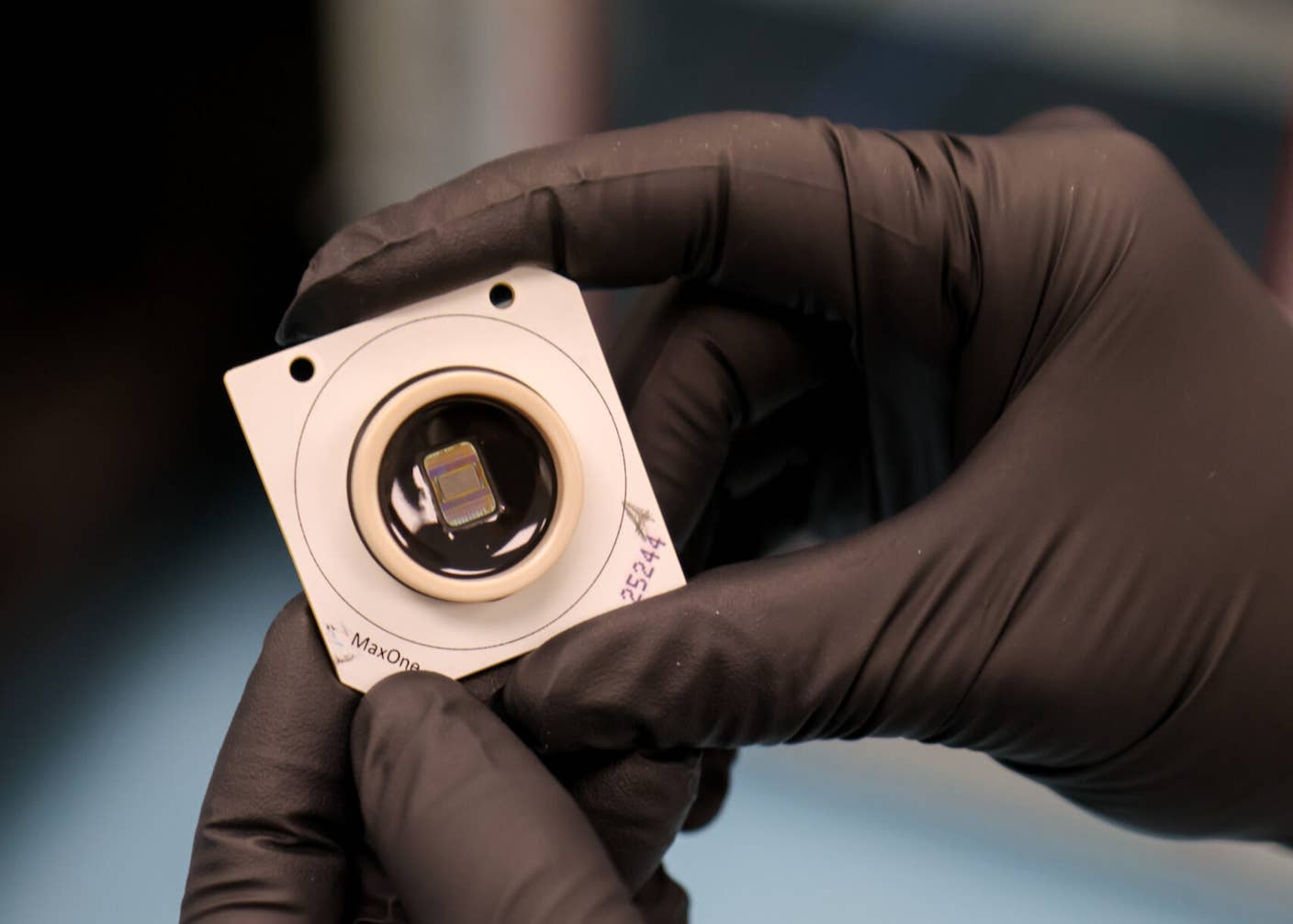
These Mini Brains Just Learned to Solve a Classic Engineering Problem
Reviving Brain Activity After ‘Cryosleep’ Inches Closer in Pioneering Study

This Week’s Awesome Tech Stories From Around the Web (Through March 21)
These Mini Brains Just Learned to Solve a Classic Engineering Problem
Reviving Brain Activity After ‘Cryosleep’ Inches Closer in Pioneering Study
This Week’s Awesome Tech Stories From Around the Web (Through March 21)
What we’re reading