Google DeepMind AI Decodes the Genome a Million ‘Letters’ at a Time
Thousands of scientists are already experimenting with the AI to study cancer and brain disorders.
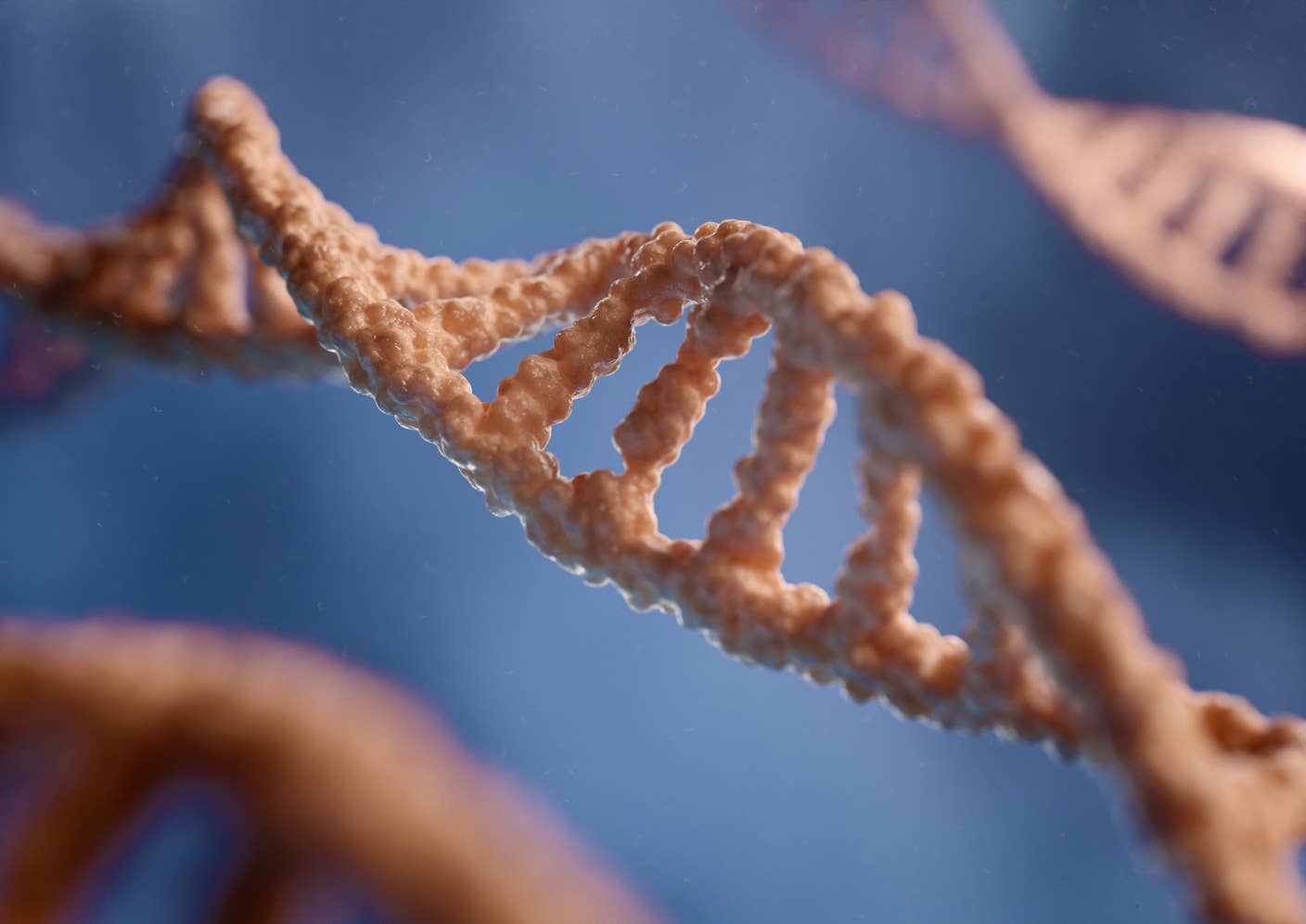
Image Credit
digitale.de on Unsplash
Share
DNA stores the body’s operating playbook. Some genes encode proteins. Other sections change a cell’s behavior by regulating which genes are turned on or off. For yet others, the dark matter of the genome, the purpose remains mysterious—if they have any at all.
Normally, these genetic instructions conduct the symphony of proteins and molecules that keep cells humming along. But even a tiny typo can throw molecular programs into chaos. Scientists have painstakingly connected many DNA mutations—some in genes, others in regulatory regions—to a range of humanity’s most devastating diseases. But a full understanding of the genome remains out of reach, largely because of its overwhelming complexity.
AI could help. In a paper published this week in Nature, Google DeepMind formally unveiled AlphaGenome, a tool that predicts how mutations shape gene expression. The model takes in up to one million DNA letters—an unprecedented length—and simultaneously analyzes 11 types of genomic mutations that could torpedo the way genes are supposed to function.
Built on a previous iteration called Enformer, AlphaGenome stands out for its ability to predict the purpose of DNA letters in non-coding regions of the genome, which largely remain mysterious.
Computational gene expression prediction tools already exist, but they’re usually tailored to one type of genetic change and its consequences. AlphaGenome is a jack-of-all-trades that tracks multiple gene expression mechanisms, allowing researchers to rapidly capture a comprehensive picture of a given mutation and potentially speed up therapeutic development.
Since its initial launch last June, roughly 3,000 scientists from 160 countries have experimented with the AI to study a range of diseases including cancer, infections, and neurodegenerative disorders, said DeepMind’s Pushmeet Kohli in a press briefing.
AlphaGenome is now available for non-commercial use through a free online portal, but the DeepMind team plans to release the model to scientists so they can customize it for their research.
“We see AlphaGenome as a tool for understanding what the functional elements in the genome do, which we hope will accelerate our fundamental understanding of the code of life,” said study author Natasha Latysheva in the news conference.
98 Percent Invisible
Our genetic blueprint seems simple. DNA consists of four basic molecules represented by the letters A, T, C, and G. These letters are grouped in threes called codons. Most codons call for the production of an amino acid, a type of molecule the body strings together into proteins. Mutations thwart the cell from making healthy proteins and potentially cause diseases.
The actual genetic playbook is far more complex.
When scientists pieced together the first draft of the human genome in the early 2000s, they were surprised by how little of it directed protein manufacturing. Just two percent of our DNA encoded proteins. The other 98 percent didn’t seem to do much, earning the nickname “junk DNA.”
Over time, however, scientists have realized those non-coding letters have a say about when and in which cells a gene is turned on. These regions were originally thought to be physically close to the gene they regulated. But DNA snippets thousands of letters away can also control gene expression, making it tough to hunt them down and figure out what they do.
It gets messier.
Cells translate genes into messenger molecules that shuttle DNA instructions to the cell’s protein factories. In this process, called splicing, some DNA sequences are skipped. This lets a single gene create multiple proteins with different purposes. Think of it as multiple cuts of the same movie: The edits result in different but still-coherent storylines. Many rare genetic diseases are caused by splicing errors, but it’s been hard to predict where a gene is spliced.
Then there’s the accessibility problem. DNA strands are tightly wrapped around a protein spool. This makes it physically impossible for the proteins involved in gene expression to latch on. Some molecules dock onto tiny bits of DNA and tug them away from the spool to provide access, but the sites are tough to hunt down.
The DeepMind team thought AI would be well-suited to take a crack at these problems.
Be Part of the Future
Sign up to receive top stories about groundbreaking technologies and visionary thinkers from SingularityHub.

“The genome is like the recipe of life,” said Kohli in a press briefing. “And really understanding ‘What is the effect of changing any part of the recipe?’ is what AlphaGenome sort of looks at.”
Making Sense of Nonsense
Previous work linking genes to function inspired AlphaGenome. It works in three steps. The first detects short patterns of DNA letters. Next the algorithm communicates this information across the entire analyzed DNA section. In the final step, AlphaGenome maps detected patterns into predictions like, for example, how a mutation affects splicing.
The team trained AlphaGenome on a variety of publicly available genetic libraries amassed by biologists over the past decade. Each captures overlapping aspects of gene expression, including differences between cell types and species. AlphaGenome can analyze sequences that are as long as a million DNA letters from humans or mice. It can then predict a range of molecular outcomes at the resolution of single letter changes.
“Long sequence context is important for covering regions regulating genes from far away,” wrote the team in a blog post. The algorithm’s high resolution captures “fine-grained biological details.” Older methods often sacrifice one for the other; AlphaGenome optimizes both.
The AI is also extremely versatile. It can make sense of 11 different gene regulation processes at once. When pitted against state-of-the-art programs, each focused on just one of these processes, AlphaGenome was as good or better across the board. It readily detected areas engaged in splicing and scored how much DNA letter changes would likely affect gene expression.
In one test, the AI tracked down DNA mutations roughly 8,000 letters away from a gene involved in blood cancer. Normally, the gene helps immune cells mature so they can fight off infections. Then it turns off. But mutations can keep it switched on, causing immune cells to replicate out of control and turn cancerous. That the AI could predict the impact of these far-off DNA influences showcases its genome-deciphering potential.
There are limitations, however. The algorithm struggles to capture the roles of regulatory regions over 100,000 DNA letters away. And while it can predict molecular outcomes of mutations—for example, what proteins are made—it can’t gauge how they cause complex diseases, which involve environmental and other factors. It’s also not set up to predict the impact of DNA mutations for any particular individual.
Still, AlphaGenome is a baseline model that scientists can fine-tune for their area of research, provided there’s enough well-organized data to further train the AI.
“This work is an exciting step forward in illuminating the ‘dark genome.’ We still have a long way to go in understanding the lengthy sequences of our DNA that don’t directly encode the protein
machinery whose constant whirring keeps us healthy,” said Rivka Isaacson at King’s College London, who was not involved in the work. “AlphaGenome gives scientists whole new and vast datasets to sift and scavenge for clues.”

Dr. Shelly Xuelai Fan is a neuroscientist-turned-science-writer. She's fascinated with research about the brain, AI, longevity, biotech, and especially their intersection. As a digital nomad, she enjoys exploring new cultures, local foods, and the great outdoors.
Related Articles
Forget Antibiotics: These Killer Cells Wipe Out Deadly Superbugs in a Day
Reviving Brain Activity After ‘Cryosleep’ Inches Closer in Pioneering Study
Digital Twin of a Cell Tracks Its Entire Life Cycle Down to the Nanoscale
Forget Antibiotics: These Killer Cells Wipe Out Deadly Superbugs in a Day
Reviving Brain Activity After ‘Cryosleep’ Inches Closer in Pioneering Study
Digital Twin of a Cell Tracks Its Entire Life Cycle Down to the Nanoscale
What we’re reading