This Week’s Awesome Tech Stories From Around the Web (Through March 14)
Every week, we scour the web for important, insightful, and fascinating stories in science and technology.

Image Credit
Alexander Korte on Unsplash
Share
Robotics
How Pokémon Go Is Giving Delivery Robots an Inch-Perfect View of the WorldWill Douglas Heaven | MIT Technology Review ($)
"Niantic Spatial is using that vast and unparalleled trove of crowdsourced data—images of urban landmarks tagged with super-accurate location markers taken from the phones of hundreds of millions of Pokémon Go players around the world—to build a kind of world model, a buzzy new technology that grounds the smarts of LLMs in real-world environments."
Future
A Roadmap for AI, if Anyone Will ListenConnie Loizos | TechCrunch
"The newly published document, signed by hundreds of experts, former officials, and public figures, opens with the no-nonsense observation that humanity is at a fork in the road. One path, which the declaration calls 'the race to replace,' leads to humans being supplanted first as workers, then as decision-makers, as power accrues to unaccountable institutions and their machines. The other leads to AI that massively expands human potential."
Computing
Startup Is Building the First Data Center to Use Human Brain CellsAlex Wilkins | New Scientist ($)
"Data centers use huge amounts of energy and chips are in high demand—could brain cells be the answer? Australia-based start-up Cortical Labs has announced it is building two 'biological' data centers in Melbourne and Singapore, stacked with the same neuron-filled chips that it has demonstrated can play Pong or Doom."
Robotics
Why Do Humanoid Robots Still Struggle With the Small Stuff?John Pavlus | Quanta Magazine
"'I asked each researcher: Can your flagship robot—Boston Dynamics’ Atlas or Agility’s Digit, two of the most credible and pedigreed humanoids on Earth—handle any set of stairs or doorway? 'Not reliably,' Hurst said. 'I don’t think it’s totally solved,' Kuindersma said. ...It’s 2026. Why are humanoids still this…hard?"
Future
AI Isn’t Lightening Workloads. It’s Making Them More Intense.Ray A. Smith | The Wall Street Journal ($)
"One of the great hopes for artificial intelligence—at least, among workers—is that it will ease workloads, freeing people up for more high-level, creative pursuits. So far, the opposite is happening, new data show. In fact, AI is increasing the speed, density and complexity of work rather than reducing it, according to an analysis of 164,000 workers’ digital work activity."
Future
Karpathy’s March of Nines Shows Why 90% AI Reliability Isn’t Even Close to EnoughNikhil Mungel | VentureBeat
"The 'March of Nines' frames a common production reality: You can reach the first 90% reliability with a strong demo, and each additional nine often requires comparable engineering effort. For enterprise teams, the distance between 'usually works' and 'operates like dependable software' determines adoption."
Computing
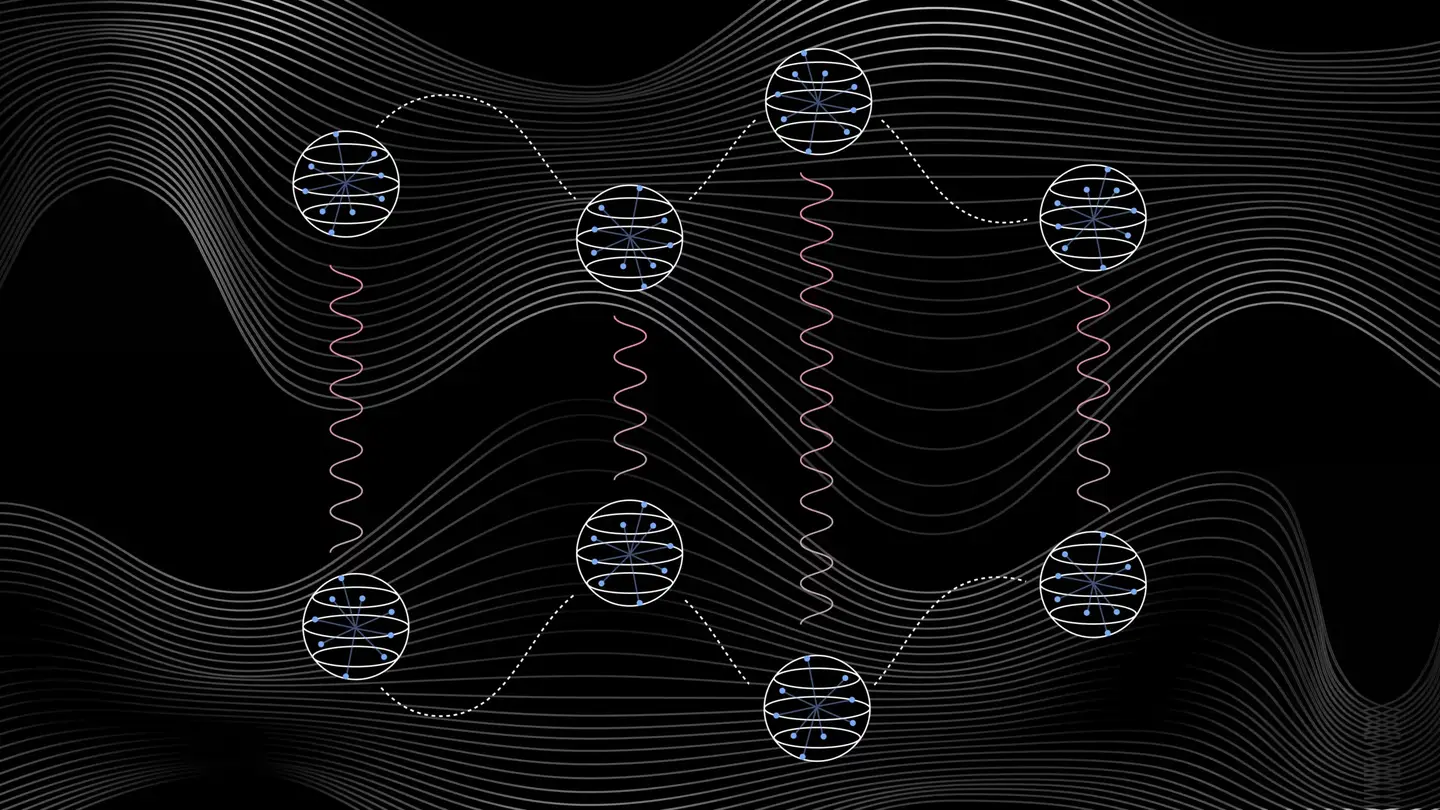
The Race to Solve the Biggest Problem in Quantum ComputingKarmela Padavic-Callaghan | New Scientist ($)
"Quantum computers are already here, but they make far too many errors. This is arguably the biggest obstacle to the technology really becoming useful, but recent breakthroughs suggest a solution may be on the horizon. 'It’s a very exciting time in error correction. For the first time, theory and practice are really making contact,' says Robert Schoelkopf at Yale University."
Robotics
Modular Yard Robot Mows Lawns, Plows Snow, Gathers Leaves and Trims GrassMaryna Holovnova | New Atlas
"Homeowners usually end up with a garage filled with various equipment: a lawn mower, snow blower, shovels, and tools for clearing fallen leaves. Currently available on Kickstarter, the Yarbo M attempts to combine all those individual tools into one compact robotic platform that can automatically do all the yard work."
Be Part of the Future
Sign up to receive top stories about groundbreaking technologies and visionary thinkers from SingularityHub.

Robotics
These Self-Configuring Modular Robots May One Day Rule the WorldTom Hawking | Gizmodo
"Each unit has multiple points to which another unit can attach itself: 18 of them, to be precise, which means that just two units can be combined in 435 ways. The number of possible configurations explodes as the number of units increases, and by the time you get to five units, there are hundreds of billions of possible combinations."
Space
This SpaceX Veteran Says the Next Big Thing in Space Is Satellites That Return to EarthTim Fernholz | TechCrunch
"The reusable rocket has transformed the space industry in the last decade, and a new startup led by a SpaceX veteran wants to do the same for satellites. Brian Taylor, who helped build satellites for networks like SpaceX’s Starlink and Amazon’s Leo, founded Lux Aeterna in December 2024 to develop satellite structures with a built-in heat shield that will allow them to return to Earth with their payloads intact."
Tech
Almost 40 New Unicorns Have Been Minted So Far This Year—Here They AreDominic-Madori Davis | TechCrunch
"Using data from Crunchbase and PitchBook, TechCrunch tracked down the VC-backed startups that became unicorns in 2026. While most are AI-related, a surprising number are focused on other industries like healthcare and even a few crypto companies."
Space
SETI Thinks It Might Have Missed a Few Alien Calls. Here’s WhyMatthew Phelan | Gizmodo
"A new study published by researchers at the SETI Institute, short for the Search for Extraterrestrial Intelligence, has tested the possibility that 'space weather' could render strong premeditated alien broadcasts into the kind of fainter radio signals that SETI typically ignores."

Related Articles
Five Ways Quantum Technology Could Shape Everyday Life

The Mad Scramble to Power AI Is Rewiring the US Grid

Chatbots ‘Optimized to Please’ Make Us Less Likely to Admit When We’re Wrong
Five Ways Quantum Technology Could Shape Everyday Life
The Mad Scramble to Power AI Is Rewiring the US Grid
Chatbots ‘Optimized to Please’ Make Us Less Likely to Admit When We’re Wrong
What we’re reading