This Week’s Awesome Tech Stories From Around the Web (Through March 28)
Every week, we scour the web for important, insightful, and fascinating stories in science and technology.

Share
Artificial Intelligence
This New Benchmark Could Expose AI’s Biggest WeaknessMark Sullivan | Fast Company
"The influential AI researcher François Chollet has long argued that the field measures intelligence incorrectly, that popular benchmarks reward a model’s ability to memorize vast amounts of data rather than navigate novel situations and learn new skills. ...The test, called ARC-AGI-3, may offer the clearest measurement yet of how close today’s AI agents are to human-level intelligence."
Computing
You Can Now Buy a DIY Quantum ComputerKarmela Padavic-Callaghan | New Scientist ($)
"EduQit includes a chip made from tiny superconducting circuits, which is the heart of the quantum computer. There is also a special refrigerator that the chip is installed and wired into, along with a set of electronic devices that use radio waves and microwaves for controlling the chip and reading the results of its computations. All of this is combined with a smattering of racks, power cables and other devices that help complete the quantum computer."
Biotechnology
Scientists Create ‘Living Pharmacy’ Implant That Doses 3 Drugs at OnceEd Cara | Gizmodo
"These tiny devices are jam-packed with genetically engineered cells that produce the desired medication. Once implanted inside the body, usually just underneath the skin, the cells can deliver the drug as needed without any fuss, while the device’s structure is intended to protect the cells from any immune response."
Computing
The CPU Was Left for Dead by AI. Now AI Is Bringing It Back.Robbie Whelan | The Wall Street Journal ($)
"For the past few years, central processing units, or CPUs...have been something of an afterthought in the world of artificial-intelligence computing. Now, thanks to how fast AI is changing, they are the belles of the ball. The explosion of so-called agentic AI has driven a wave of demand for CPUs, and chip companies are moving quickly to capitalize on it."
Future
What Happens If AI Makes Things Too Easy for Us?Vanessa Bates Ramirez | IEEE Spectrum
"Psychological research has long shown that effortful engagement can deepen understanding and strengthen memory, sometimes described as 'desirable difficulties.' The authors worry that AI systems capable of instantly producing polished answers or highly responsive conversation may bypass these processes of learning and motivation."
Science
Computer Finds Flaw in Major Physics Paper for First TimeMatthew Sparkes | New Scientist ($)
"A computer language designed to robustly verify mathematical theorems and expose logical flaws has been turned towards a physics paper—and spotted an error. ...The researcher behind the discovery says it is the first physics paper he has analyzed in this way, which raises a worrying question: how many more contain mistakes?"
Biotechnology
'Zombie' Cells Created by Transplanting Genomes Into Dead BacteriaChris Simms | New Scientist ($)
"Some of the bacteria began to grow and divide normally and genetic tests showed they carried the synthetic genome. This makes them the first living, synthetic bacterial cells constructed from non-living parts, claim the researchers, who call them 'zombie cells' because they have been revived after death."
Be Part of the Future
Sign up to receive top stories about groundbreaking technologies and visionary thinkers from SingularityHub.

Future
We Could Protect Earth From Dangerous Asteroids Using a Huge MagnetLeah Crane | New Scientist ($)
"The spacecraft itself would consist of a large magnet made from a coil of superconducting wire, about 20 meters in diameter, powered by a nuclear fission reactor. Small boosters would control its orbit around the asteroid, keeping it about 10 to 15 meters from the rock, so the magnet could act on the iron within the asteroid."
Biotechnology
A Billionaire-Backed Startup Wants to Grow 'Organ Sacks' to Replace Animal TestingEmily Mullin | Wired ($)
"R3 Bio has a bold idea for replacing lab animals: genetically-engineered whole organ systems that lack a brain. The long-term goal, says a cofounder, is to make human versions. ...Growing human organs from scratch has been a longtime goal of regenerative medicine, but the idea of body sacks raises a number of ethical questions about how these entities would be created, stored, and maintained—and if they would be capable of having awareness or feeling pain."
Future
The Hardest Question to Answer About AI-Fueled DelusionsJames O'Donnell | MIT Technology Review ($)
"New research can’t yet say whether AI causes delusions or amplifies them, a distinction that will shape everything from high-profile court cases to safety rules for chatbots. ...Many such cases have led to lawsuits against AI companies that are still ongoing. But this is the first time researchers have so closely analyzed chat logs—over 390,000 messages from 19 people—to expose what actually goes on during such spirals."
Biotechnology
This Scientist Rewarmed and Studied Pieces of His Friend’s Cryopreserved BrainJessica Hamzelou | MIT Technology Review ($)
"'This brain is not alive,' says John Bischof, who works on ways to cryopreserve human organs at the University of Minnesota. Still, Fahy’s research could help provide a tool to neuroscientists looking for new ways to study the brain. And while human reanimation after cryopreservation may be the stuff of science fiction, using the technology to preserve organs for transplantation is within reach."

Related Articles

NASA Unveils Its $20 Billion Moon Base Plan—and a Nuclear Spacecraft for Mars

What We Actually See—and Don’t See—Shows Consciousness Is Only the Tip of the Iceberg
These Mini Brains Just Learned to Solve a Classic Engineering Problem
NASA Unveils Its $20 Billion Moon Base Plan—and a Nuclear Spacecraft for Mars
What We Actually See—and Don’t See—Shows Consciousness Is Only the Tip of the Iceberg
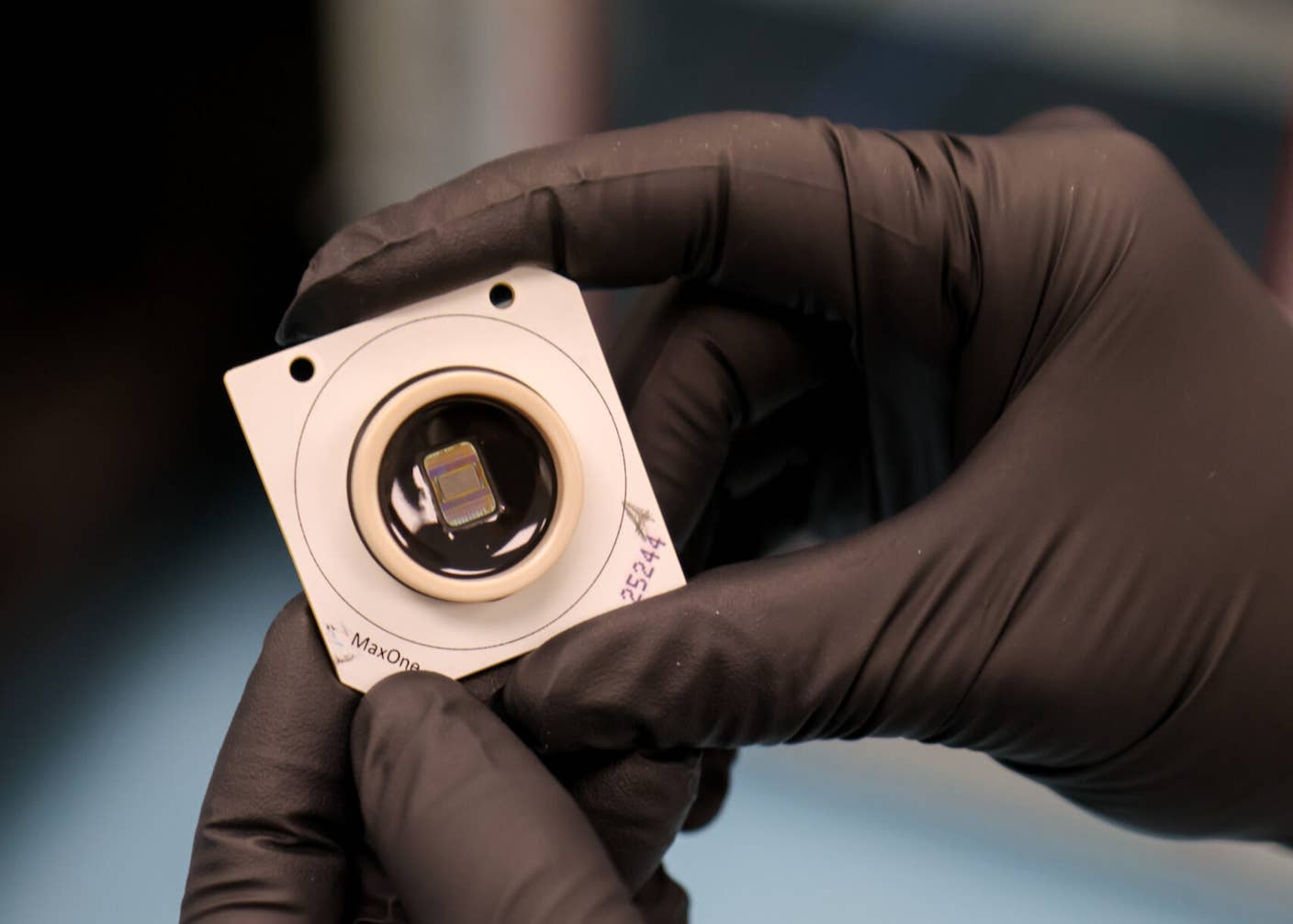
These Mini Brains Just Learned to Solve a Classic Engineering Problem
What we’re reading