Sodium Is Cheap, Abundant, and Now Powering Batteries That Could Rival Lithium
Sodium-ion batteries are rapidly gaining on lithium in consistency and fast charging.
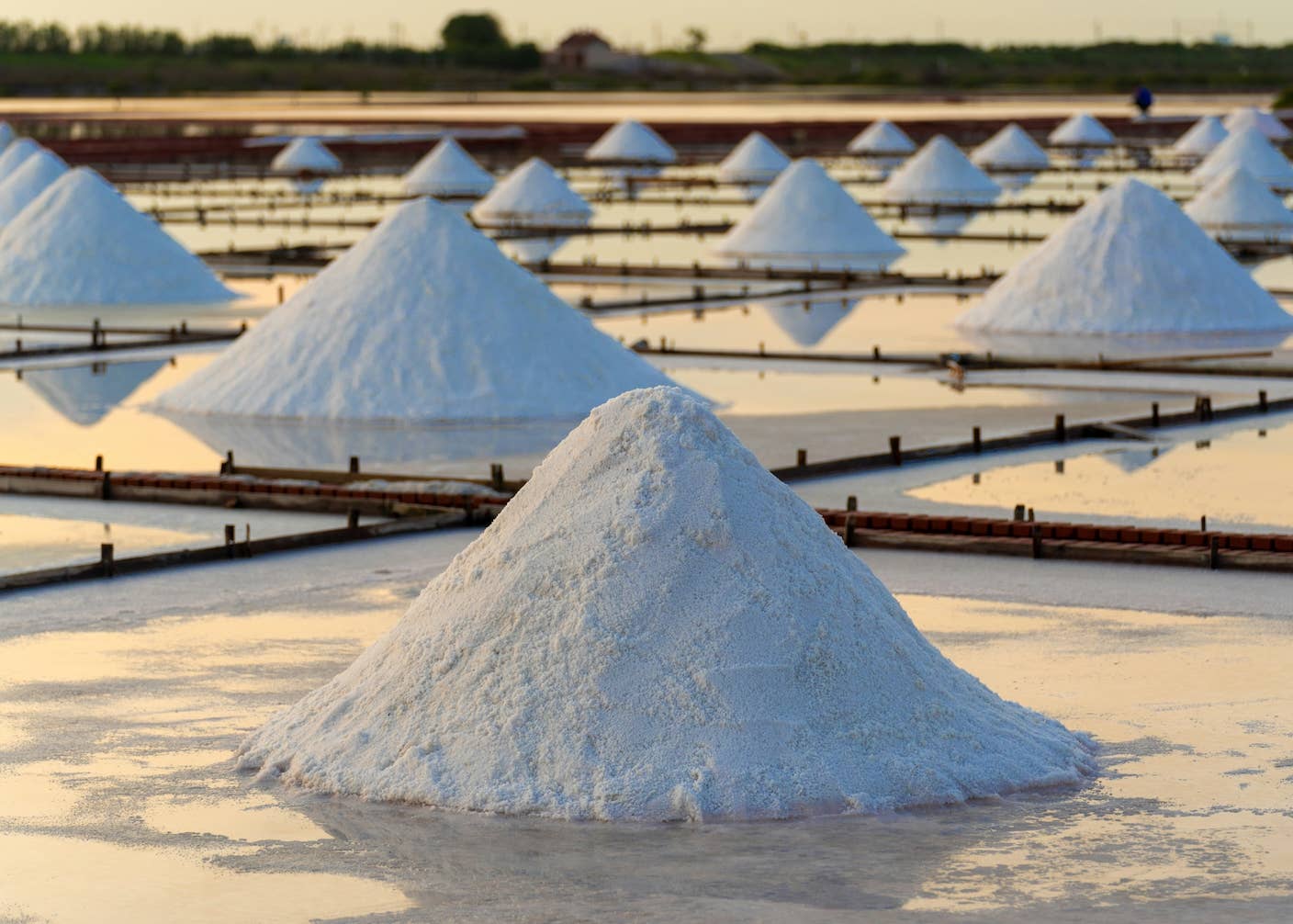
Image Credit
Timo Volz on Unsplash
Share
As demand for electric vehicles and grid storage surges, battery makers are searching for alternatives to lithium that are cheaper and easier to source. New research suggests sodium-ion batteries, which have long been heralded as a promising alternative, may be maturing faster than expected.
Lithium-ion batteries dominate the market thanks to their excellent energy density and well-developed supply chains. But lithium prices have been swinging wildly in recent years, and there are concerns about lithium market concentration—the vast majority of extraction happens in a handful of countries, like Australia and Chile, and China dominates lithium processing.
This has driven interest in novel chemistries. Sodium is a leading contender due its low price and abundant deposits all over the globe, but performance concerns have held back adoption.
Chinese companies, however, have begun to take sodium batteries seriously. And in a new analysis in Cell Reports Physical Science, German scientists found that cells made by the Chinese manufacturer HiNa compare favorably to the lithium-ion batteries Tesla uses in its cars.

“The combination of good uniformity, high power capability, and strong low‑temperature performance makes these cells attractive for stationary storage, grid services, and shorter‑range or commercial vehicles where potential lower cost and resource availability matter more than maximum driving range,” Moritz Schütte, a battery researcher at RWTH Aachen University who co-led the study, said in a press release.
A good battery needs uniform cells. If some cells are weaker than others, it can degrade the entire battery over multiple charge and discharge cycles, and it also makes it harder to control and optimize power flow in and out of the pack. It’s also a key indicator of a mature production process.
To see how the HiNa batteries stacked up, the researchers tested 120 individual sodium-ion cells using a non-destructive technique called impedance spectroscopy. Here, they applied a current across various frequencies to probe the internal physical chemical properties of the device.
The team then tested the cells at varying currents and temperatures from -4 to 113 degrees Fahrenheit to get a picture of their power performance under a wide range of conditions. They also used X-rays to probe the batteries’ internal structure, before opening them up to analyze the size and composition of various components in more detail.
Across the 120 cells, resistance varied by just 5.3 percent—a level of consistency the researchers say is comparable to well-established lithium-ion production lines. And while fast charging can rapidly degrade performance, the cells maintained full capacity at charge rates high enough to fill the battery in just 15 minutes.
Be Part of the Future
Sign up to receive top stories about groundbreaking technologies and visionary thinkers from SingularityHub.

Low temperature also reduces capacity by slowing down a battery’s chemical reactions. But the researchers found the HiNa device discharged over 80 percent of its usable energy at -4 degrees Fahrenheit after charging at roughly room temperature. That figure fell to 56 percent, however, when it was also charged at -4 degrees Fahrenheit (as opposed to room temperature).
The batteries didn’t get a universally glowing report. The team found energy density still lags the best lithium-ion cells, and as noted, charging at low temperatures remains a problem. “The high‑power performance was better than one might expect from an early commercial sodium‑ion product,” said Schütte. “However, for applications that require frequent charging at low ambient temperatures, appropriate thermal management or operating strategies will be important.”
But given the technology’s other attractive characteristics, the battery industry appears to be forging ahead. Chinese automaker Changan Automobile recently began selling the Nevo A06, which is fitted with a sodium-ion battery made by CATL, the world's dominant battery manufacturer.
According to Bloomberg, CATL's chief technology officer recently told a media event that the company will begin mass-producing sodium-ion cells in the fourth quarter of this year, declaring “the era of sodium and lithium shining together has arrived.”
A typical SUV powered by a sodium-ion battery would only have a range of around 215 miles, compared to the 250 to 370 miles for a lithium-ion powered vehicle, according to calculations from the International Energy Agency. But that’s nothing to turn your nose up at, particularly considering the fast-charging capabilities discovered by the RWTH researchers.
Whether the technology establishes a commercial foothold may well depend more on the vagaries of geopolitics than its inherent qualities. But cheaper, easier to source batteries can only be a win for the planet.

Related Articles
Scrapping a New Gas Car for an Electric One Could Cut Emissions, Study Finds
Solar Beat Coal in US Electricity Mix for the First Time in May

How to Tame AI’s Voracious Appetite for Energy
Scrapping a New Gas Car for an Electric One Could Cut Emissions, Study Finds
Solar Beat Coal in US Electricity Mix for the First Time in May
How to Tame AI’s Voracious Appetite for Energy
What we’re reading