New Video of MIT’s Minority Report Interface: G-Speak

Share
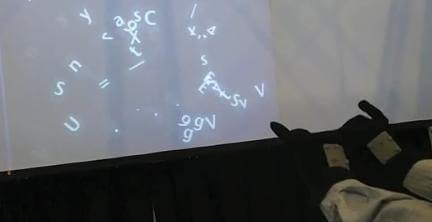
John Underkoffler thrilled geeks and normals alike when he designed the revolutionary computer interface seen in Steven Spielberg's Minority Report. Using nothing more than gloves and gestures, Tom Cruise was able to explore video clips and massive amounts of data using the futuristic controls. Now, the real life version of Underkoffler's creation, called G-Speak, is slowly making its way towards market. We've shown you Underkoffler's presentation at the most recent TED conference, and explored G-Speak and other creations in development at startup company Oblong. Now, the guys at Crunch Gear managed to snag some face time with the interface in person. Watch below as a MIT undergraduate explains gestures and demonstrates two special programs (Grabby and Erf) made to show off G-Speak's futuristic controls. The kid may not have Cruise's style, but he still puts on a good show.
Be Part of the Future
Sign up to receive top stories about groundbreaking technologies and visionary thinkers from SingularityHub.

As you can see in the video, G-Speak uses a mounted camera to track the user's gloves as they move in space. It has sub millimeter precision and can handle quick motions and multiple users. You and your friends will never have to touch a computer again. In his TED talk, Underkoffler promised that in a few years, we wouldn't even need the gloves anymore - computer vision and tracking would improve enough so you could just use your bare hands. I'm looking forward to the day that I'll be able to wade through the digital world looking like an orchestra conductor. Sure, we'll probably have gesture TVs, and definitely gesture video games in the next few months, but they won't have the level of control of G-Speak. This thing is still one of a kind.
[image and video credits: CrunchGear]
[source: Crunch Gear, MIT Media Lab]

Related Articles
How Scientists Are Growing Computers From Human Brain Cells—and Why They Want to Keep Doing It
These Brain Implants Are Smaller Than Cells and Can Be Injected Into Veins
This Wireless Brain Implant Is Smaller Than a Grain of Salt
How Scientists Are Growing Computers From Human Brain Cells—and Why They Want to Keep Doing It
These Brain Implants Are Smaller Than Cells and Can Be Injected Into Veins
This Wireless Brain Implant Is Smaller Than a Grain of Salt
What we’re reading