Heat Is an Orbital Data Center’s Greatest Foe. These Tiles Dump It at the Source.
Sophia Space and Caltech want to fold the bulky parts of a space-based data center—solar cells and radiators—into all-in-one tiles with chips.
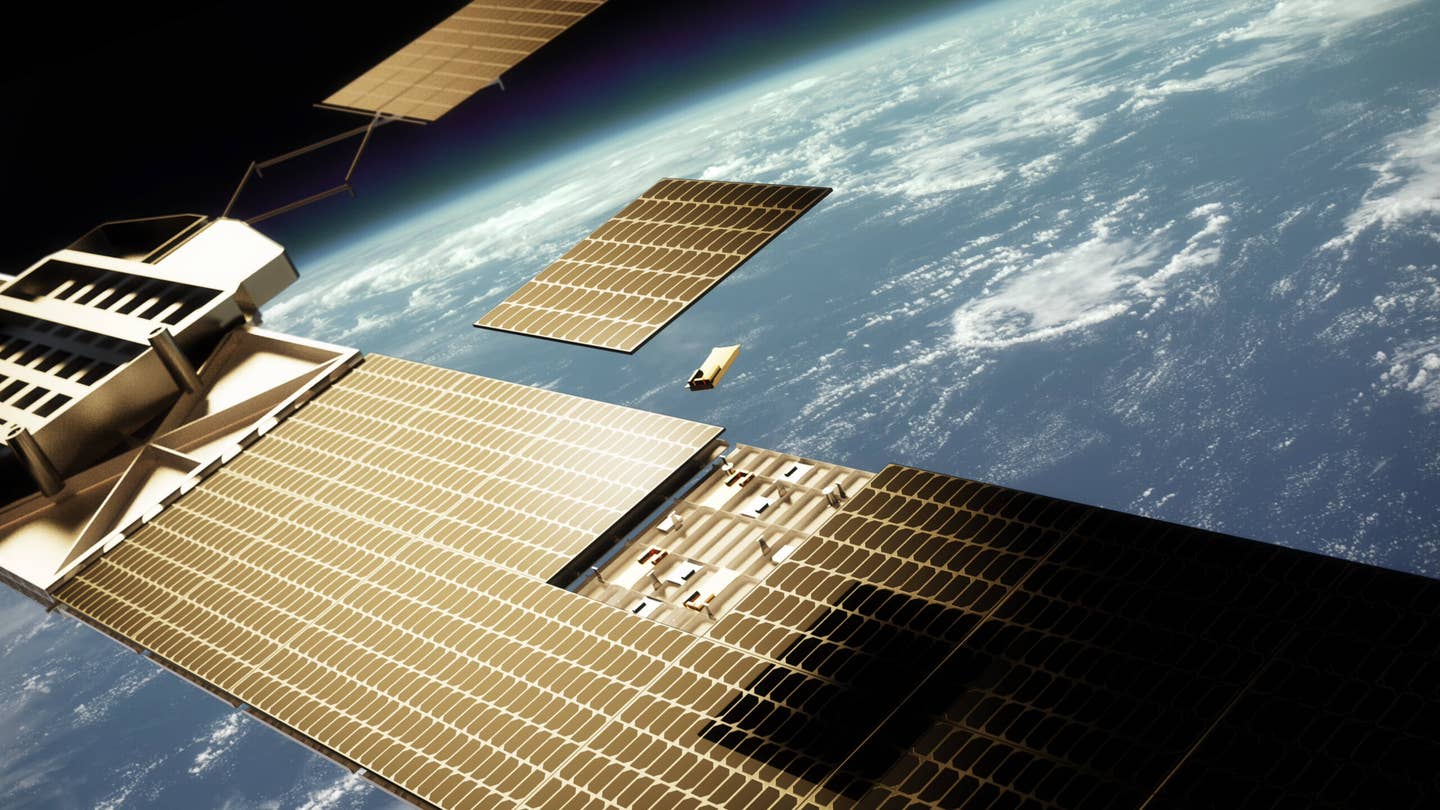
Image Credit
Sophia Space
Share
Every time you ask ChatGPT a question, computer chips in a massive data center whirl into action. In the blink of an eye, they ping back answers. Behind the scenes, though, AI data centers consume enormous amounts of electricity, heat, and water.
The AI boom is impacting communities. After welcoming 37 data centers, residents in Virginia’s Henrico County were hit with skyrocketing electrical bills. Schools and government buildings were asked to turn off lights, shut down computers, and avoid using space heaters to ease strain on the power grid and keep costs down.
Henrico isn’t alone. A growing backlash is prompting many states to consider legislation curbing new facilities. “No data center” signs have sprouted on lawns and alongside roads. Yet as AI demand continues to surge, so does the need for more computing power.
This has top AI companies looking skyward. Instead of routing requests to terrestrial data centers, future queries could be handled by thousands of solar-powered satellites orbiting above. The results would then be beamed back, with users none the wiser.
But there’s a major hurdle: heat.
Space’s frigid vacuum may seem like the perfect place to cool chips, but it’s not that simple. Lacking air and water to carry heat away, orbital data centers would have to use thermal radiation. Here, heat is converted into infrared energy and radiated into space, often requiring bulky hardware that adds weight, cost, and complexity.
With these challenges in mind, California Institute of Technology and Sophia Space, a California startup developing orbital computing, recently unveiled a patent for a chip cooling system designed to radiate heat into deep space. Called Sophia TILE, thousands of these chips could be linked to form large orbital data centers or organized into smaller, distributed clusters.
Powered by abundant sunlight, the chips could operate continuously without eating up Earth’s resources. The team hopes to test their vision by 2030.
“This patent reflects a different way of thinking about computer infrastructure in space,” said Leon Alkalai, founder and chief technology officer at Sophia Space, in a press release. “Instead of beaming down energy to Earth from orbit, we decided to consider putting computing in space and beam[ing] down data.”
The project joins a growing international push towards orbital computing. ADA Space, working with Zhejiang Lab, has already launched satellites for its Three-Body Computing Constellation and plans to expand into a much larger network. Meanwhile, US companies including SpaceX, Starcloud, and Blue Origin are seeking regulatory approval for constellations that could eventually grow to include up to a million AI-capable satellites.
Without doubt, the race is on.
Space Cadet
Orbital data centers would consist of high-performance computer chips housed in protective enclosures designed to withstand the harsh conditions of space. In orbit, they would collect uninterrupted solar power. In contrast, solar panels on Earth require batteries to store energy for use after sunset.
Solar power in space is hardly new. The International Space Station, satellites, and other spacecraft have long relied on solar panels. More recently, engineers have developed flexible, lightweight designs such as NASA’s Roll-Out Solar Arrays, which launch tightly rolled and unfurl in orbit.
AI, however, demands far more power. One long-standing idea for harvesting continuous solar power suggests we collect solar energy in space and beam it down to Earth. But that approach doesn’t completely appease the growing ire against data centers. They’d still consume energy on the ground and take up land and other resources. A newer idea flips the question. Rather than delivering energy to computers, why not bring computers nearer to the energy source?
The argument in favor of sending data centers skyward is growing stronger. A recent Gallup poll found roughly 70 percent of Americans oppose data centers in their backyard, while experts agree that meeting AI’s future energy demands on Earth alone will become increasingly unsustainable.
But while power is abundant in space, heat is the main problem. Without air or water to carry heat away, computers in space must rely on thermal radiation. That means adding large, heavy radiators to an already bulky, solar-powered setup. In space, weight is money, and scaling orbital data centers will take a lot of it (to put it mildly).
Be Part of the Future
Sign up to receive top stories about groundbreaking technologies and visionary thinkers from SingularityHub.

Hot and Cold
TILE tackles the cooling problem with a specialized material that converts heat into infrared radiation. The concept may seem alien, but everything warmer than absolute zero cools this way. Our bodies, stovetops, and car engines all shed heat as invisible infrared light.
Each TILE combines solar cells, thermal insulation, processors, memory, and optical communication hardware into a single module. Beneath the electronics sits a custom heat-spreading layer that prevents dangerous hot spots. Like placing a scorching pan onto a baking sheet, it distributes heat over a much larger surface before channeling it to the radiator.
The modules are designed to work together. Thousands of TILES could link into a giant computing mosaic, each acting as a mini computer connected to its neighbors. Like a modern power grid, the distributed architecture improves reliability—if one TILE fails, others can jump in—while simplifying power distribution and thermal management.
The modular design also solves a practical challenge: Rockets don’t have much cargo space. Similar to NASA’s Roll-Out Solar Arrays, a TILE-based data center could launch in a compact configuration before unfolding into a large, flat computing platform in orbit.
Looking further ahead, the team envisions launching multiple interconnected arrays in succession, like strings of pearls. Each could function as an independent data center that exchanges data with others, effectively extending cloud computing into orbit.
Sophia Space is targeting a demonstration mission in late 2027. By 2030, the team estimates an array of 2,000 TILEs could deliver up to a megawatt of dedicated computing power. To put that in perspective, a single ground-based data center can deliver hundreds of megawatts of computing power, and future data centers will stretch that number into the thousands.
There are challenges beyond the purely technical. Earth orbit is crowded with active spacecraft and debris, raising the risk of collisions. SpaceX’s Starlink satellites, for example, perform frequent collision-avoidance maneuvers after a close call in 2019. The breakup of a Chinese Long March rocket in 2024 threatened an estimated 1,000 satellites. Large constellations of data centers—SpaceX has plans for up to a million in low Earth orbit—would add even more traffic.
Beyond collisions, astronomers are worried that expanding satellite numbers could hinder our ability to study the universe by interfering with telescope observations and radio astronomy.
For now, orbital data centers are unlikely to replace their terrestrial counterparts. Instead, they’re more likely to complement them, processing data collected by spacecraft and beaming only the results back to Earth. Although the field is ridden with hype and controversy, there’s also promise and momentum is clearly building.
“It’s just kind of exploding,” Sergio Pellegrino, a Caltech engineer who collaborates with Sophia Space, told The New York Times. “We need to become more comfortable with space doing things for us.”

Related Articles

Star Catcher Is About to Beam Power Between Two Satellites for the First Time
US Launches $215 Million Race to Build an Error-Corrected Quantum Computer by 2028
Europe’s First Private Rocket Reaches Orbit
Star Catcher Is About to Beam Power Between Two Satellites for the First Time
US Launches $215 Million Race to Build an Error-Corrected Quantum Computer by 2028
Europe’s First Private Rocket Reaches Orbit
What we’re reading