Tour a Century of Sci-Fi Film in Just Four Minutes
Share
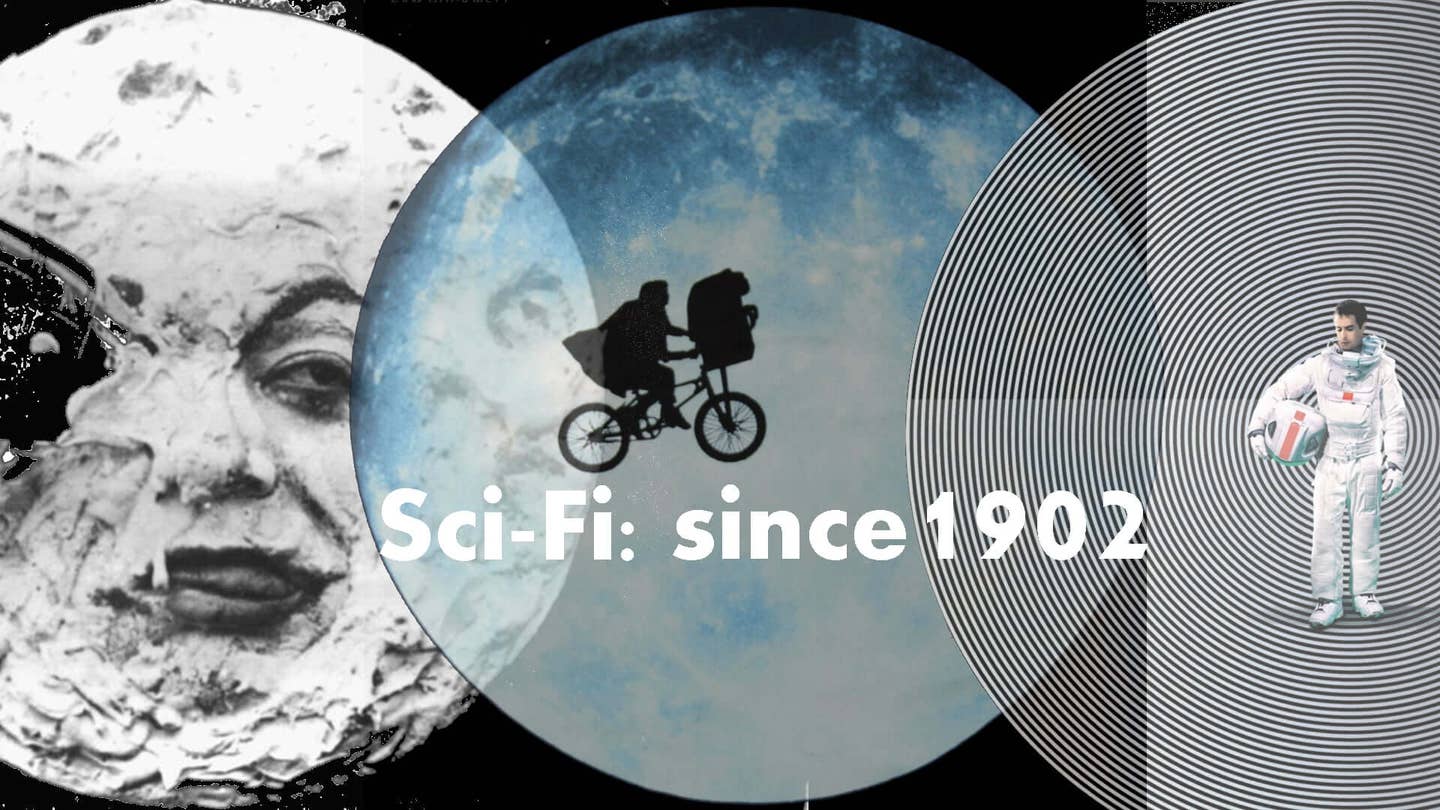
I just watched over a hundred years of sci-fi crunched into four minutes. (See below.) And beyond a fun trip down memory lane, I noticed a few things. The effects have radically improved, but the themes haven't changed much at all.
Murderous robots and AI, scientific experiments run amok, oppressive regimes, the elite vs. the masses, hostile aliens, and gritty dystopias—these aren't just the realm of the last few decades, they've been around much longer.
There are newer themes, like the virtual reality of The Matrix, some happier visions, like Star Trek, and a few more nuanced takes, like Her. And there have no doubt been periods of greater positivity about the future, science, and technology.
But as a whole, future generations may view our science fiction as largely symptomatic of human anxiety during a time of rapid change. For much of history, each new human generation had much the same experience as the last generation and the next one. Now, notable technological and cultural change happens within generations or faster.
Be Part of the Future
Sign up to receive top stories about groundbreaking technologies and visionary thinkers from SingularityHub.

And from Hunger Games to Elysium to Interstellar, we're as anxious as ever. It's still cool to be post-apocalyptic, to visit a future when all our greatest challenges go unsolved, and we've ruined the planet or ourselves or both.
Science fiction is a way to explore the ethical implications and worst-case scenarios of our technological capabilities. But since its early days, the most dire predictions of destruction and chaos have remained a generation or two out. And the world, still imperfect, full of wars and strife, continues on—life improving for some and still a struggle for others.
Image Credit: Shutterstock.com
Related Articles
Google DeepMind Gives AI-Designed Proteins a Watermark
How Would AI Actually Kill All Humans? Here Are the Top 5 Scenarios
Content for Clicks: AI Is Tearing Up the Web’s Social Contract
Google DeepMind Gives AI-Designed Proteins a Watermark
How Would AI Actually Kill All Humans? Here Are the Top 5 Scenarios
Content for Clicks: AI Is Tearing Up the Web’s Social Contract
What we’re reading