Facial Recognition Door Lock and Time Clock for Less than $500

Share
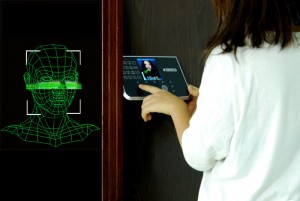
Ditch the keys and throw away the time cards, now all you need is your face. Wholesale electronics giant Chinavision is offering a facial recognition door lock for around $465. The device uses two night vision equipped cameras to recognize up to 500 faces from 2D photographs, and transmit information via USB or ethernet port. Once it recognizes someone the facial recognition system can unlock a door and/or record the arrival of an individual (up to 150,000 such records can be stored). Chinavision is promoting the device as a replacement for time clocks at businesses, able to record access to restricted areas or keep track of employee attendance. It's not clear how easy it is to defeat this device, so I wouldn't wire it to your front door just yet. Still, if cheap facial recognition proves itself, we could see it replacing traditional locks in the year ahead. Check out more photos of the facial recognition door lock after the break.
Facial Recognition (FR) technology is already in use in government run security checks. While FR seems well suited to surveillance and restricting access, we've also recently seen it gain popularity on Facebook as a way to augment social networking. Right now, I certainly trust it more in the latter than I do the former. FR checks are only as good as the original images with which they are calibrated. London airports (and others) are often comparing against passport photos. The device from Chinavision also uses 2D images. While using two cameras and applying some careful stereography will keep FR from being tricked by a photo cut out from a magazine, the technique is far from fool proof. If facial recognition gains popularity, we may see a push for ID cards to contain 3D scans of our features to provide extra security. Still, while humans naturally focus on faces, other biometrics (finger prints, ear scans) may be a better avenue for tracking our identity. It's still unclear which kinds of scans, or combinations of them, will form the security check of the future, but you can bet it will involve using your body as its own ID. Carrying around strangely shaped pieces of metal can't last forever.
Be Part of the Future
Sign up to receive top stories about groundbreaking technologies and visionary thinkers from SingularityHub.

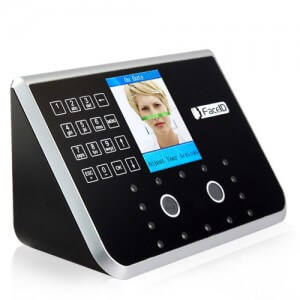
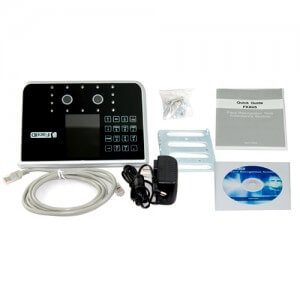
[photo credits: Chinavision]

Related Articles

Epigenetic Editing Could Wipe Out Chronic Hepatitis B Infections

Google DeepMind Gives AI-Designed Proteins a Watermark
This Week’s Awesome Tech Stories From Around the Web (Through October 3)
Epigenetic Editing Could Wipe Out Chronic Hepatitis B Infections
Google DeepMind Gives AI-Designed Proteins a Watermark
This Week’s Awesome Tech Stories From Around the Web (Through October 3)
What we’re reading