CRISPR Prime Editing Rewrites DNA in the Human Body for the First Time
The first patient received a dose of the high-precision gene editor in a new clinical trial for Wilson disease. Researchers hope it's a one-and-done fix.
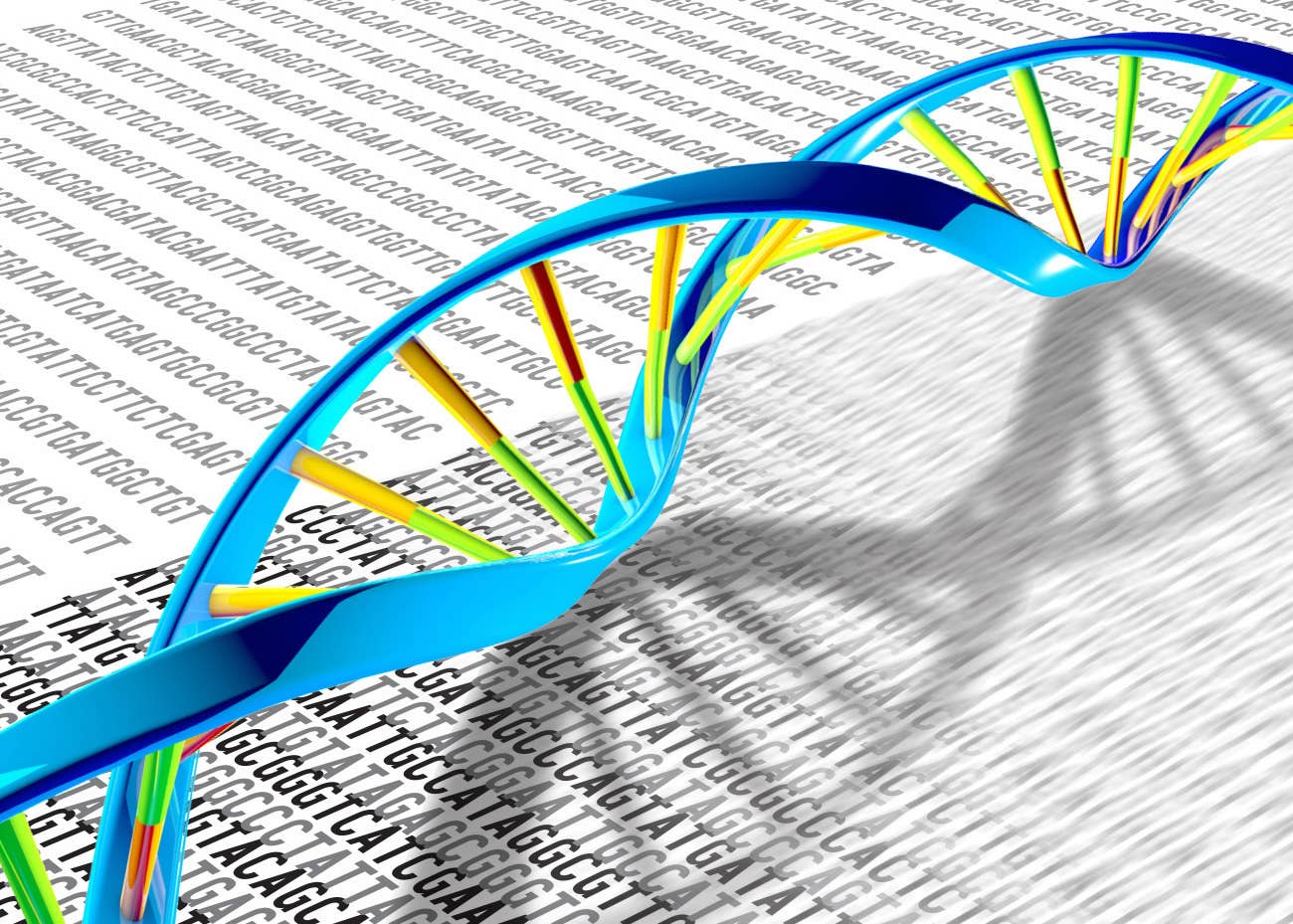
Image Credit
Darryl Leja, NHGRI
Share
Prime editing is finally ready for prime time. Introduced in 2019, the CRISPR-based gene editor wowed scientists with its versatility and precision. A search-and-replace engine for the human genome, it can swap individual DNA letters, insert new genetic instructions, or delete chunks, all with minimal damage to the genome. In theory, it could correct up to 89 percent of known genetic variants associated with disease.
Now, scientists at Prime Medicine in Cambridge, Massachusetts, are testing the technology’s ability to make edits inside the body for the first time. In a global clinical trial for Wilson disease, the team is giving participants a prime editor that directly rewrites DNA in liver cells. The first patient received an infusion earlier this month, but results showing whether it’s safe and how well it works aren’t expected until next year.
The therapy has “the potential to offer patients a one-time curative treatment, ideally before irreversible liver and neurological damage occur,” Mohammed Asmal, chief medical officer of Prime Medicine, said in a press release.
Version Update
Gene editing made history in 2024 when regulators approved Casgevy for the inherited blood disorders sickle cell disease and beta thalassemia. It was the first CRISPR-based treatment to receive the green light. Casgevy uses CRISPR-Cas9 to edit blood stem cells outside the body, switching on a fetal form of a blood protein that compensates for the faulty adult version.
The classic version of CRISPR cuts through both DNA strands. Over the years, scientists have expanded on it significantly. Rather than simply disabling a gene, some variants can insert new genes, flip DNA sequences, or delete millions of DNA letters across a chromosome. Other spin-offs target RNA—the messenger molecule delivering genetic instructions—rather than DNA itself.
But for all these upgrades, CRISPR-Cas9 has a glaring weakness: It’s rough on the genome. Much of what we call “editing” is actually cells scrambling to repair broken DNA strands. Sometimes, they botch the job. In one glaring example, a single cut triggered the loss of large portions of a chromosome, which one expert called “genome vandalism.”
To rein in collateral damage, scientists redesigned the system to nick only one DNA strand. Base editing emerged as a powerful alternative. Here, the tool swaps one DNA letter for another without deliberately breaking the double helix.
Base editing made medical history last year, when doctors gave a baby, KJ Muldoon, a custom-made base editor to treat a life-threatening genetic disorder. Delivered to his cells inside lipid nanoparticles, the editor corrected a DNA mutation and eased his symptoms in weeks. Multiple clinical trials are now exploring base editing for other diseases. However, the technology can make only certain types of DNA-letter swaps.
Prime editing takes the concept a step further, turning the gene editor into a genetic word processor.
Like base editors, prime editing cuts a single DNA strand. A second component, pegRNA, carries a blueprint of the desired edit and steers the machinery to its target. Once there, a third component copies the RNA instructions into DNA, which the cell can incorporate into its genome. In a variety of tests, the inventors showed prime editing could swap any DNA letter for another, add new genetic code, or delete short stretches with high precision.
But there was a problem. Prime editors are hefty molecular machines. Getting them into the right cells is tricky.
Special Delivery
In prime editing’s first medical foray, researchers targeted chronic granulomatous disease, a rare immune disorder. Here, genetic defects prevent certain microbe-fighting immune cells from attacking invaders, leaving patients vulnerable to dangerous infections.
Be Part of the Future
Sign up to receive top stories about groundbreaking technologies and visionary thinkers from SingularityHub.

Scientists have tried multiple fixes. One, a viral gene therapy, restored neutrophil function in six of seven surviving patients but risked disrupting normal gene activity. In another effort, researchers turned to base editing and a clinical trial is now recruiting patients.
Prime Medicine turned to prime editing to tackle a common form of the disorder caused by two missing DNA letters.
In an earlier study, their prime editor restored those letters in blood stem cells collected from two patients—a repair that classic CRISPR-Cas9 and base editors can’t reliably complete. Within a month of receiving the edited cells, both patients had neutrophils capable of producing pathogen-killing chemicals. For one, the benefits lasted at least half a year. Side effects were mostly caused by the chemotherapy used to clear existing stem cells before the infusion.
“We created prime editing five and a half years ago as a versatile, precise genome editing technology that in principle could correct almost all mutations known to cause genetic diseases,” David Liu, a cofounder of Prime Medicine and whose lab developed prime editing, said in a press release last year. “Today’s data represent a milestone in medicine.”
Despite the early success, Prime Medicine announced it would no longer develop the therapy on its own, shifting their focus instead toward editing genes directly inside the body. Part of the decision was driven by cost: Each patient needed a custom batch of their own edited cells.
The new Wilson disease trial reflects that pivot. Patients with the condition harbor mutations in a gene encoding a protein that shuttles copper out of liver cells. Symptoms often emerge during childhood, and without treatment, copper buildup progressively damages the liver, nerves, and brain.
Though a lifelong medical cocktail can manage the disease, a one-time cure could be a game changer. Prime Medicine’s drug, PM577a, packages its editor in liver-targeted lipid nanoparticles and delivers it into the bloodstream. Not every liver cell needs fixing. According to the company, correcting between 20 and 30 percent may be enough to see a benefit.
Early animal results have been promising. In monkeys, a single infusion edited roughly half of liver cells. There were no notable changes in liver function, blood chemistry, or immune response. In mice modeling Wilson disease, the editor precisely corrected 80 percent of cells with minimal off-target edits. Prime Medicine presented these findings at the 2024 American Association for the Study of Liver Diseases, but they have not yet been published in a peer-review journal.
Dosing the first patients is a milestone. But the real test is whether the treatment is safe and gets rid of excess copper over the long haul. If so, prime editing could be adapted to tackle the other mutations behind Wilson disease, and potentially entirely different genetic disorders.
Although PM577a targets “the most prevalent disease-causing mutation in the United States and Europe,” the same system could help expand the treatment to patients elsewhere in the world, where different mutations are more common, said Prime Medicine CEO Allan Reine.

Related Articles
This AI Model Designs Enzymes With Atomic Precision

Blind Patients Recover Partial Vision in Gene Therapy Trial

The Evolving Quest to Build Life in a Lab
This AI Model Designs Enzymes With Atomic Precision
Blind Patients Recover Partial Vision in Gene Therapy Trial
The Evolving Quest to Build Life in a Lab
What we’re reading